.

Member, Executive Committee

Chair, Appellate Advocacy & Post-Trial Practice

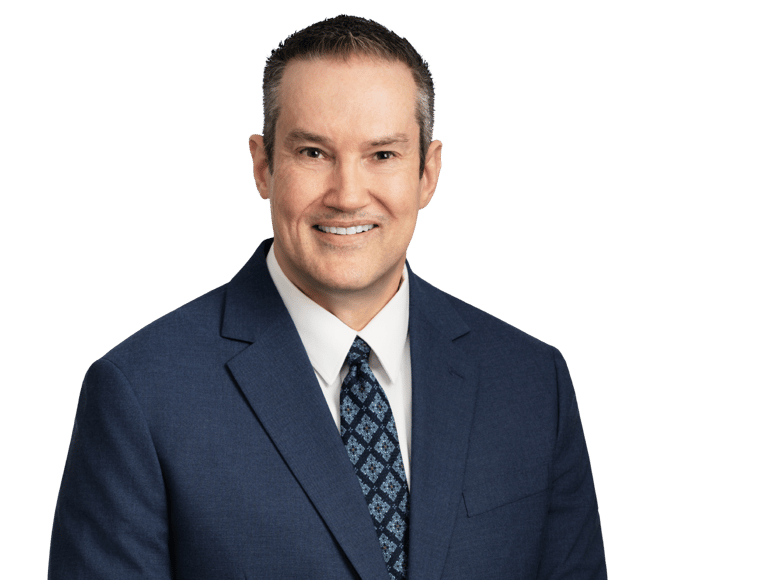
Portrait of John J. Hare

Marshall Dennehey Celebrates 25th Anniversary of Advanced Trial Advocacy & Mock Trial Program

July 15, 2025

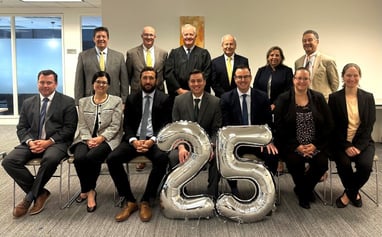
Group photo of attorneys and judges from the 25th anniversary of the mock trial program.

Marshall Dennehey celebrated the 25th anniversary of its Advanced Trial Advocacy & Mock Trial Program this week, reflecting on an annual event that has become a cornerstone of the firm’s attorney development efforts and a hallmark of its commitment to excellence in courtroom advocacy.

Launched in 2000, the in-house program was founded by retired firm leader, Christopher Dougherty, who was inspired by his military-based trial training experience as a Marine Corps Officer. Drawing on the National Institute for Trial Advocacy (NITA) framework, the program was created to provide immersive, real-world trial training for attorneys preparing to take cases to verdict.

“From the beginning, the goal was to formalize trial training and ensure our attorneys were prepared for increasingly complex and high-stakes matters,” said Thomas Brophy, Marshall Dennehey’s retired, former President & CEO who championed the program’s development. “Chris brought a proven model and adapted it into something uniquely Marshall Dennehey.”

Each year, 8 to 12 attorneys from offices across the firm are selected to participate based on nominations from department leadership. The curriculum focuses on four essential trial components—opening statements, direct examination, cross examination, and closing arguments—and culminates in a full mock trial experience. Participants receive detailed critiques from seasoned trial lawyers and gain invaluable courtroom confidence.

Over the years, the program has been supported by a distinguished faculty of Marshall Dennehey trial attorneys, professional actors serving as expert witnesses, and summer law clerks acting as jurors. The firm’s Philadelphia headquarters features a dedicated mock courtroom designed to replicate live trial conditions.

“The mock trial program isn’t just about teaching skills,” Brophy added. “It’s about identifying future leaders and building strong connections across offices and practice groups.”

Marshall Dennehey’s President & CEO, G. Mark Thompson, reflected on the milestone. “This program embodies our belief that great trial lawyers are built through hands-on experience, mentorship, and support. We’re proud of its legacy and excited for what the next 25 years will bring.”

PHOTO CAPTION: Celebrating 25 Years: Marshall Dennehey’s 2025 Advanced Trial Advocacy & Mock Trial Program participants included (front row, left to right): Sean Reeves, Lauren Purcell, David Drake, Christian Weimann, Elias Hassinger, Heather LaBombardi, and Corey Setterlund. Faculty included (back row, left to right): James Hanratty, Craig Hudson, Dan Sherry, Thomas Brophy, Joan Orsini Ford, Joseph Santarone and Robin Snyder (not pictured).
 

Firm Highlights

Result

No-Cause Jury Verdict Secured in Wrongful Death Trial

We successfully obtained a no-cause jury verdict in a 13-day wrongful death trial. The decedent, a 59-year-old man, was admitted to the emergency room on February 15, 2019, with complaints of abdominal pain, decreased appetite, and constipation, despite the use of laxatives. The patient did not complain of any nausea, vomiting, or diarrhea. He had a significant medical history including diabetes, hypertension, prior coronary artery stenting, morbid obesity (with past gastric bypass surgery), longstanding ventral hernia, and back pain. A CT scan revealed multiple hernias and a potential closed-loop bowel obstruction, leading to a surgery consultation. Our client, an emergency general surgeon, interpreted that the patient did not have a closed loop or any significant obstruction and recommended non-surgical management. The patient was approved to have clear liquids, and had a vomiting incident shortly after, but our client was not notified. The patient was returned to NPO status, and after improving overnight, he was returned to “clears” and additional medical and renal consults were ordered. Our client did not receive any communications from the residents/nurses of any changes in the patient’s condition. On February 18, 2019, two rapid responses were called due to increased heart rate and vomiting. It is believed that the vomiting resulted in aspiration, causing sepsis, ultimately leading to the patient’s death. During the trial, the plaintiff’s sole medical expert highlighted imaging on the wrong hernia, which called into question all of his opinions in the case. We made key objections related to the expert testimony, limiting what the allegations were, and preventing new allegations from being made. After approximately two and a half hours of deliberating, the jury returned a no-cause verdict. 

Thought Leadership

NJ Workers' Compensation Legislation Update

A couple more bills were introduced for the 2026-27 session. Any updates since February have been highlighted in bold. A1023 | S3984 Medical use of cannabis under certain circumstances This requires workers’ compensation, PIP, and health insurance coverage for the medical use of cannabis under certain circumstances. It was introduced on January 13, 2026 and referred to the Assembly Financial Institutions and Insurance Committee. It was also introduced on March 19, 2026 and referred to the Senate Commerce Committee. A1045 Certain injuries to volunteer and professional public safety and law enforcement personnel This revises workers’ compensation coverage for certain injuries to volunteer and professional public safety and law enforcement personnel. It was introduced on January 13, 2026 and referred to the Assembly Labor Committee. A3724 Personal liability to employer officers for failure to pay for coverage This provides personal liability for owner, executive officer, or executive director of employer for failure to pay for workers' compensation coverage. It was introduced on January 13, 2026 and referred to the Assembly Labor Committee. On May 7, 2026, it was reported and referred to Assembly Judiciary Committee. A4617 Certain workers' compensation supplemental benefits and funding method This concerns certain workers' compensation supplemental benefits and funding method. For a permanently and totally disabled worker or surviving dependents after December 31, 1979, with some exceptions, this bill provides for an annual cost of living adjustment in the weekly workers’ compensation benefit rate. It was introduced on March 10, 2026, and referred to the Assembly Labor Committee. S241 Inclusion in database of appointed officials This requires that workers’ compensation judges and administrative law judges be included in database of appointed officials. It was introduced on January 13, 2026 to the Senate, Referred to Senate State Government, Wagering, Tourism & Historic Preservation Committee. A1870 | S1379 Workers' compensation benefits for certain workers due to September 11, 2001, terrorist attacks This provides workers’ compensation benefits for certain public safety workers who developed illness or injury as result of responding to September 11, 2001 terrorist attacks. It was introduced on January 13, 2026 and referred to the Assembly Labor Committee. It was also introduced on the same day and referred to the Senate Labor Committee. On February 5, 2026, it was reported from the Senate Committee, 2nd Reading, and referred to the Senate Budget and Appropriations Committee. A2779 | S1521 Excludes Certain Illegal Aliens This excludes certain illegal aliens from workers’ compensation and temporary disability benefits. It was introduced on January 13, 2026 and referred to the Senate Labor Committee. It was also introduced on the same day and referred to the Assembly Labor Committee. A2792 | S1555 Prevent Intoxicated Employees from Workers’ Compensation This prevents intoxicated employees from receiving workers’ compensation. It was introduced on January 13, 2026 and referred to the Senate Labor Committee. It was also introduced on the same day and referred to the Assembly Labor Committee. S2290 Increase Mandatory Retirement Age This increases statutory mandatory retirement age for Supreme Court Justices, Superior Court Judges, Tax Court Judges, Administrative Law Judges, and Workers’ Compensation Judges from 70 to 72. It was introduced on January 13, 2026, and referred to the Senate Judiciary Committee. A3167 | S2372 Workers’ compensation insurance requirements for certain corporations and partnerships. This concerns workers’ compensation insurance requirements for certain corporations and partnerships. It was introduced on January 13, 2026 and referred to the Senate Labor Committee. It was also introduced on the same day and referred to the Assembly Labor Committee. A1384 | S2757 Reduce Statute of Limitations in Medical Fee Disputes This reduces statute of limitations from six years to two years in medical fee disputes in workers’ compensation matters. It was introduced on January 13, 2026 and referred to the Senate Labor Committee. It was also introduced on the same day and referred to the Assembly Labor Committee. S3144 Testimony in Workers’ Compensation This concerns submission of testimony in workers’ compensation claims. It was introduced on January 13, 2026, and referred to the Senate Labor Committee. S3342 Increase Mandatory Retirement Age This increases statutory mandatory retirement age for Supreme Court Justices, Superior Court Judges, Tax Court Judges, Administrative Law Judges, and Workers’ Compensation Judges from 70 to 75. It was introduced on February 5, 2026, and referred to the Senate Judiciary Committee. A3548 | S3571 Maximum benefits for certain volunteers This provides certain volunteer and other workers with maximum compensation benefit for workers' compensation claim regardless of outside employment.. It was introduced on January 13, 2026 and referred to the Senate Labor Committee. On March 2, 2026, it was reported from the Senate Committee, 2nd Reading, and referred to the Senate Budget and Appropriations Committee. It was also introduced on the same day and referred to the Assembly Labor Committee. On May 7, 2026, it was reported and referred to Assembly State and Local Government Committee.

Thought Leadership

What’s Hot in Workers’ Comp - News and Results*

RESULTS* Ben Durstein (Wilmington) obtained a favorable decision involving a claimant who fractured his patella in a work accident requiring two surgeries. The IAB rejected the claimant’s medical expert’s opinion that he sustained a 25% permanent impairment to the right lower extremity. Instead, the board accepted the opinion of the employer’s medical expert that the appropriate permanency was 13% utilizing the 6th Edition of the AMA Guides to the Evaluation of Permanent Impairment. Tony Natale III (King of Prussia) successfully had a claim petition alleging new injuries and periods of disability dismissed based on full recovery. The claimant was injured when his skid loader was struck by another loader in the process of baling hay. Original injuries were accepted and the claimant returned to work. Thereafter, the claimant abandoned work and filed a claim petition to assert new injuries and extended disability. Cross examination of the claimant’s medical expert stunningly revealed his failure to review claimant testimony, his lack of awareness of a social security disability decision detailing the existence of claimant’s alleged work-related conditions prior to the date of work injury, and his failure to understand that the claimant admitted to full recovery of injuries for which he was continuing to treat. Tony Natale III (King of Prussia) successfully obtained a defense verdict in a Medicare conditional payment lien third level appeal. The United States government alleged a Medicare conditional lien payment was due and owing in the upper six-figure range based on an auto accident and PIP policy for which the government conditionally became the primary carrier. The government argued that our client, the PIP carrier, was the primary payer and, under federal law, must reimburse the government for its conditional lien payment. At the third-level appeal hearing, the government’s position was refuted by the revelation that the date of injury tied to the medical bills associated with the lien was glaringly and chronologically prior to the insurer’s PIP policy date. The court held that based on this evidence and argument, the government could not meet its requirements to assert a lien against our client. A. Judd Woytek (King of Prussia) and John Abda (Scranton) successfully had a workers’ compensation claim petition granted for medical benefits only for a closed period with no wage loss awarded. The claimant alleged multiple injuries as the result of a very minor motor vehicle incident where a co-worker’s delivery van rolled down an incline of approximately six feet, and bumped into the rear of the claimant’s delivery van. He claimed he was thrown forward and suffered head and neck injuries, along with aggravating a pre-existing ankle injury. The claimant was also terminated following the accident for having a large hunting knife in his van, which was against the employer’s workplace violence policy. The judge granted the claim for a mild concussion and an ankle contusion, but terminated medical benefits as of the date of our IME’s. The judge found that no wage loss benefits were payable as the claimant was terminated for cause and work remained available to him. The judge found our medical experts to be more credible than the claimant’s, along with finding our four employer witnesses to all be credible. The trial team was assisted by paralegal Bonnie Zemek (King of Prussia). Eric Scott Thompson (Wilmington) was successful in a workers’ compensation matter in Delaware. On October 15, 2024, the claimant was injured while performing fire training in a multistory building when he tripped over a fire line, injuring his right knee. The claimant received regular and consistent treatment for the right knee through August 29, 2025, when he presented with left knee complaints for the first time. His treating orthopedist diagnosed a hamstring strain. The claimant was next seen October 15, 2025, with continued left knee complaints, and was referred to a total knee doctor within the practice. He was then diagnosed with a posterior root tear of the medial meniscus. Our expert testified that it was not plausible for a lateral hamstring strain to progress to a meniscal tear in two months. The claimant required a total knee replacement that was ultimately performed in February 2026. In the six months between the time of initial presentation with left knee complaints and the total knee replacement, conservative care consisted of a single injection. Our expert testified that posterior root media meniscal tears can respond to conservative care, and it was not known if it would with the claimant because it was not adequately explored. The Industrial Accident Board agreed with our expert and determined that the claimant failed to meet the burden of establishing more likely than not that the left knee complaints were caused by overloading/overuse as a result of the compensable injury to the right knee. They also agreed that the claimant was able to return to work in a sedentary capacity as opined by his physicians and our expert prior to the left total knee replacement and that there were employment opportunities available within his restrictions and capabilities as presented by the vocational expert. As a result, the claimant was no longer entitled to total disability benefits and will receive partial disability benefits for which he is limited to 300 weeks. Michele Punturi (Philadelphia) and Alana Staniszewski (Pittsburgh) had a termination petition granted in a Pennsylvania workers’ compensation case. The petition involved an echocardiography technologist with long-term employment at a local hospital who sustained a right shoulder injury resulting in surgery in January 2024. Following surgery, the claimant was diagnosed with a frozen shoulder and underwent additional surgery in June 2024, with a recommendation for a third surgery. The opinions of the defense medical expert, a Board-certified orthopedic surgeon, were found credible, persuasive, and competent based upon the extensive history he obtained from the claimant, analysis of the mechanism of injury, and review of records, along with comparison of MRIs from October 2023, February 11, 2024, and January 6, 2025, which failed to reveal any causal relationship other than a strain/sprain of the right shoulder. This evidence supported that the claimant had fully recovered, and was not in need of any ongoing medical treatment and/or restrictions. In particular, despite allegations of injuries beyond a sprain/strain, the defense medical expert identified that those allegations were not consistent with what was found at the time of surgery, and elements of the surgery were to treat a chronic and degenerative condition. Additionally there were no ongoing issues or problems with the subscapularis, which was intact, consistent with the follow-up MRI of February 11, 2024, and the claimant did not have evidence of a frozen shoulder. In fact, the MRIs and mechanism of injury, he opined, did not support any injury causing tendonitis or inflammatory conditions within the bicep tendon. Furthermore, multiple days of surveillance footage demonstrated the claimant’s normal use, with the ability to sweep and shovel snow, operate her vehicle, raise her arms above shoulder level, and use a broom – all without any observable difficulty, which challenged the claimant’s credibility of a disability and further established a lack of causation. As a result of this favorable decision, supersedeas fund reimbursement will be obtained for both wage loss and medical benefits through the supersedeas fund recovery process. *Prior Results Do Not Guarantee a Similar Outcome NEWS Heather Carbone (Jacksonville) was a panelist for a webinar hosted by The Workers’ Compensation Claims Professionals (WCCP) Association. As part of the “Meet the Experts” Series, the speakers addressed “Afterthoughts that Undermine a Successful Mediation,” highlighting the pitfalls and challenges of underprepared or unprepared mediation participants. The discussion included appropriate pre-mediation communications, setting of expectations, management of expectations, and working through the unexpected or unprepared. Attendees gained ideas about how and when to prepare, best practices, and the potential for non-parties (spouse, significant other, risk owners-insurers) to have differing perspectives or concerns than the actual employee and employer. On May 21-22, 2026, A. Judd Woytek, (King of Prussia) joined a panel at the CLM Alliance (Claims and Litigation Management Alliance) Work Comp Conference in Nashville to present "We See You: How Employee Engagement Enhances Work Comp Outcomes." Judd and his fellow panelists discussed the positive impact of employee engagement on claim outcomes, return-to-work timelines, and overall claim costs.