.

Craig S. Hudson

Director Emeritus, Professional Liability Department

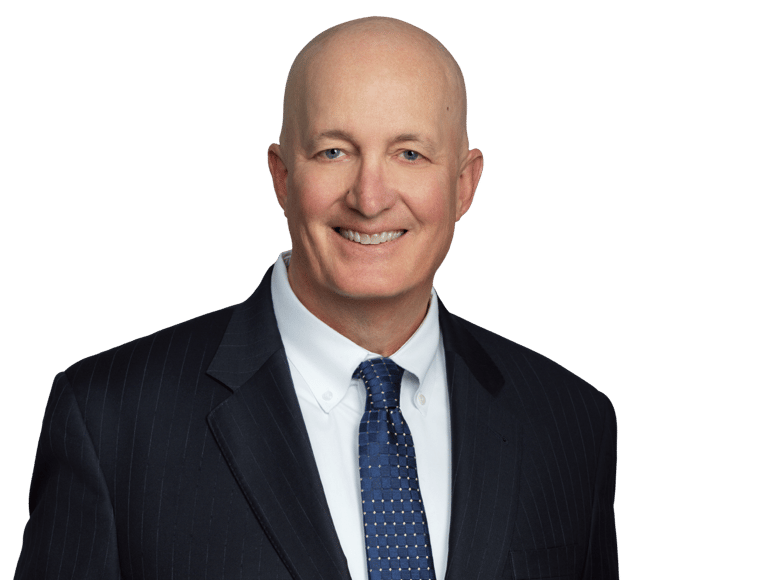
Portrait of Craig S. Hudson

Craig is the Director Emeritus of the Professional Liability Department. He is also a former member of the firm's three-person Executive Committee, the governing body of our law firm that serves to advance and implement our strategic goals. In his current role, Craig continues to assist with the strategic direction of the department and oversight of over 140 attorneys who focus on defending clients in professional liability claims and suits throughout the firm's 22 distinct areas of professional liability practice.

Craig joined Marshall Dennehey's Philadelphia office in 1993 and has been involved in the firm's management, both in Philadelphia and in Florida, since 1995. Over the years, he has served as the manager of the law clerk program, vice chair and chair of hiring, and as manager of the Philadelphia Professional Liability Group. In 2006, Craig relocated to Florida to manage the firm's Fort Lauderdale office, and more recently, he served as the Regional Managing Attorney for the entire state with responsibility for all four Florida offices and oversight of all their practice groups. In January of 2020, Craig assumed the role of Assistant Director of the Professional Liability Department and was elevated to Department Director in 2021. He works in Philadelphia while maintaining an office in Fort Lauderdale.

A trial attorney for over 30 years, Craig has litigated hundreds of cases in the state and federal courts of Florida, Pennsylvania and New Jersey, obtaining a majority of favorable jury verdicts in all three states. Over the course of his career, he has defended lawyers, accountants, architects, engineers, real estate professionals, property managers, debt collectors, insurance brokers and investment professionals in matters pertaining to malpractice, negligence and fraud. He has also represented law firms, lawyers and employers in all types of employment related litigation at the administrative level and in federal and state court. 

Craig is rated AV Preeminent® by Martindale-Hubbell, the highest rating for an attorney’s professional competence. He has also been selected numerous times to the South Florida Legal Guide – Top Lawyers in Professional Liability Defense. He is a graduate of Villanova University and Rutgers, The State University of New Jersey School of Law – Camden. 

    • Rutgers Law School (J.D., 1985)
    • Villanova University (B.A., 1982)
    • Pennsylvania, 1985
    • Florida, 2006
    • U.S. District Court Middle District of Florida
    • U.S. District Court Southern District of Florida
    • AV® Preeminent™ by Martindale-Hubbell®
    • South Florida Legal Guide - Top Lawyers in Professional Liability Defense (2016, 2017, 2019, 2020, 2021)
    • Broward County Bar Association
    • Defense Research Institute
    • Florida State Bar Association
    • Palm Beach County Bar Association
    • Understanding the Sub-Prime Credit and Housing Crises, MG, 2008
    • Sub-Prime Market Collapse and Its Impact on Claims against Professionals involved in Real Estate Transactions, Gen Star, 2008
    • Defending Construction Defect Litigation Claims in Florida, Liberty International, 2007
    • Claims Against the Board of Directors of Condominium and Homeowner Associations, USLI, 2006
    • "Career Spotlight: Leading the Success of Others," South Florida Sun Sentinel, August 12, 2018
    • "Communication With Clients Key to Avoiding Professional Liability Claims,"  InsuranceJournal.com, April 17, 2017
    • "How Insurance Agents Can Mitigate Malpractice Risk: Do the Right Thing,"Property Casualty 360, January 27, 2016
    • "To Reduce Malpractice Risk, Improve Client Communications," Daily Business Review, January 7, 2015
    • "Did the Florida Supreme Court Greatly Expand Tort Law at a Cost to Florida's Contract Law?" Defense Digest, Vol. 19, No. 3, September 2013
    • "Fear the Next Hurricane More Than Florida Supreme Court's Ruling on Tiara," Claims Journal, June 2013
    • "Jury Verdict Value of Emotional Damages Caused by Age Discrimination," Defense Digest, Vol. 17, No. 2, June 2011
    • "Third Circuit Confirms That All Claims Concerning Medical Devices, Other Than Breach of Express Warranty Claims, Are Barred," Defense Digest, January, 1996
    • Defended Florida real estate attorney in a legal malpractice lawsuit arising out of the actions taken by the attorney which led to a default judgment being entered against his client, resulting in his client losing the right to enforce an option to purchase valuable real estate at below market price. After filing a motion for summary judgment asserting that plaintiff could not establish that the option to purchase was enforceable, the case settled for nuisance value.
    • Defended Florida matrimonial attorney in a lawsuit filed by a dissatisfied client after a very acrimonious divorce proceeding to determine property settlement, child custody, and permanent alimony, which included three trials, two appeals, and dozens of motions. Plaintiff identified multiple "errors" by the attorney and claimed over $1 million in damages. Eventually was able to undermine each of the claims made by the plaintiff, and eventually the case was able to be settled well below the plaintiffs bottom line figure.
    • Defended Florida structural engineer in a multi-party binding arbitration arising out of a large condominium project. The case eventually settled without any contribution from the structural engineer.
    • Defended Florida mechanical engineer in a multi-party pre-suit mediation arising out of a large multi-use complex wherein the case settled with the mechanical engineer making the lowest contribution to the settlement fund.
    • Defended auto manufacturer in a number of cases claiming defective airbag system in which several of them went to trial and all ended with defense verdicts.
    • Successfully defended at trial a national amusement park operator in several lawsuits claiming personal injuries caused by the alleged negligence of the amusement park operator by obtaining defense verdict in each of the cases.
    • Obtained summary judgment on behalf of title agent alleged to have been involved in a fraudulent mortgage scheme.
    • Obtained summary judgment on behalf of large masonry contractor in claim arising out of the collapse of a large wall during the course of construction.
    • Defended actuary and benefits expert in a binding AAA arbitration in claims of professional negligence arising out of the termination of a defined benefits. Following twelve days of hearing, the case settled with a payment by the actuary and benefits expert far below the amount claimed at the beginning of the arbitration.

Results

Defense Verdict in Florida Legal Malpractice Case

Obtained a defense verdict in a legal malpractice case in Florida. Our clients, two board-certified construction lawyers, had unsuccessfully defended the plaintiff, a real estate developer for a project in West Palm Beach, Florida, in a lawsuit brought by the general contractor that ended with an adverse jury verdict of over $1 million. In the underlying lawsuit, the two lawyers pursued a litigation strategy that, upon reflection, had little chance of success. The lawyers never communicated to their client the prospect of an adverse result, at least not in writing. During the underlying trial, the judge made critical comments concerning the attorneys' preparation and made several adverse rulings, including dismissing a third-party complaint against one party, stating that the lawyer had sued the wrong party, and another ruling excluding their primary expert because the expert's opinions were not properly disclosed during discovery. Our defense focused on the theme that the legal advice and strategy the attorneys provided to their client was based on inaccurate information supplied by the client; that the client deliberately withheld critical information; that their developer was the one in control of the underlying litigation strategy; and that his own actions and trial testimony undermined his case, not the actions of his attorneys. The trial lasted 14 days; the plaintiff's case took ten and one-half days to present three live witnesses; and there were over 500 exhibits admitted into evidence. The defense case was presented in two and one-half days with testimony from four live witnesses, including the plaintiff's attorney from the underlying trial. The jury deliberated for less than one and one-half hours before returning a defense verdict on all counts.

Thought Leadership

Defense Digest

Message From the Executive Committee

June 1, 2023

Beginning in April 2021 and extending through the end of this April, Marshall Dennehey added 14 lateral shareholders. While public pronouncements were issued at the time each joined our firm, I want to introduce them again as a group, to show how the addition of these shareholders reaffirms our continuing commitment to be the go-to civil defense firm in every jurisdiction where we practice.  This influx of new, experienced attorneys took place in nine out of our 19 offices, in six states, and in all four of our practice departments. These shareholders augment our already deep roster of talented and experienced litigation specialists. They have an average of over 28 years of legal experience, representing clients in federal and state court. Together, they have handled over 375 jury trials and countless non-jury trials, arbitrations, mediations, and administrative hearings. Collectively, they have handled every imaginable type of civil litigation, and each of their practices and experiences add depth to our existing practices. Many of them are active in national, state, and local bar associations and industry groups, are frequent lecturers to attorneys and claims professionals, and are contributors to several legal publications.  Seven of the shareholders who joined Marshall Dennehey over this period are in our Casualty Department. The most high-profile of these occurred this past October, when Jack Delany, a prominent, international, catastrophic damage trial attorney, decided to join our firm. Joining Jack as shareholders from his previous firm are Kristen Worley and Andrew Campbell. Jack and his team have been counsel in some of the most significant national and international civil litigation in recent memory, including lawsuits stemming from the Grenfell Tower fire in London, the Surfside condominium collapse in Florida, a recent factory explosion in Pennsylvania, and many other high-profile catastrophic events. Within weeks of joining Marshall Dennehey, Jack, Kristen, and Andrew began a large construction defect case in which the plaintiffs sought over $24 million in damages. After a three-week trial in federal court, the jury returned with a unanimous defense verdict.  In February 2021, Melissa Devich Cochran was the first of the 14 shareholders to join Marshall Dennehey. Melissa was already familiar with Marshall Dennehey, having previously been a 12-year Marshall Dennehey attorney, who decided to return after several years at another firm. She rejoined our Pittsburgh office in our Asbestos and Mass Tort Litigation Practice Group. Melissa quickly settled back into familiar surroundings, bringing with her deep client relations and extensive knowledge and experience in defending national equipment manufacturers, outside contractors, and suppliers in asbestos litigation throughout Western Pennsylvania.  Later in 2021, Vince Cononico joined our Cleveland office from a major insurance company’s staff counsel office where, for over 25 years, he handled a variety of significant automobile, premises liability, uninsured/underinsured motorist, and other personal injury matters throughout Ohio. Vince has first-chaired over 50 jury trials and several times was acknowledged by the insurance company as having the highest winning percentage of the staff counsel in his region.  In 2022, John Yaninek, a 33-year trial attorney, joined our Harrisburg office. John, who is admitted in both Pennsylvania and Maryland, handles a variety of complex casualty matters in both states. John’s experience extends beyond his injury cases, as he has also defended clients in white-collar criminal cases and clients in real estate E&O matters. John is a decorated U.S. Army veteran of the Gulf War, where he managed legal issues for the Army in occupied Iraqi territory during the ground conflict. John retired from the Army Reserve as a Lieutenant Colonel. Just a few months ago, Keith McCabe joined our New Haven office, which we opened in February of 2022. Keith brings to this rapidly-growing office over 30 years of litigation experience, defending personal and commercial clients in the Connecticut federal and state courts. Keith has tried over 75 jury cases to verdict in a broad range of cases, including those that involve catastrophic injuries and deaths.  Four of the 14 lateral shareholders joined our Health Care Department. The first is Bill Gianaris, who joined our Westchester office where he represents hospitals and medical providers in the five boroughs of New York City and upstate New York. A 34-year attorney, Bill spent the first 14 years of his career as an Assistant District Attorney in Queens County where he tried numerous criminal cases. Since leaving the District Attorney’s office, Bill has been primarily defending medical liability and general liability matters. He has tried numerous high-exposure cases involving medical professional liability across New York. Near the end of 2022, Suzanne Utke joined our Health Care Department in Philadelphia. Suzanne, who was a critical care nurse before going to law school, has over 20 years of experience defending physicians, nurses, and health care providers against medical and psychiatric malpractice claims. She also represents professionals in peer and credential reviews before various State Boards.  This year, two additional shareholders joined our Health Care Department. In March, David G. Tomeo, a litigation leader with more than 30 years of experience across New Jersey, Pennsylvania, and New York, joined our Roseland office. In addition to his medical professional liability practice, Dave handles commercial and business litigation and insurance coverage matters. Dave is also frequently called upon to defend urgent care center franchisors in medical malpractice suits and handles other matters at the intersection of franchise and medical malpractice law.  A few weeks later, experienced medical malpractice litigator Tracey S. McGurk joined Marshall Dennehey as a shareholder in the firm’s Cleveland office. A member of the Health Care Department, she focuses on the defense of medical professionals and providers, including physicians, hospitals, and nursing home/extended care facilities. In addition to her medical liability experience, Tracey also represents non-medical professionals, primarily real estate agents and agencies, in a variety of E&O and commercial matters.  Two of the 14 shareholders who joined Marshall Dennehey over the last 24 months are in our Workers’ Compensation Department. The first is Michael Sebastian, who joined our Scranton office and has represented employers in workers’ compensation matters for over 30 years. Mike came to us with a loyal client following and vast experience at all levels of the workers’ compensation system.  Next, Kristopher Starr joined our Wilmington office. Kris started his legal career as a Deputy Attorney General, prosecuting criminal cases. The Delaware Secretary of Labor appointed Kris as a Workers’ Compensation Hearing Officer, where he spent three years issuing opinions and orders, before leaving the bench to represent public and private employers, which he continues to do.  Finally, Josh J.T. Byrne joined our Professional Liability Department in 2021 as a shareholder in the Philadelphia office. A well-known attorney in the Pennsylvania legal community, Josh has over 24 years of experience representing and defending clients in a variety of professional liability matters, as well as assisting those clients with professional disciplinary and licensing matters. Josh is a frequent commentator on legal malpractice, disciplinary matters, and attorney ethics. He also serves as chair of the Pennsylvania Bar Association’s Professional Liability Committee, co-chair of the Pennsylvania Bar’s Amicus Curiae Brief Committee, and co-chair of the Philadelphia Bar Association’s Professional Responsibility Committee. The successful integration of these 14 attorneys is the result of a disciplined process we employ at Marshall Dennehey. More than ten years ago, we created the role of Lateral Integration Coordinator to assist new shareholders in their transition to the firm. Since that time, Sandy Caiazzo, who is also Director of Administrative Services, has held this position. Sandy is the key internal point of contact for all lateral attorneys joining our firm. She works closely with these laterals before, during, and after their arrival to ensure a timely start and seamless transition. Many of these lateral shareholders brought with them other associates or special counsel, paralegals, and administrative staff, and Sandy oversees their onboarding as well.  Among her responsibilities, Sandy liaises with the firm’s administrative departments to ensure that conflict searches are performed, client guidelines and rates are obtained, and press releases and marketing materials are prepared. From day one, she ensures that lateral shareholders who join Marshall Dennehey have the technological and administrative resources and training tools necessary to enable them to hit the ground running. Each of the 15 new shareholders was uniformly impressed with our lateral integration process and marveled at how quickly they were assimilated into Marshall Dennehey. I am very pleased to highlight the addition of our remarkable new lateral shareholders, who further enhance our firm’s extraordinary litigation talent across our many jurisdictions, offices, and practice areas. To a person, these new attorneys saw Marshall Dennehey as the perfect firm in which to further develop their careers and build meaningful professional and personal relationships. I am humbled by their confidence in us, and I firmly believe that they made the right decision in joining us. With their transitions eased by the efficiency of Sandy Caiazzo’s team and our firm’s many other administrative and technological resources, our new lateral shareholders position Marshall Dennehey very well for continued success in the service of our clients. I am also confident that, over the coming months, Marshall Dennehey will have the opportunity to welcome other lateral shareholders who will continue our tradition of finding the right attorneys to serve our clients.  Defense Digest, Vol. 29, No. 2, June 2023, is prepared by Marshall Dennehey to provide information on recent legal developments of interest to our readers. This publication is not intended to provide legal advice for a specific situation or to create an attorney-client relationship. ATTORNEY ADVERTISING pursuant to New York RPC 7.1. © 2023 Marshall Dennehey. All Rights Reserved. This article may not be reprinted without the express written permission of our firm. For reprints, contact tamontemuro@mdwcg.com.

Defense Digest

Message From the Executive Committee

April 1, 2022

Over this past year, much has been written and said about what employees of today want from their employer, regardless of the industry. While every so-called expert and pundit has their own perspective, a few consistent themes emerge. Employees want their employer to be invested in their professional and personal development. Employees want constant feedback, affirmation and direction. Employees want to be treated with respect and dignity. Employees want their workplace to have a sense of community and to believe they are a part of a team. To Marshall Dennehey, the aspirations of today’s employees are nothing new. What today’s employees are purportedly looking for in their workplace environment has always been found at Marshall Dennehey. A staple of our culture has been to treat each and every employee, regardless of their position, with respect and dignity. We have long believed in creating a positive workplace environment that fosters a sense of community and teamwork. We have a tradition of making and keeping our commitment to every employee’s professional development. Our culture is why so many of our professional and non-professional staff spend their entire working life at Marshall Dennehey. It is why we have a number of shareholders who have spent their entire careers at Marshall Dennehey. It is why, when lateral attorneys join us, they lament that they failed to make the jump sooner. It is why many of our administrative directors and managers, who started at an entry level position, now find themselves responsible for numerous employees and key operational functions.  Our desire is to attract employees who we believe will thrive at Marshall Dennehey. Our process is to involve a number of employees in recruitment and interviewing to bring different perspectives and life experiences to the table. This ensures that we embrace each potential employee’s differences. The paramount reason for doing so is to identify potential employees who will be successful regardless of their background. We look for individuals who have the potential to be long-term employees and who are themselves sincerely looking for such an opportunity.  Our commitment to the long-term success of our employees is evident immediately after a person is hired and begins working at Marshall Dennehey. Long before “on-boarding” became a catch phrase, we expended a great deal of time, energy and expense in the training of new employees. Every new employee goes through our on-board program. The initial training includes sessions by our administrative departments on our structure, systems and best practices. The training also includes presentations on our history and culture. Additionally, the on-boarding process provides every new employee the opportunity to establish a rapport with other employees at Marshall Dennehey to facilitate teamwork.  For attorneys, the on-boarding process does not end with their initial training session. Twice a year, we hold a “New Attorney” orientation, where we bring every newly-hired attorney, regardless of their experience, back to Philadelphia for a two-day meeting and dinner. At this two-day session, hosted by Larry Schempp, our Director of Professional Development and Training, recently hired attorneys meet the members of the Executive Committee, the practice group directors, our CFO, COO and other administrative directors. There are workshops and training sessions that are incorporated to enhance their professional development, as well as sessions dedicated to explaining Marshall Dennehey’s structure, history, and culture.  For our associates in Philadelphia, Larry Schempp hosts frequent in-house “Lunch and Learn” CLEs that not only provide training and professional development, but they also create an opportunity for the associates, regardless of their practice group, to get to know one another and to establish relationships that serve them well during their careers. For the associates in our offices outside of Philadelphia, we hold similar training sessions. In addition, we hold annual two-day conferences that bring associates from several of our offices together. The program, designed by Larry, includes presentations from shareholders, administrative directors, and at least one member of the Executive Committee, all geared to enhance their professional development and success at Marshall Dennehey.  Every associate is assigned to one of our four Practice Departments, and they are then assigned to work in smaller practice groups within their department. Every new associate is assigned a supervising attorney. Assigning a new associate to work with a limited number of attorneys allows each associate the opportunity to specialize in a particular area and to receive one-on-one training from a more seasoned lawyer. Supervising attorneys are charged with finding opportunities for the associates to interact with claims professionals, clients, opposing counsel, judges, and, when appropriate, to handle depositions and arguments on motions. We want our associates out front, and working with senior attorneys—not confined to working behind the scenes. We believe this is how you effectively train associates. In granting these opportunities, the associate becomes part of the team, and their hard work and accomplishments are recognized. Supervising attorneys and other senior lawyers are encouraged to provide constant feedback and mentoring to the associates in their group.  Relatedly, every associate has formal mid-year and end-of-year review meetings with their supervising attorney. This lets the associate know what they are doing right and identifies areas that need improvement. During their review, the associate is encouraged to identify their accomplishments, raise any concerns they may have and specify how the firm can assist them in their professional development. Mentoring of associates at Marshall Dennehey has always played a key role in the development and retention of lawyers. I know that every shareholder at Marshall Dennehey recognizes that they had mentors who were instrumental in their success. Consequently, our more experienced attorneys embrace being a mentor themselves. While we have always encouraged and stressed the importance of mentorship to the success and retention of associates, our Executive Advisory Committee and our Diversity, Equity and Inclusion Committee are both actively engaged in working with our Executive Committee to identify opportunities to further enhance the mentoring process.  Perhaps nothing demonstrates our desire to create a workplace environment that is collaborative and provides opportunities for success better than having a compensation system for attorneys that is not origination-based. This has always been the foundation of our compensation system. Every attorney’s year-over-year compensation is based on their overall contribution to the firm, not just the hours they have billed or the work they have generated. In determining each attorney’s compensation, a number of factors are considered, including how an attorney treats staff members and other attorneys, and whether they are a team player, willing to assist others. Our system encourages our associates to help one another. Because our compensation system is not origination-based, our lawyers are more apt and, in fact, are encouraged to share opportunities with each other. The lack of an origination-based compensation system is also why our senior attorneys are so receptive to having associates communicate and work directly with clients and claims professionals. A non-origination-based compensation system also serves our desire to become a more diverse and inclusive workforce.  When I interview associates from other firms, I am surprised to hear that at some firms, associates are not permitted to communicate directly with the client or claims professional. Apparently, this grows out of some concern that the associate may establish a relationship with the client or claims professional and someday take the client away from the partner. Such a concern does not exist at Marshall Dennehey. We want our associates to have direct communications with claims professionals and clients. In doing so, we make associates part of the team and invest them in serving our clients’ best interests.  Another part of our firm structure and culture that creates a sense of being part of a team is that every shareholder owns one share of stock. We don’t have equity and non-equity shareholders. And we do elevate associates to shareholder. In fact, we do it every year. Just this past year, we welcomed 17 new shareholders. Many of them have spent their entire legal careers at Marshall Dennehey. These 17 newly-elected shareholders have demonstrated that they possess the talent, drive, and dedication to be successful attorneys and, importantly, that they have the qualities that enhance our firm’s culture.  Perhaps there is no better example of Marshall Dennehey’s sense of commitment to its professional and non-professional staff than the fact that, back in the early stages of the pandemic, when we went into a “lockdown” of unknown duration, we decided that we would not lay off any employees or cut compensation. This was done because we at Marshall Dennehey are a community that stands together.  As a community, we emphasize that we talk to each other face-to-face and not through a computer screen or during a scheduled Zoom call. We need to confront issues together and share our insights and experiences. None of this happens if we are working from home. This is why we adopted a hybrid return-to-the-office policy that requires professional and non-professional staff to work a specified minimum number of days in the office. A majority of our professional and non-professional staff have elected to return to their pre-pandemic routine of working in the office every day. This is a testament to our positive and fulfilling working environment. Marshall Dennehey’s desire to create a positive and enriching workplace environment is nothing new. We described our culture and our continued aspirations for that culture on our website well over a decade ago:  •    It’s a culture that treats employees fairly and respectfully, be they shareholders, associates, administrative assistants, receptionists or file clerks.  •    It’s a culture that recognizes and promotes diversity among its members.  •    It's a culture in which lawyers like and trust one another and like and trust their leadership. •    It's a culture that hires employees with the hope and expectation they will finish their careers at the firm.  •    It's a culture that encourages and rewards loyalty, humility and teamwork.  This statement of Marshall Dennehey’s culture remains just as accurate and important today as it did many years ago. It is a culture we are dedicated to preserving.    Defense Digest, Vol. 28, No. 1, April 2022 is prepared by Marshall Dennehey Warner Coleman & Goggin to provide information on recent legal developments of interest to our readers. This publication is not intended to provide legal advice for a specific situation or to create an attorney-client relationship. ATTORNEY ADVERTISING pursuant to New York RPC 7.1. © 2022 Marshall Dennehey Warner Coleman & Goggin. All Rights Reserved. This article may not be reprinted without the express written permission of our firm. For reprints, contact tamontemuro@mdwcg.com.

Firm Highlights

Thought Leadership

Perlmutter Provides Predictability for Punitive Damages Claims in Florida

In a much anticipated decision, the Florida Supreme Court provided clarity for the standards of proof for punitive damages claims in Perlmutter v. Federal Insurance Company, SC2024-0058 (Fla. June 11, 2026). Litigants and trial judges must be mindful of the standards laid out by the Court. And, defense practitioners must be prepared to alter their strategies to defend against such claims. Perlmutter came to the Court from the Fourth District, based on conflict jurisdiction with decisions from the Second and Fifth District and on certification of a question of great public importance as to the standard of proof for punitive damages claims at the pleading stage. Fed. Ins. Co. v. Perlmutter, 376 So. 3d 24, 29 (Fla. 4th DCA 2023). In the underlying case, the Fourth District made two conclusions. First, it held that a “trial court must consider the evidentiary showing by all parties at the hearing on the motion to amend, that is, evidence ‘in the record’ and evidence ‘proffered by the claimant.’”  376 So. 3d at 33. Second, the Fourth held that it “interpreted section 768.72(1) and (2) to require the trial court to make a preliminary determination of whether a reasonable jury, viewing the totality of proffered evidence in the light most favorable to the movant, could find by clear and convincing evidence that punitive damages are warranted.  Id. at 34 (underscoring in the original). In making these conclusions, the court cautioned trial courts that the “preliminary determination” analysis did not entitle the trial court to decide whether the evidence is clear and convincing and noted that the trial court should not weigh evidence and should not determine witness credibility. Id. The Florida Supreme Court accepted jurisdiction and answered the certified question in the negative. It quashed the decision below and remanded the case for application of the following standards: The trial court should consider only the evidence identified or proffered by the claimant; it should not entertain an evidentiary counter-submission from the opponent. The trial court should consider whether a reasonable person could conclude based on the claimant’s evidence, that the defendant committed “intentional misconduct” or “gross negligence” as defined in section 768.72(2) or section 768.72(3). The trial court must review the request for punitive damages in the context of the underlying claims. The trial court should not apply the clear and convincing standard of proof in reviewing the sufficiency of the evidence at the pleading stage. The trial court does not act as a fact-finder; the trial court must not weigh the claimant’s evidence—it cannot decide the truth of the matter. The trial court must consider the record evidence and the proffered evidence in the light most favorable to the plaintiff, but the allegations in the proposed amended complaint are not themselves evidence. Perlmutter, SC2024-0058 at 13-15 (emphasis added). In explaining these standards, the Court interpreted the text of the statute and compared it to a related statute which governs punitive damages in the nursing home context. The nursing home statute expressly calls for evidentiary submissions by “the parties” and expressly tells the trial court to determine whether there is a reasonable basis to believe the claimant could satisfy the “clear and convincing evidence” standard at trial. Id. at 17-18 (comparing the text of section 768.72(1), Florida Statutes, with section 400.0237, Florida Statutes). Without that express language in section 768.72, the statute could not be applied in the same manner. With these standards specially delineated for the trial courts, the Court is “confident that its interpretation of section 768.72(1) will not frustrate the effectiveness of the statute in accomplishing the Legislature’s textually evident purposes.” Id.  at 22 (cleaned up). This remains to be seen. While Perlmutter provides predictability and clarity for trial courts when reviewing the evidentiary submissions in support of a punitive damages claim, the decision will not likely impact the numbers of punitive damages motions filed. Rather, these new parameters will change the way claims are defended, reminiscent of a time when rulings on punitive damages were only subject to certiorari review and appellate courts were limited in reviewing procedural errors. This decision will likely deflate the level-playing field that Florida Rule of Appellate Procedure 9.130(a)(3)(G) addressed by allowing appeals of orders granting and denying punitive damages amendments. Further, Perlmutter may have impliedly created a call to action for the Legislature to amend section 768.72(1) in the same manner it amended section 400.0237 to allow the courts to analyze “admissible evidence submitted by the parties” and determine at a hearing whether there is a reasonable basis to believe the claimant at trial would be able to demonstrate by “clear and convincing evidence” that the recovery of punitive damages is warranted. Until then, defendants must adjust their strategies. To adapt to these new standards, defense practitioners will need to tailor their strategy for defending punitive damages claims since they can no longer submit a counter-proffer or urge a court to apply the clear and convincing standard at the pleading phase. Instead, defendants will need to attack the deficiencies in the claimant’s pleadings and proffer. If the trial court fails to serve as a gatekeeper, and does not apply the above standards, then defendants can pursue an interlocutory appeal under Rule 9.130(a)(3)(G). If a nonfinal appeal is taken, then defendants should move to stay any intrusive financial discovery while the appellate court analyzes the issues on appeal. Finally, defendants should utilize Florida Rule of Civil Procedure 1.510 to serve as a screening device to allow the trial court to analyze all evidence and prevent nonmeritorious punitive damages claims from proceeding to a jury.

News

Marshall Dennehey’s John J. Hare Brings Home Attorney of the Year Honors; Firm Named Litigation Department of the Year in Two Categories

Marshall Dennehey took home top honors in three categories at the The Legal Intelligencer’s 2026 Pennsylvania Legal Awards, held June 11 in Philadelphia. The first place awards include: Attorney of the Year: John J. Hare, Chair of the firm’s Appellate Advocacy & Post-Trial Practice Group and Executive Committee member, together with Charles “Chip” Becker of Kline & Specter Litigation Department of the Year, Appellate – Third Win in a Row! Litigation Department of the Year, Product Liability/Mass Torts “There is no one more deserving of Attorney of the Year honors than John. This award is a testament to his exceptional skill, dedication, and leadership—qualities that truly exemplify the very best of our firm,” said G. Mark Thompson, Marshall Dennehey’s President & CEO. “These honors also reflect the strength and depth of our product liability, mass torts, and appellate practices across Pennsylvania and beyond, underscoring our ongoing commitment to delivering outstanding results for our clients.” Attorney of the Year – John J. Hare, Marshall Dennehey, together with Charles “Chip” Becker, Kline & Specter Over the past year, John and Charles were opposing counsel in many of the highest-profile civil appeals in Pennsylvania. John is renowned as a preeminent appellate lawyer on the defense side, and Chip on the plaintiff's side. They have opposed each other repeatedly, exhibiting peerless professionalism and exceptional civility, while zealously litigating under the unremitting pressure of high-profile litigation and record-setting verdicts totaling more than $3.5 billion. They have also collaborated, outside of litigation, on many commissions, committees, and projects of importance to the Pennsylvania judiciary and legal community. Litigation Department of the Year – Appellate Law, Winner (previous winner, 2025 and 2024) 2025 was another standout year for the firm’s Appellate Advocacy & Post‑Trial Practice Group, led by John J. Hare, which was retained to challenge many of Pennsylvania’s “nuclear” verdicts—awards exceeding $10 million. Notably, the department persuaded the Pennsylvania Superior Court to reverse a Philadelphia judgment of $1.09 billion, the largest judgment ever overturned by a Pennsylvania appellate court. The group’s 11 full‑time Pennsylvania‑based appellate lawyers are at the center of Pennsylvania’s most high-profile matters, bringing more than 150 years of combined appellate experience. They routinely handle post‑trial and appellate matters and are frequently engaged to participate in and monitor trials in high‑exposure cases to ensure that critical legal issues are properly raised and preserved for appeal. Litigation Department of the Year – Product Liability/Mass Torts, Winner This marks the first win for the firm’s Pennsylvania Product Liability and Mass Torts practices, which operate within our Casualty Department, managed by Matthew Schorr and Jeff Rapattoni. For almost five decades, Fortune 500 product manufacturers/distributors and their insurers have turned to these groups to defend their litigation. Led by Bradley D. Remick and Vlada Tasich, our Product Liability group’s success can be attributed to its commitment to keeping abreast of ever-changing legal theories, judicial viewpoints, and evolving technology impacting the product liability landscape. Our attorneys have successfully handled thousands of product liability matters in all jurisdictions across the state. Likewise, our mass tort litigation practice – divided into Asbestos & Mass Tort, and Environmental & Toxic Tort Litigation –  has defended manufacturers, distributors, contractors, and premises owners in thousands of personal injury and other claims. Led by Kevin E. Hexstall and Patrick T. Reilly, most attorneys in these groups have more than 20 years of experience, and our seasoned trial team has tried hundreds of cases to verdict, consistently achieving strong results through both trials and settlements. In addition to these awards, Marshall Dennehey was a Litigation Department of the Year finalist for Professional Liability.

Thought Leadership

Court Reaffirms That Actual Cash Value Includes Labor and Overhead, Not Just Materials

Greenaker v. Universal Prop. & Cas. Ins. Co., Case No. 2D2024-1964, (Fla. 2nd DCA May 8, 2026). The plaintiffs filed a breach of contract suit against Universal for refusal to pay for all of plaintiffs’ damages from a storm in November 2020. Universal filed a motion in limine to prevent the plaintiffs from introducing evidence concerning both actual cash value and replacement cost value of the loss. They argued that the plaintiffs did not complete repairs or incur any expenses in repairing the damaged property, thus being limited to actual cash value as their measure of damage and the plaintiffs’ submitted estimate of damages contained labor costs necessary for repair and, therefore, not an actual cash value estimate. Universal further asked for a directed verdict at the hearing because the plaintiffs would have no evidence to support the claim for damages. The trial court agreed and granted Universal’s motion, entering a final judgment in Universal’s favor.  The plaintiffs filed a motion for rehearing and reconsideration due to the court improperly converting Universal’s motion in limine to a motion for final summary judgment. The court denied plaintiffs’ motion and the plaintiffs appealed. The Second District Court of Appeal agreed with the plaintiffs and determined that the trial court improperly entered a final judgment based on a pretrial ruling in limine, advising there was recognized procedures, including summary judgment, judgment on the pleadings, and default judgment that could have been exercised. Further, the court continued that the improper procedure was not the only reason for the judgment to be reversed. They noted the insurance policy did not provide a definition of actual cash value nor how to calculate it, and the parties disputed the definition and calculation of such.  Universal argued that actual cash value is defined as the value of the property that suffered the direct physical loss less depreciation and deductible, i.e. costs of physical materials that were damaged.  The plaintiffs argued that actual cash value includes the amount of repair costs in addition to the value of the property that suffered direct physical loss because it is calculated as the replacement cost minus depreciation.  The court agreed with the plaintiffs, noting that Universal’s definition was not supported by the insurance contract, the statute governing replacement value insurance contracts, nor decisional authority.  The court noted that Universal “cherry-picked” the phrase “direct physical loss” from the perils insured against provision and applied it to the loss settlement provision, which doesn’t state “direct physical loss,” but instead states “insured loss.”  Further, the court conveyed that application of “direct physical loss” would be used on both actual cash value and replacement cost value, as they are both present in the loss settlement provision, which would mean insureds never got payments beyond costs of physically damaged material, which is contradictory to the replacement cost value definition.  The court advised that the Florida Supreme Court had approved the court’s interpretation of actual cash value as including costs other than damaged physical property, including overhead and profit, noting that these costs can be included in actual cash value to which a portion, like all other costs, could be depreciated. The court noted the difference between actual cash value and replacement cost value is not between types of costs, i.e. materials vs. labor, but between the valuation of the costs with the distinction of being a depreciated vs. undepreciated value. The court refused to exclude intangible costs such as labor, profit and overhead from actual cash value, finding these costs inclusions were consistent with statutory and contractual language as well as Florida Supreme Court precedent. The court reversed the judgment and remanded the case back to the trial court.

Result

No-Cause Jury Verdict Secured in Wrongful Death Trial

We successfully obtained a no-cause jury verdict in a 13-day wrongful death trial. The decedent, a 59-year-old man, was admitted to the emergency room on February 15, 2019, with complaints of abdominal pain, decreased appetite, and constipation, despite the use of laxatives. The patient did not complain of any nausea, vomiting, or diarrhea. He had a significant medical history including diabetes, hypertension, prior coronary artery stenting, morbid obesity (with past gastric bypass surgery), longstanding ventral hernia, and back pain. A CT scan revealed multiple hernias and a potential closed-loop bowel obstruction, leading to a surgery consultation. Our client, an emergency general surgeon, interpreted that the patient did not have a closed loop or any significant obstruction and recommended non-surgical management. The patient was approved to have clear liquids, and had a vomiting incident shortly after, but our client was not notified. The patient was returned to NPO status, and after improving overnight, he was returned to “clears” and additional medical and renal consults were ordered. Our client did not receive any communications from the residents/nurses of any changes in the patient’s condition. On February 18, 2019, two rapid responses were called due to increased heart rate and vomiting. It is believed that the vomiting resulted in aspiration, causing sepsis, ultimately leading to the patient’s death. During the trial, the plaintiff’s sole medical expert highlighted imaging on the wrong hernia, which called into question all of his opinions in the case. We made key objections related to the expert testimony, limiting what the allegations were, and preventing new allegations from being made. After approximately two and a half hours of deliberating, the jury returned a no-cause verdict. 

Thought Leadership

Appeals Court Reverses Trial Court Order Striking Complaint as Sanction for Violating Discovery Order

All Dry USA v. Savell, 2026 WL 816093 (Fla. 1st DCA 2026) The First District Court of Appeal reversed the trial court’s order denying All Dry USA’s complaint as a sanction for violating a discovery order. The appellate court found that All Dry USA’s failure to comply with the trial court’s case management order did not give the trial court the authority to strike All Dry USA’s pleadings. All Dry USA provided water mitigation, mold remediation, and a restorative tarp at the property owned by the Savells. The property had been damaged by Hurricane Sally. All Dry USA provided invoices for the three services it performed in the amount of $90,130.61. The Savells refused to pay the invoices, stating that while they had retained All Dry USA, there was no agreement reached regarding the cost of the services. All Dry USA proceeded to file a lawsuit against the Savells, alleging breach of contract and unjust enrichment. The Savells answered the lawsuit and served discovery upon All Dry USA. All Dry USA failed to respond to the discovery requests and the Savells moved for an order compelling discovery. The trial court issued an order compelling All Dry USA to respond to Savells discovery requests and comply with all outstanding discovery deadlines per the case management order. On the day its responses were due, All Dry USA filed a motion to extend the deadline to comply with the court’s order. Before the motion was ruled upon, the Savells filed a motion to have All Dry USA’s complaint stricken for violating the trial court’s order compelling All Dry USA’s responses. The trial court granted the motion to strike, and then granted the Savell’s request for entry of default final judgment, based upon there no longer being an operative complaint. The First District Court of Appeal reversed, ruling that an order striking pleadings is justified if it is found that a party has violated numerous discovery orders, or has shown a “deliberate and contumacious disregard of the court's authority.” Mercer v. Raine, 443 So. 2d 944, 946 (Fla. 1983). The appellate court stated that a trial court’s authority to strike pleadings is not unbridled and that the situation before the court did not justify the striking of All Dry USA’s pleadings. In reaching its decision, the First District focused on the fact that the trial court only addressed the potential prejudice to Savell by All Dry USA failing to respond to discovery and seeking an extension of the deadline. The appellate court stated that prejudice is not the only factor to be considered and that the trial court needed to address if All Dry USA’s behavior in failing to comply with the discovery order was willful and deliberate.  The First District also stated that nothing in rule 1.200 or 1.380 grants a trial court the authority to strike a pleading because certain case management deadlines are not met. The appellate court held that the Florida Rules of Civil Procedure allow trial courts to bring the parties in, order them to comply with the case management discovery deadlines, and then strike pleadings if the subsequent discovery orders are disobeyed. This ruling shows the importance of understanding the authority that is binding on the trial court a party is appearing in front of. The First District’s view on a trial court’s ability to strike pleadings is in contrast with other appellate court’s throughout Florida.
