
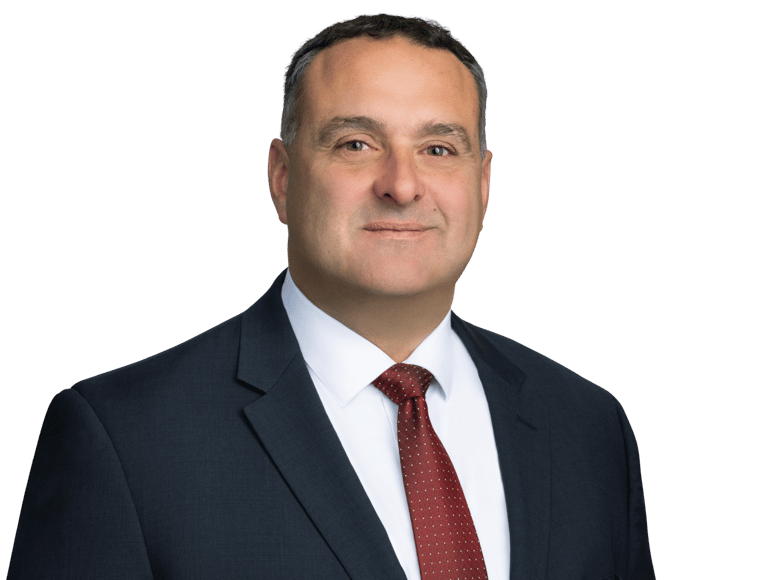
Will is a member of the Professional Liability Department and handles matters on behalf of both insured and self-insured clients. He concentrates his practice in areas involving special education due process, civil rights, employment matters and claims involving the Political Subdivision Tort Claims Act. Will represents both government and private employers in state and federal court in ADEA, ADA, Title VII, FMLA and PA Veterans Preference Act claims. He also handles general liability matters involving automobile accidents, premises liability claims and special investigations matters, which often involve claims of suspected arson and insurance fraud.
Prior to joining Marshall Dennehey, Will worked for defense firms in Pittsburgh and Philadelphia. He also served as a law clerk to the Honorable Ralph L. DeLuccia, Jr. in the Superior Court of New Jersey, Trial Division, in Passaic County.
Will earned his Bachelor of Arts degree from the University of Miami in environmental planning, an interdisciplinary degree with an emphasis on science and civil engineering. While at Miami, he was the starting fullback for the Hurricanes and received All Big East Football Academic Honors. He later attended the University of Pittsburgh School of Law, earning his juris doctor in 2004.
Results

Emergency Injunctive Relief Denied in a Data Center Matter
Dismissal Affirmed by the Commonwealth Court of Pennsylvania
We successfully convinced the Commonwealth Court of Pennsylvania to affirm the Court of Common Pleas of Wayne County’s grant of our preliminary objections and dismissal of the plaintiff’s complaint in mandamus. In its complaint in mandamus to the Court of Common Pleas, the plaintiff argued that our client’s letter denying its plan and application for the development of solar panels was insufficient under the Municipalities Planning Code, thus entitling it to a deemed approval of its plan. We had successfully filed preliminary objections to the complaint on the grounds that the Township’s letter, which identified the plan’s defects with specific reference to provisions of the Municipal Planning Code that had not been satisfied, was sufficient under Section 508 of the Municipal Planning Code. This section requires that, when a municipality denies an application for approval of a development plan, “the decision shall specify the defects found in the application and describe the requirements which have not been met and shall, in each case, cite to the provisions of the statute or ordinance relied upon.” 53 P.S. Section 10508(2). The plaintiff appealed the decision, and we attended oral argument before the Commonwealth Court, following which the court affirmed the decision of the lower court on the same grounds.
Thought Leadership
Legal Updates for Special Education Law
Legal Update for Special Education Law – Case Law Update
July 1, 2025
U.S. Supreme Court Clarifies Standard for Disability Discrimination Claims in Education Under Section 504 and ADA A.J.T., by and through her parents, A.T., et al. v. Osseo Area Schools, Independent School District No. 279, et al., 605 U.S. --- , --- S. Ct. ---, 2025 WL 1657415 (June 12, 2025) In a ruling clarifying the rights of students with disabilities, the Supreme Court of the United States unanimously held that schoolchildren bringing claims under the Americans with Disabilities Act (ADA) and Section 504 of the Rehabilitation Act are not required to show “bad faith or gross misjudgment” to recover damages related to educational services. This case alleged that a school district refused to provide supplemental instruction during the early evening to a special education student with a rare form of epilepsy that prevented her from attending school until midday. The District Court concluded that the child was entitled to the instruction and compensatory education. In addressing the parents’ suit for money damages under Section 504 and the ADA, the Eighth Circuit Court of Appeals dismissed that claim because the parents had not established that the school district’s refusal amounted to bad faith or gross misjudgment. The petitioner, A.J.T., a teenager with a rare form of epilepsy that severely limits her physical and cognitive functioning, suffers from seizures that are so frequent in the mornings that she cannot attend school before noon but is alert and able to learn between noon and 6 p.m. For the first few years of her schooling, A.J.T.’s school district accommodated her condition by providing her with afternoon and evening instruction and allowed her to avoid morning activities. In 2015, A.J.T.’s family moved, and her new school district, Osseo Area Public Schools, denied her parents’ request to provide evening instruction in A.J.T.’s IEP. This denial resulted in A.J.T. only receiving 4.25 hours of instruction per day as compared to the standard 6.5 hours of schooling received by nondisabled students in the district. A.J.T.’s parents filed an IDEA complaint with the Minnesota Department of Education, claiming a denial of FAPE. The administrative law judge ruled that the school district had violated the IDEA and ordered the school district to provide compensatory education and evening instruction. Federal courts affirmed the ruling, upholding the award of compensatory education under the IDEA. A.J.T. and her parents then sued the school district in the Federal District Court under the ADA and the Rehabilitation Act, requesting a permanent injunction, reimbursement of certain costs and compensatory damages. The District Court granted summary judgment to the school district. The Eighth Circuit affirmed the judgment, holding that a school district’s failure to provide a reasonable accommodation was not enough to state a prima facie case of discrimination as established by prior case law. In addition, the Eighth Circuit upheld a requirement that a plaintiff prove that school officials’ conduct rose to the level of bad faith or gross misjudgment in order to recover damages under either the ADA or the Rehabilitation Act. Certain other courts of appeal have also applied the same heightened standard as the Eighth Circuit, but not all. In reaching its decision resolving the split, the Supreme Court recognized that, outside of the educational services context, courts only require a “deliberate indifference” standard to obtain compensatory damages under the ADA and the Rehabilitation Act for intentional discrimination. However, the Court noted that the statutory remedial or substantive protections of Title II of the ADA or Section 504 of the Rehabilitation Act suggest that claims based on educational services should be subject to a more demanding standard. The Court further referenced the specific statutory language of the IDEA, which provides that nothing in the IDEA “shall be construed to restrict or limit the rights, procedures, and remedies available under” the ADA, the Rehabilitation Act, or other federal laws protecting disabling children’s rights, noting that a heightened standard of “bad faith or gross misjudgment” is irreconcilable with the unambiguous directive of this section of the IDEA. By imposing a heightened standard, the appeals court limited the ability of disabled schoolchildren to assert their independent rights under the ADA and the Rehabilitation Act, thereby making it more difficult to obtain remedies provided by Congress when it enacted this newer provision of the IDEA. Going forward, claims based on educational services brought pursuant to the ADA and the Rehabilitation Act should be subject to the same standards applied in other disability discrimination contexts. Legal Update for Special Education Law – July 2025 is prepared by Marshall Dennehey to provide information on recent legal developments of interest to our readers. This publication is not intended to provide legal advice for a specific situation or to create an attorney-client relationship. We would be pleased to provide such legal assistance as you require on these and other subjects when called upon. ATTORNEY ADVERTISING pursuant to New York RPC 7.1 Copyright © 2025 Marshall Dennehey, all rights reserved. No part of this publication may be reprinted without the express written permission of our firm. For reprints or inquiries, or if you wish to be removed from this mailing list, contact tamontemuro@mdwcg.com.
Legal Updates for Special Education Law
Legal Update for Special Education Law – Updates from the U.S. Department of Education
February 1, 2025
In Tennessee v. Cardona, 2025 WL 63795, a Kentucky federal judge issued an opinion vacating the new Title IX regulations. In April of 2024, new Title IX regulations expanded the concept of discrimination “on the basis of sex” under Title IX to include “discrimination on the basis of sex stereotypes, sex characteristics, pregnancy or related conditions, sexual orientation, and gender identity.” The new regulations redefined expanded “sexual harassment” to encompass both “sexual harassment and other harassment on the basis of sex.” It also expanded protections for students against sexual harassment. The Kentucky District Court held that the Department of Education exceeded its statutory authority when it expanded the definition of “on the basis of sex” to include “gender identity.” The District Court also found the new regulations violated the First Amendment by requiring the use of names and pronouns associated with a student’s asserted gender and these names and pronouns were vague and overbroad. Additionally, the District Court found the new regulations violated the Spending Clause by conditioning receipt of federal funding on the prohibition of discrimination based upon gender identity. While not binding on other district courts, we will continue to monitor this case as it proceeds on appeal. Legal Update for Special Education Law – February 2025 is prepared by Marshall Dennehey to provide information on recent legal developments of interest to our readers. This publication is not intended to provide legal advice for a specific situation or to create an attorney-client relationship. We would be pleased to provide such legal assistance as you require on these and other subjects when called upon. ATTORNEY ADVERTISING pursuant to New York RPC 7.1 Copyright © 2025 Marshall Dennehey, all rights reserved. No part of this publication may be reprinted without the express written permission of our firm. For reprints or inquiries, or if you wish to be removed from this mailing list, contact tamontemuro@mdwcg.com.
News
106 Marshall Dennehey Attorneys Recognized in the 2027 Editions of The Best Lawyers in America® and the Best Lawyers: Ones to Watch® in America
August 20, 2026
98 Marshall Dennehey Attorneys Recognized in the 2027 Editions of The Best Lawyers in America® and the Best Lawyers: Ones to Watch® in America
August 20, 2025

