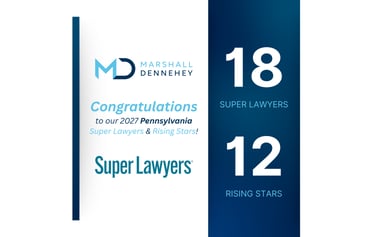
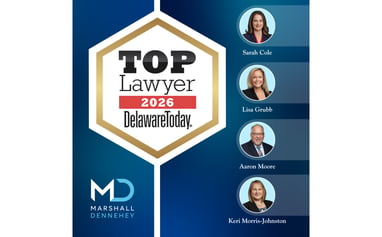
.

Defense Digest

On the Pulse…Other Notable Achievements

Defense Digest, Vol. 32, No. 3, September 2026

September 30, 2026

THOUGHT LEADERSHIP

Dana Gittleman (Philadelphia) authored the article, “The Importance of Memorializing Settlement Terms," appearing in the PLUS Blog on April 27, 2026. In the article, Dana discusses a new Pennsylvania Superior Court decision that shows how overlooked or undocumented terms can unravel even routine negotiations, especially when parties have differing expectations or one side is unrepresented.

Jordan Mazzoni (Scranton) authored the article, “The Best Defense is Already in the File Documentation in Civil Rights Litigation," published on PLUS Blog on July 27. The article discusses how documentation is an essential defense to public entity & civil rights litigation.

SPEAKING ENGAGEMENTS

​John L. Slimm (Mount Laurel) moderated and presented on claims and defenses involving lawsuits against the plaintiffs' bar at the 2026 Legal Malpractice Update for the New Jersey Institute for Continuing Legal Education. The seminar offered practical strategies to prevent ethical grievances and legal malpractice, along with sharing expert insights on issues from electronic payments and fee splitting to the impact of AI.

​Heather Carbone (Jacksonville) was a panelist for a webinar hosted by The Workers’ Compensation Claims Professionals (WCCP) Association. As part of the “Meet the Experts” Series, the speakers addressed “Afterthoughts that Undermine a Successful Mediation,” highlighting the pitfalls and challenges of underprepared or unprepared mediation participants.

A. Judd Woytek (King of Prussia) joined a panel at the CLM Alliance (Claims and Litigation Management Alliance) Work Comp Conference in Nashville to present "We See You How Employee Engagement Enhances Work Comp Outcomes." Judd and his fellow panelists discussed the positive impact of employee engagement on claim outcomes, return-to-work timelines, and overall claim costs.

​Joe Lesinski (Pittsburgh), Jim Cole (Philadelphia), Matt Flanagan (New York), and Adam Fogarty (Mt. Laurel) presented several continuing education (CE) programs to claims professionals for our client. The team hosted two one-hour panel discussions on “The Art of Mediation", attended by more than 80 claims professionals. In the afternoon Adam Fogarty and Joe Lesinski presented a CE program on “The Fundamentals of Premises Liability in New Jersey and Pennsylvania" while Matt Flanagan and Jim Cole led a presentation on “Trends in Claims" against attorneys and the evolving issues impacting the legal profession.

​Julia Klubenspies (Roseland) was invited to speak to the 2026 class of incoming resident physicians at The Valley Hospital on ways to reduce the risk of being named in litigation.

​Jon Cross (Philadelphia) and Sara Mazzolla (Roseland) spoke at the 5th Annual ideal3 Summit in Minneapolis on “Information Gathering for New Claims and Prevention of Spoliation." The program explored the ethical and legal obligations surrounding the collection and preservation of evidence once a claim is anticipated.

Sara Mazzolla (Roseland) presented at the annual Roller Skating Association Conference on "The Pros and Cons of Waivers in Your Rink," sharing insights on the use of liability waivers as a risk management tool for skating rink operators and discussing considerations that may impact their effectiveness.

James Hanratty and Erica Cagan (both of Jacksonville) presented at the Florida Defense Lawyers Association's Florida Liability Claims Conference. Their session, "Supporting the Next Generation: Connecting with Associates," explored communication best practices from the perspectives of both a senior shareholder and a newer associate.

Lindsay McCormick (Tampa) was a panelist at the West Coast Casualty Construction Defect Seminar in Anaheim. Lindsay's session, "It May Not Be All Wrapped Up with Your OCIP/CCIP," examined key considerations surrounding Owner-Controlled and Contractor-Controlled Insurance Programs. Attendees gained insight into risk management strategies and coverage issues impacting construction defect litigation and related claims.

Gary M. Samms (King of Prussia and Philadelphia) was a featured speaker at the American Legal Connections (ALC) 2026 Seventh Annual Healthcare Symposium in Atlanta, Georgia. Gary joined a panel discussion titled “The Modern Plaintiff Machine.” Designed for medical professional liability defense attorneys, claims professionals, underwriters, carriers, and health system risk executives, the symposium addressed some of the most pressing challenges in today’s healthcare litigation landscape.

Josh Byrne (Philadelphia) was a featured panelist at the Philadelphia Bar Association CLE program, "Ethics & Legal Malpractice Avoidance." The program provided a comprehensive overview of strategies for avoiding legal malpractice, including ethical considerations, client communication best practices, and common pitfalls that can lead to malpractice claims.

Casey Coyle (Harrisburg and Philadelphia) presented "Recent Civil Law Decisions and Civil Rule Updates" at the Pennsylvania Conference of State Trial Judges in Hershey. The session provided attendees with insights into recent developments in Pennsylvania civil law and examined updates to the rules governing civil practice, helping practitioners stay informed on significant changes affecting litigation and courtroom procedure.

PUBLISHED WORKS

Josh J.T. Byrne (Philadelphia) and Alesia S. Sulock (Philadelphia) authored the article, “Whither the Private Reprimand," published in The Legal Intelligencer on July 22, 2026. In the article, Josh and Alesia examine the notable absence of private reprimands issued by the Pennsylvania disciplinary authorities in 2025, discussing the important role that informal admonitions and private reprimands have historically played in addressing attorney misconduct and considering what this trend may signal for the future of attorney discipline in Pennsylvania.

​Blake Hood (Jacksonville) authored the article, “Fla. Workers' Comp Physician Dispensing Ruling Could Produce New Legislative Fight," published on August 5 in Insurance Journal . The article discusses Florida's First District Court of Appeal's decision in Publix Super Markets, Inc., et al. v. Department of Financial Services, et al., holding that while injured workers have an absolute right to choose their own pharmacy or pharmacist, that right does not extend to physicians who dispense medications directly to their patients.

Kimberly Kanoff Berman and Seth Altman (Fort Lauderdale) authored the article, “A Unified, Single Claim for Damages Requires Apportionment in a Joint Proposal: What the Decision in 'Trace Elements' Means for Property Insurance Claims,” published on August 6 in the Daily Business Review. The article analyzes the Florida Supreme Court's decision in Trace Elements v. MacKensen and examines its implications for property insurance claims in Florida, particularly regarding the apportionment of damages in joint settlement proposals.

RECOGNITION

Tiere Phillips (Pittsburgh) was elected to the Allegheny County Bar Association’s Judicial Committee for a Diverse Seat. As one of only three attorneys elected to this role, Tiere will help ensure fairness and equality in representation during judicial evaluations and recommendations for election and reelection in Allegheny County.

Steven A. Johnston (Roseland) received the “Pride of Essex County Award” at the 2026 Essex County LGBTQ+ Pride Celebration on June 17 at the Essex County Martin Luther King, Jr. Justice Building in Newark. Hosted in conjunction with the Essex County Office of LGBTQ+ Affairs and the Essex County Lesbian, Gay, Bisexual, Transgender and Questioning Advisory Board, Steven was recognized for his service to the community and his support of equality for members of the LGBTQ+ community.

Jason Banonis (King of Prussia) was honored with the Pennsylvania Defense Institute’s 2026 Attorney of the Year Award at the organization’s annual conference.  A longtime leader and contributor to the organization, Jason was recognized for his dedication and service.

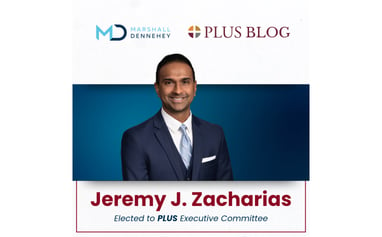
Firm Highlights

Thought Leadership

Pennsylvania HB 2307: Special Education Contingency Fund Reform

Pennsylvania school districts and school law attorneys are aware of the increasing cost of special education services. In an effort to address this growing squeeze on school district budgets, a bi-partisan group of Pennsylvania House Representatives introduced House Bill 2307. The bill is a special education funding measure intended to reform Pennsylvania's reimbursement system for extraordinarily high-cost special education students. As written, HB 2307 would increase funding dedicated to Pennsylvania's Extraordinary Special Education Program Expenses reimbursement program. Beginning with the 2026-27 school year, the bill would increase the set-aside from 1% to 2% of the annual Special Education appropriation. The increased funding is aimed at assisting school districts and charter schools address the costs of serving students whose needs generate exceptionally high special education expenses. The proposal specifically targets situations involving students whose annual special education costs exceed the state's highest cost threshold and represent a significant burden on a district's special education budget. HB 2307 includes key eligibility requirements such as: 1) extraordinary special education expenses approved by the Secretary of Education; 2) student costs exceeding the state's highest Category 3A threshold; 3) costs representing at least 1% of the district's total special education expenditures; 4) student enrolled in the district for no more than two consecutive school years for the proposed reimbursement category; and 5) application and documentation requirements for districts and charter schools. HB 2307 successfully passed the Pennsylvania House of Representatives on June 16, 2026, by a unanimous vote of 202-0. It was subsequently transmitted to the Senate and was referred to the Senate Education Committee on June 22, 2026, where it currently remains pending. While there is currently no scheduled Senate committee or floor vote publicly listed for HB 2307, the next step would be for the Senate Education Committee to consider the bill and determine whether to report it to the full Senate for consideration. If approved by the committee, the bill would proceed through the Senate's three-consideration process before a final vote. Because the General Assembly is still within the 2025-26 legislative session, the bill remains eligible for action during the remainder of the session. However, absent committee action, it will not become law before the start of the 2026-27 school year. If enacted, HB 2307 could have several important effects: Greater financial stability for districts serving students with exceptionally expensive educational and related-service needs. Increased reimbursement opportunities for high-cost placements, specialized transportation, intensive behavioral supports, and other extraordinary services. Reduced pressure on local special education budgets, particularly in smaller districts where one or two high-cost students can significantly affect annual expenditures. Potential reduction in litigation and placement disputes driven by financial constraints, although the bill does not alter substantive IDEA rights or district obligations to provide FAPE.

Thought Leadership

U.S. Department of Education Reports to Congress on Disciplinary Removals of Children with Disabilities

In June 2026, the United States Department of Education, through the Office of Special Education and Rehabilitative Services (OSERS), published its “47th Annual Report to Congress on the Implementation of the Individuals with Disabilities Education Act, 2025.” In its report, OSERS provided detailed data and information on the discipline and removal of students from their educational placements, specifically for the school year 2022-2023. To obtain this data, all 50 states, the District of Columbia, the Bureau of Indian Education, Puerto Rico, and other U.S. territories, were asked to report on pre-school and school-aged students, ages 3-21, who were served under IDEA, Part B, and removed from their educational placements for disciplinary reasons during the school year in question. Not all jurisdictions had data available; OSERS’ reporting to Congress was based on the information supplied by the jurisdictions that responded.  First, OSERS examined the total number of served students who were removed to an interim alternative educational setting. From the reporting data, this number totaled 7,204,199 students. Of this total, 11,364 students were removed unilaterally by school personnel for drugs, weapons, or serious bodily injury to themselves or others. These figures reflected the unilateral removal of served students at a rate of 16 per 10,000 students. Of this total, 545 students were removed by a due process hearing officer for likely serious bodily injury, a rate of one per 10,000 students.  Next, OSERS examined data for students who were suspended (in school and out of school) or expelled for more than 10 school days. The total number of students in this category was 7,623,095. Of this total, 65,104 students received out of school suspensions or expulsions, a rate of 85 per 10,000 students. A total of 21,878 students received in school suspensions, a rate of 29 students per 10,000.  OSERS evaluated this particular data and drilled down further, examining the rate of interim removal, expulsion, and suspension per 10,000 students based specifically upon each IDEA disability category. Perhaps not surprisingly, children primarily identified with emotional disturbance were the most affected.    For every 10,000 students who were identified under the category of emotional disturbance, 65 were unilaterally removed to an interim alternative educational setting by school personnel (not the IEP team) for drugs, weapons, or serious bodily injury, and four out of every 10,000 students were removed following a hearing officer finding that there was a substantial likelihood of serious bodily injury to the student or others. By contrast, the ratio of students under each of the other disability categories who were unilaterally removed by school personnel was 25 or less per 10,000 students in each category. No more than two students per 10,000 in each of the other categories were removed by a hearing officer. Other Health Impairment was the second leading category.  For every 10,000 students identified primarily with emotional disturbance, 411 students received out of school suspensions or expulsions of more than 10 days, and 107 of every 10,000 students in this category received in-school suspensions. In comparison, the ratio of students under each of the other disability categories who received out of school suspensions or expulsions of more than 10 days was no more than 172 per 10,000. Students identified in all other disability categories received in-school suspensions at a rate of no more than 57 per 10,000 students. Again, Other Health Impairment was the second leading category. OSERS then examined discipline data with a state-by-state comparison, once more at a ratio of 10,000 students served. The overall data of students who were unilaterally removed to an interim alternative educational setting by school personnel for drugs, weapons, or serious bodily injury showed that removal occurred most frequently in Texas (92 per 10,000 students), Montana (62 per 10,000 students), and Tennessee (42 per 10,000 students). The mean was 12.1.  In Pennsylvania, the rate of removal was 12 out of every 10,000 students, just below the mean.  OSERS also considered, on a state-by-state basis, the number of students who received out-of-school suspensions or expulsions of greater than 10 days. The most significant rate of discipline here occurred in North Carolina (256 per 10,000 students), Missouri (250 per 10,000 students), and South Carolina (250 per 10,000 students).  The mean was 85.83. In Pennsylvania, the rate of discipline was 57 per 10,000 students, well below the mean.  Finally, OSERS evaluated, on a state-by-state comparison, the ratio of students per 10,000 who were identified under the category of emotional disturbance and who received out of school suspensions or expulsions for greater than 10 days. The suspension or expulsion of students with emotional disturbance occurred most often in North Carolina (1,723 per 10,000 students), Missouri (1,127 per 10,000 students), and South Carolina (1,098 per 10,000). The mean was 485.81. In Pennsylvania, the suspension or expulsion of students identified with emotional disturbance occurred at a rate of 260 per 10,000, again well below the mean. Although OSERS did not draw any specific conclusions about the disciplinary data it collected, it is nonetheless evident that students primarily identified with emotional disturbance were removed from their educational placements for disciplinary reasons at a rate much higher than students in any other disability category. Relatively speaking, however, Pennsylvania acquitted itself well in the state-by-state disciplinary data collection.