
.

Assistant Director, Casualty Department

Chair, Personal Injury Protection (PIP) Litigation Practice

Co-Chair, Fraud/Special Investigation Practice

Shareholder

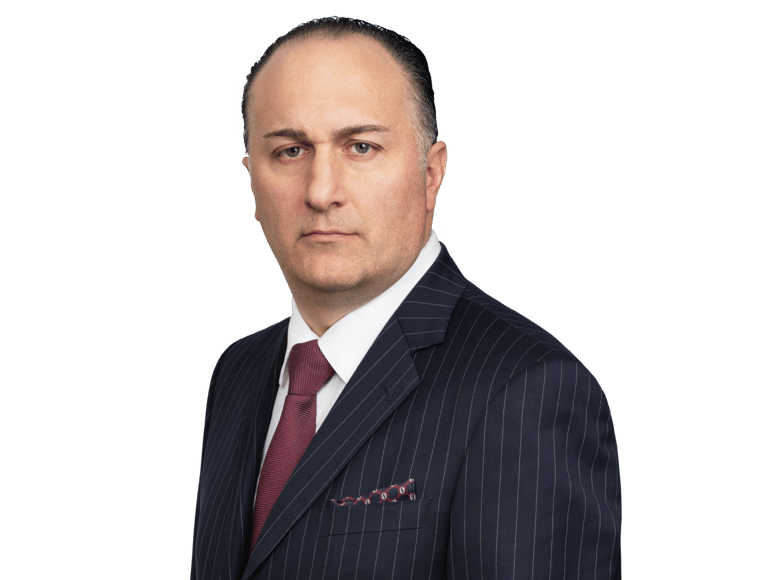
Portrait of Jeffrey G. Rapattoni

Marshall Dennehey Again Earns Recognition in Distinguished Chambers USA

June 4, 2026

Marshall Dennehey Again Earns Recognition in Distinguished Chambers USA

Marshall Dennehey is proud to announce that the firm’s Pennsylvania Product Liability Practice and leaders of the firm’s Pennsylvania and Florida appellate practices have received top recognition in the 2026 edition of Chambers USA. Chambers rankings are among the most respected legal rankings in the industry and are compiled through the assessment of the firm’s work and opinions from external market sources, with an emphasis on client feedback.

Pennsylvania Product Liability Practice
The firm’s Pennsylvania product liability practice was recognized for the second time, earning a Band 2 ranking in the statewide category. Attorneys within this department defend cases alleging defects in the manufacture, design, failure to warn and breach of warranty of every imaginable product variety, including mass tort and asbestos litigation. Representing foreign and domestic manufacturers, they also act as national coordinating counsel and regional counsel in a number of state and federal courts.

“Their mastery of the record and ability to translate complex issues into clear, persuasive arguments consistently sets them apart,” one client commented about the department.

“Marshall Dennehey provides a smart, effective defense performed in good faith, always keeping in mind the best interests of the client,” said another.

Vlada Tasich, Co-Chair, Pennsylvania Product Liability Practice 
Additionally, Vlada Tasich, who Co-Chairs the firm’s product liability practice group with Bradley D. Remick, was individually ranked for the second time in the Pennsylvania product liability category Liability (PA), for his work defending clients in complex product liability litigation. His experience encompasses all aspects of motor vehicle design and manufacture, including product litigation involving Advanced Driver Assistance Systems (ADAS). He additionally defends cases involving consumer goods, appliances and electronics, residential and industrial fires, durable medical equipment, industrial equipment, exercise equipment and more.

Speaking of Vlada’s approach, clients commented: “Vlada provides exceptional client service demonstrating consistent responsiveness, clear communication and a strong commitment to meeting the client’s business needs.”

“Vlada is a brilliant litigator who consistently provides numerous strategic options with risk and cost analysis,” said another.

John J. Hare, Chair, Appellate Advocacy & Post-Trial Practice Group
John J. Hare, Chair of the firm’s Appellate Advocacy & Post-Trial Practice Group and a member of the firm’s Executive Committee, has been ranked for the second time in Band 1 for Pennsylvania Appellate Litigation. Hare was recognized for his extensive appellate experience and strategic insight in complex litigation matters. “John Hare is highly responsive and extremely sophisticated. He is excellent all around,” said a client.

Kimberly K. Berman, Shareholder, Florida Lead, Appellate Law
In Florida, Kimberly K. Berman, shareholder in the firm’s Appellate Advocacy and Post-Trial Practice, was individually ranked for the first time in the Florida Appellate Litigation category for her advocacy on behalf of the firm’s Florida clients. Berman, who is Board-certified in Appellate Practice by The Florida Bar, is the firm’s lead Florida appellate attorney, serving as a critical resource for the firm's clients and attorneys in the state who rely on her to handle their most significant pre-trial motions, post-trial motions, and appeals.

“Kimberly Berman is deeply committed to her work and to achieving excellent results for her clients,” said a client. Another remarked, “Kimberly Berman is just an excellent lawyer. She’s very smart, on top of the appellate issues, and very in tune with the law and the facts.”

Another client commented, “Kimberly is a fantastic lawyer. She is extremely well spoken and an even better writer.”

“We’re proud to have John, Vlada, and now Kimberly, recognized for their individual excellence, and to have our product liability practice honored for their fantastic work. This continued recognition reflects the depth of our talent across offices and our ongoing commitment to delivering exceptional results for our clients,” said G. Mark Thompson, Marshall Dennehey’s President & CEO.

For more information, please visit: https://chambers.com/law-firm/marshall-dennehey-pc-usa-5:2843.

Firm Highlights

Thought Leadership

Supreme Court of Pennsylvania Holds That Public Policy Does Not Prevent Insurance Coverage for Sex Trafficking Claims

On July 21, 2026, the Supreme Court of Pennsylvania issued an opinion emphasizing the limited circumstances in which courts may invoke public policy to bar insurance coverage, holding in Samsung Fire & Marine Insurance Co., Ltd. (U.S. Branch) v. RI Settlement Trust that Pennsylvania public policy does not preclude coverage for claims alleging that insureds enabled or profited from human sex trafficking. The decision rejects a line of federal district court decisions predicting otherwise and reinforces that Pennsylvania courts will invoke the public policy doctrine only in the clearest of circumstances. RI Settlement is particularly significant because it arose on certified questions from the United States Court of Appeals for the Third Circuit, giving the Supreme Court the opportunity to resolve an issue on which federal courts had predicted Pennsylvania law differently. RI Settlement arose out of four separate civil complaints in which the underlying plaintiffs alleged that, as minors, they were the victims of human sex trafficking at various hotels in Philadelphia. The plaintiffs claimed that the hotel owners were negligent in failing to stop the sex trafficking from happening at their hotels. After the filing of the lawsuits, the hotel owners sought coverage under their Commercial General Liability policies. The insurers initially defended the hotels under Reservation of Rights letters, though the carriers later filed Declaratory Judgment actions seeking declarations that they did not owe a duty to defend or indemnify. In short, the insurers argued in the alternative that they did not owe any obligation to provide coverage based upon Pennsylvania public policy (because the claims violated the Human Trafficking Law – 18 Pa.C.S. § 3011) and the terms and conditions of the policy. On motions for judgment on the pleadings, the District Court found for the insurers on the basis of public policy: There is no duty to defend or indemnify against actions arising out of an insured's criminal conduct related to the sex trafficking of minors. The Court appreciates that it may make public policy the basis of a judicial decision only in “the clearest of cases.” See Minnesota Fire & Cas. Co. v. Greenfield, 589 A.2d 854, 868 (Pa. 2004) (quoting Hall v. Amica Mut. Ins. Co., 648 A.2d 755, 760 (Pa. 1994)). Yet, the Court strains to imagine a clearer case than the one presented here in which the facts alleged indicate that Policyholders engaged in criminal conduct in violation of Pennsylvania's Human Trafficking Law. The hotel owners appealed the matter to the Third Circuit, which petitioned the Supreme Court of Pennsylvania to grant review of two certified questions of law: (1) whether Pennsylvania law had an “overriding public policy” against sex trafficking, such that an insurer’s duty to defend and/or indemnify is abrogated when an insured is alleged to have enabled or profited from such trafficking; and (2) if yes, is that duty abrogated whenever the insured’s alleged conduct would constitute a violation of the Pennsylvania Human Trafficking statute. Importantly, the certified questions did not ask the Supreme Court to determine whether the policies afforded coverage under their terms. Rather, the court was asked only whether Pennsylvania public policy independently barred coverage. As a result, the court assumed for purposes of answering the certified questions that the insurers otherwise owed a duty to defend and addressed only the public policy issue, leaving all policy-based coverage defenses for further proceedings. Because the court concluded that the answer to the first certified question was “no”, it did not reach the second issue. In reaching its determination that Pennsylvania public policy does not prohibit insurance coverage for sex trafficking claims, the court limited the impact of its decision in Minnesota Fire & Cas. Co. v. Greenfield, 855 A. 2d 854, 855 (Pa. 2004), which the RI Settlement opinion emphasized as having been an “Opinion Announcing Judgment of the Court” – or a plurality opinion. In Greenfield, the insured homeowner was sued by the estate of his houseguest who overdosed from heroin that he sold to her. The matter wound its way to the Supreme Court, which determined that the insurer did not owe a duty to defend or indemnify based upon Pennsylvania public policy, which criminalized the sale and use of heroin as a Schedule I narcotic. In RI Settlement, the court “decline[d] the invitation” to extend the rationale of the three-justice plurality in Greenfield beyond cases involving Schedule I controlled substances. In so holding, the justices in RI Settlement refused to “divine an overriding public policy pronouncement by the General Assembly by virtue of its enactment of the Human Trafficking Law.” The opinion further states that it is not “within the purview of this Court to rank the magnitude of the public policy underlying the various crimes defined in the Crimes Code. It is sufficient for the work of the courts to know that the General Assembly has identified conduct it deems harmful and dangerous to the maintenance of an orderly society and criminalized it.” While the court declined to declare that Pennsylvania public policy prohibits coverage for sex trafficking claims, the opinion in RI Settlement expressly states that insurers are free to include appropriate exclusionary language for such causes of actions in their policies if they desire to do so. It will certainly be interesting to see whether the insurance industry accepts the court’s invitation, or perhaps whether the Pennsylvania legislature steps in to clarify that sex trafficking claims are indeed of the type or magnitude that they should not be covered by insurance. In any event, we will, of course, continue to monitor this and other insurance coverage issues that arise before courts in Pennsylvania, New Jersey and throughout our firm’s geographic footprint and around the country.

Thought Leadership

New Jersey Appellate Division Affirms Exclusion of Legal Malpractice Expert as Impermissible Net Opinion

Jack Slimm and Jeremy Zacharias obtained a favorable decision on behalf of their client in a case centering on the admissibility of expert testimony in legal malpractice actions. In Martin v. Loury, the New Jersey Appellate Division affirmed the exclusion of a plaintiff's legal malpractice expert, holding that the expert's opinions on causation and damages were too speculative to support the malpractice claim. The legal malpractice action arose from an underlying employment dispute involving claims for damages stemming from the breach of an employment agreement. The plaintiff alleged that defense counsel committed malpractice during a second trial by failing to recall the plaintiff as a rebuttal witness after the employer's CEO testified. According to the plaintiff's expert, additional rebuttal testimony would have bolstered the plaintiff's damages claims and led to a more favorable result. Both the trial court and the Appellate Division rejected that theory. The courts found that the expert could not explain how the proposed rebuttal testimony would have altered the outcome of the underlying case or resulted in any additional recoverable damages. Notably, the trial judge in the underlying employment matter had already rejected the CEO's testimony as not credible and had accepted the damages analysis advanced by the plaintiff. The court had also determined that the amount of damages was not genuinely disputed. As a result, the expert's opinion that additional rebuttal testimony would have produced a better outcome was unsupported by the record and based on speculation rather than evidence. The Appellate Division agreed that neither the plaintiff nor the expert could identify any actual damages attributable to the alleged malpractice or demonstrate the required element of proximate causation. The court further upheld the trial court's application of New Jersey's net opinion doctrine, finding that the expert failed to provide the necessary "why and wherefore" supporting his conclusion that the attorney's conduct caused a compensable loss. Because the opinions rested on unquantified possibilities rather than demonstrable facts, they were inadmissible. Key Takeaway for Legal Malpractice Defendants For attorneys and firms defending legal malpractice claims, Martin v. Loury underscores the importance of closely scrutinizing an opponent's expert report on the critical elements of proximate causation and damages. The decision demonstrates that a malpractice claim cannot survive where an expert merely speculates that different litigation tactics might have produced a better result. Instead, the plaintiff must present admissible expert testimony grounded in the record that explains how the alleged attorney error probably changed the outcome of the underlying matter and resulted in measurable damages.

Thought Leadership

Court Allows Recklessness and Punitive Damages Claims to Proceed After Work‑Zone Crash

In a case where a defendant filed preliminary objections against allegations of recklessness and punitive damages, the Susquehanna County Court of Common Pleas denied these preliminary objections. This case stems from a motor vehicle accident, where the defendants car struck the plaintiffs car after the defendant allegedly fell asleep at the wheel, going at a high rate of speed, through a construction work zone. Defendant first objected to the general allegations throughout the plaintiff’s complaint pertaining to “reckless” conduct contending that there were insufficient factual allegations to support the claim of reckless conduct. Defendant next objected to the plaintiffs claim for punitive damages, as punitive damages may only be assessed against a motorist for falling asleep while driving if there is further evidence to prove driver was aware of their drowsiness and risk of falling asleep. Lastly, defendant objected to plaintiffs complaint, claiming it lacked specificity. The court here found that the plaintiff had included in the complaint specific allegations related to the defendant’s alleged recklessness, including allegations regarding speeding in a work zone, almost striking the flagger, falling asleep at the wheel, and striking the plaintiffs vehicle which was stopped. Additionally, the court noted that falling asleep does not come without warning. The court found that these allegations were sufficient to support an allegation of recklessness at the pleadings stage.

Result

No-Cause Jury Verdict Secured in Wrongful Death Trial

We successfully obtained a no-cause jury verdict in a 13-day wrongful death trial. The decedent, a 59-year-old man, was admitted to the emergency room on February 15, 2019, with complaints of abdominal pain, decreased appetite, and constipation, despite the use of laxatives. The patient did not complain of any nausea, vomiting, or diarrhea. He had a significant medical history including diabetes, hypertension, prior coronary artery stenting, morbid obesity (with past gastric bypass surgery), longstanding ventral hernia, and back pain. A CT scan revealed multiple hernias and a potential closed-loop bowel obstruction, leading to a surgery consultation. Our client, an emergency general surgeon, interpreted that the patient did not have a closed loop or any significant obstruction and recommended non-surgical management. The patient was approved to have clear liquids, and had a vomiting incident shortly after, but our client was not notified. The patient was returned to NPO status, and after improving overnight, he was returned to “clears” and additional medical and renal consults were ordered. Our client did not receive any communications from the residents/nurses of any changes in the patient’s condition. On February 18, 2019, two rapid responses were called due to increased heart rate and vomiting. It is believed that the vomiting resulted in aspiration, causing sepsis, ultimately leading to the patient’s death. During the trial, the plaintiff’s sole medical expert highlighted imaging on the wrong hernia, which called into question all of his opinions in the case. We made key objections related to the expert testimony, limiting what the allegations were, and preventing new allegations from being made. After approximately two and a half hours of deliberating, the jury returned a no-cause verdict.

