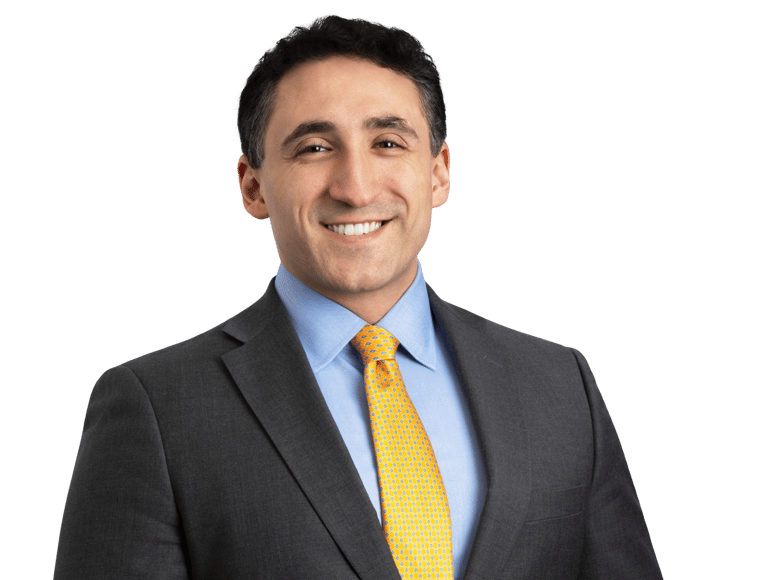
As a member of the Casualty Department, Charles serves as an associate attorney defending high-exposure cases involving commercial and personal automobile liability, general liability, premises liability, and products liability.
Prior to joining the firm, Charles managed a diverse national and international caseload focused on product liability subrogation and personal injury claims, representing insurance carriers and their insureds—including foreign manufacturers, distributors, and retailers—in both federal and state courts across the United States, Canada, and Europe. His work encompassed all phases of litigation and pre-litigation, including coordinating expert investigations across multiple disciplines, managing local counsel, and providing strategic legal and indemnification analysis. He was also responsible for developing defense and resolution strategies, preparing client reports, negotiating multi-case retention agreements with experts and consultants, and resolving matters through complex settlements.
Earlier in his career, Charles litigated complex commercial and contract disputes and also managed a high volume of business immigration matters, including both immigrant and non-immigrant visa cases.
Charles received his juris doctor from the Maurice A. Deane School of Law at Hofstra University, where he was named to the Dean’s List and served on the Hofstra Law Review. He earned his undergraduate degree in Political Science, magna cum laude, from Drew University. He is admitted to practice in the state of New York.
Thought Leadership
Case Law Alerts
Supreme Court Addresses Conflicts Between Federal and State Law Regarding Negligent Hiring Claims Against Freight Brokers
April 1, 2026
This case arises from a collision on an Illinois highway between a motorist and a tractor-trailer operated by a driver employed by the defendant, Caribe. The plaintiff brought suit, alleging a variety of claims, including negligent hiring and vicarious liability. However, rather than limit the application of negligent hiring to Caribe, the plaintiff attempted to extend this argument to the defendant freight broker, C.H. Robinson Worldwide by arguing that Robinson had negligently selected Caribe as the freight carrier. Robinson moved to dismiss the negligent hiring claims pursuant to Section 14510(c)(1) of the Federal Aviation Administration Authorization Act of 1994, as the language of that statute prohibits state suits against brokers “relat[ing] to a price, route, or service” and “with respect to the transportation of property”. The District Court ruled in favor of the plaintiff, stating that the safety exception of Section 14501(c)(2)(A) permitted such claims, as it preserves “safety regulatory authority of a State with respect to motor vehicles.” On appeal, the U.S. Court of Appeals for the Seventh Circuit ruled in favor of defendant Robinson, ruling that “the FAAAA preempts state law claims that a freight broker negligently hiring a motor carrier.” Given that a conflict presently exists between rulings on this issue from the U.S. Court of Appeals for the Sixth and Ninth Circuits and the U.S. Court of Appeals for the Seventh and Eleventh Circuits, the Supreme Court granted certiorari on October 3, 2025. The Supreme Court heard oral argument on March 6, 2026, and has yet to issue a decision.
Case Law Alerts
Texas Supreme Court to Determine if a Shipper Owes a Duty to a Third-Party Motorist Injured by a Freight Carrier
April 1, 2026
This case arises from an accident in which a driver hired by a freight carrier ran a red light and fatally struck a motorcyclist. The decedent’s parents sued both the freight carrier and the shipper, Home Depot, alleging negligence, negligence per se, and gross negligence. The carrier accepted vicarious liability given the driver was acting within the scope of his employment. Home Depot moved to dismiss the plaintiffs’ claims as baseless, given they did not owe a duty to a third-party motorist for the actions of a freight carrier’s drivers. The Texas trial court denied the motion, and the court of appeals denied Home Depot’s mandamus petition. However, the Texas Supreme Court granted Home Depot’s petition for a writ of mandamus. Home Depot again argued that it did not have a duty to a third-party motorist in the event of negligent actions by the freight carrier’s driver. Home Depot further argued that Texas does not recognize negligent hiring as a valid cause of action for an independent contractor, claiming the plaintiffs failed to adequately allege that Home Depot’s hiring of the freight carrier proximately caused the accident. Home Depot argued that the court should adopt and apply a rule that would absolve an employer of liability for a derivative claim if the employer accepts vicarious liability. The Texas Supreme Court held oral arguments on March 4, 2026, and has yet to issue a decision.