.

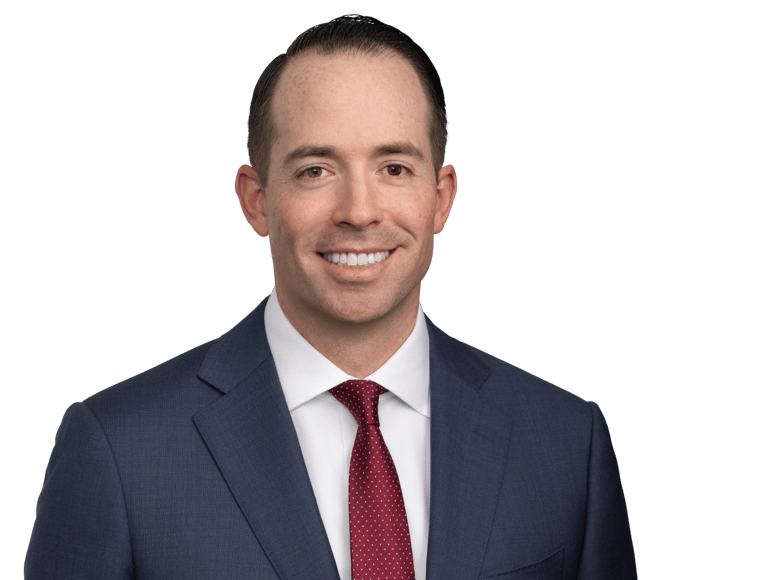
Robert A. Morton IV

Portrait of Robert A. Morton IV

Rob joined Marshall Dennehey as a member of the Casualty Department. He concentrates his practice in the areas of construction accident and construction defect litigation, premises liability, product liability, automobile and commercial motor carrier liability, and veterinary malpractice and licensure defense. Additionally, Rob has handled mold claims that were contained within larger construction-defect related claims. 

Rob received his B.A. from Saint Joseph's University, where he was a member of the Dean's List, and graduated with a degree in Criminal Justice. Following graduation from college, he attended Widener University School of Law. While at Widener, Rob was actively involved in the Veteran's Law Clinic and worked in the Complex Litigation Center of the First Judicial District of Pennsylvania.

Prior to joining the firm, Rob worked for a regional defense firm. Rob is admitted to practice in Pennsylvania, New Jersey, and before the United States District Court for the Eastern District of Pennsylvania and U.S. Tax Court.

    • Widener University Delaware Law School (J.D., 2014)
    • Saint Joseph's University (B.S., 2011)
    • Pennsylvania, 2014
    • New Jersey, 2015
    • U.S. District Court Eastern District of Pennsylvania, 2018
    • U.S. Tax Court
    • American Bar Association
    • Pennsylvania Bar Association

Results

Successful Trial Result Achieved in a Philadelphia Premises Liability Matter

We received a successful trial result in a premises liability matter in Philadelphia Court of Common Pleas. The plaintiff’s expert projected future surgeries and extensive life-long medical care costs of $1.25 million. Much of our defense centered on damages and demonstrating that the projected future medical care was not supported by the actual medical treatment provided. Additionally, video of the incident was used to demonstrate that the plaintiff had actual/constructive knowledge of spilled water in the premises but proceeded to walk in that area anyway. Forty percent comparative negligence was assigned to the plaintiff, and despite the plaintiff’s introduction of the medical cost projection described above, only $50,000 in future medical care was awarded by the jury. The total award, after a molded verdict, was $118,800, which our client viewed as a victory in this venue. 

Defense Verdict Secured in a Seven-Day Defamation Jury Trial

We won a defense verdict in a seven-day jury trial in the Philadelphia Common Pleas court. The case involved a defamation claim based on an article published in a local community newspaper. The defendants were the local Community Council and the two individuals who wrote and published the article. According to the plaintiff, the article named him and implied he wrote an anonymous letter that threatened legal action, which was seen as contrary to the community’s interest. The demand had been $1.75 million, and the plaintiff was offered $50,000. After deliberating, the jury returned a verdict for the defendants.

Thought Leadership

Defense Digest

Shoddy Home-Improvement Contracting? Grounds for Recovering Treble Damages and Attorneys Fees under Pennsylvania Home Improvement Consumer Protection Act and Pennsylvania Unfair Trade Practices and Consumer Protection Law

June 1, 2023

Key Points: Trial courts are determined to protect the individual consumer from bad-acting contractors, including with the award of treble damages and attorneys fees under the HICPA and URPCPL. Home improvement contractors must ensure that they are familiar with the provisions of both HICPA and the UTPCPL and that they perform their home improvement renovations in a workmanlike manner. As home improvement projects have sky-rocketed in Pennsylvania in the COVID and post-COVID era, thanks to the continued “work from home” model or some form thereof, so have claims against home improvement contractors under both the Pennsylvania Home Improvement Consumer Protection Act, otherwise known as HICPA, and the Pennsylvania Unfair Trade Practices and Consumer Protection Law (UTPCPL). HICPA arose, at least in part, out of the need to protect consumers from unscrupulous home improvement contractors. To combat the deceptive practices of such actors, HICPA places certain requirements on these contractors, including that they register with the state, and dictates the terms and provisions which must be included in a contract with a homeowner, while also precluding certain terms and provisions that would act to limit a homeowner’s right to recover against such contractors. While the aim is to protect consumers, both HICPA’s and UTPCPL’s requirements can sometimes appear arbitrary and onerous to home improvement contractors. However, contractors must ensure compliance with the statutes, as violations of HICPA and/or UTPCPL, even for seemingly minor technical violations, can form the basis of an award of treble damages or attorneys fees. This article addresses certain scenarios under HICPA and the UTPCPL where Pennsylvania Courts have awarded treble damages or attorney fees for violations of the statutes. Per the UTPCPL, “unfair methods of competition” and “unfair or deceptive acts or practices in the conduct of any trade or commerce” are unlawful. 73 P.S. § 201-3. “Unfair methods of competition” and “unfair or deceptive acts or practices” include, under § 201-2(4)(xvi), “making repairs, improvements or replacements on tangible, real or personal property, of a nature or quality inferior to or below the standard of that agreed to in writing.” Additionally, any violation of the HICPA is deemed a violation of the UTPCPL. 73 P.S. § 517.10.  Any person who purchases services for personal, family, or household purposes and thereby suffers any ascertainable loss of money or property, real or personal, as a result of an unlawful act under UTPCPL may bring a private action to recover actual damages. 73 P.S. § 201-9.2(a). Additionally, the court may, in its discretion, award up to three times the actual damages sustained and may provide such additional relief as it deems necessary or proper.  A trial court has broad discretion to award treble damages for any violation of the UTPCPL, including violations of the HICPA. Johnson v. Hyundai Motor America, 698 A.2d 631, 639-640 (Pa. Super. 1997). An abuse of discretion may not be found merely because an appellate court might have reached a different conclusion, but requires manifest unreasonableness, or partiality, or ill-will, or such lack of support so as to be clearly erroneous. Grady v. Frito-Lay, Inc., 839 A.2d 1038, 1046 (Pa. 2003). The court’s discretion as to treble damages under the UTPCPL should not be closely constrained by the common-law requirements associated with the award of punitive damages. Schwartz v. Rockey, 932 A.2d 885, 898 (Pa. 2007). Nevertheless, the discretion of courts of original jurisdiction is not limitless, and awards of treble damages may be reviewed by the appellate courts for rationality. Courts of original jurisdiction should focus on the presence of intentional or reckless, wrongful conduct as to which an award of treble damages would be consistent with, and in furtherance of, the remedial purposes of the UTPCPL.  In actions for violations for the UTPCPL, the court may award to the plaintiff, in addition to other relief, costs and reasonable attorneys fees. 73 P.S. § 201-9.2(a). The trial court has discretion in awarding attorneys fees, and an appellate court will not disturb such an award unless the trial court abuses that discretion. Skurnowicz v. Lucci, 798 A.2d 788, 796 (Pa. Super. 2002) (superseded on other grounds). In exercising its discretion, the trial court must consider:  (1) the time and labor required, the novelty and difficulty of the questions involved and the skill requisite properly to conduct the case; (2) the customary charges of the members of the bar for similar services; (3) the amount involved in the controversy and the benefits resulting to the client or clients from the services, and (4) the contingency or certainty of the compensation. Neal v. Bavarian Motors, Inc., 882 A.2d 1022, 1030-31 (Pa. Super. 2005). The trial court must link the fee award to the amount of damages the plaintiff sustained under the UTPCPL and eliminate from the award of attorneys fees the efforts of counsel to recover on non-UTPCPL theories. Courts have acknowledged the difficulty of parsing out the time between UTPCPL claims and other causes of action where plaintiffs are proceeding on multiple theories of relief. See e.g. Krishnan v. Culter Group, Inc., 171 A.3d 856 (Pa. Super. 2017); Boehm v. Riversource Life Inc. Co., 117 A.3d 308 (Pa. Super. 2015). In addition, a strict liability standard is now applied to all claims brought under the “catch-all” provision of the UTPCPL for conduct that has the potential to deceive a consumer. As a result, courts may impose an award of treble damages and attorneys fees for such a violation even without considering the state of mind of the actor. The following summarizes a few factual scenarios that have warranted awards of treble damages or attorneys fees in UTPCPL and/or HICPA cases. In Brandt v. Master Force Construction Corp., 236 A.3d 1112 (Pa. Super. 2020), the homeowners contracted with a home improvement contractor to replace a roof. However, the roof leaked after replacement. After the contractor claimed to have fixed the leak, the leaks persisted, and the homeowners decided to hire another contractor to actually fix the leaky roof. The Pennsylvania Superior Court ultimately upheld a trial court’s award of treble damages and attorneys fees because the court applied the Neal factors and only awarded fees and expenses for which counsel had prepared invoices and which Plaintiffs had actually paid. In Bennett v. A.T. Masterpiece Homes at Broadsprings, LLC, 40 A.3d 145 (Pa. Super. 2012), the buyers of a newly-constructed home were guaranteed by the builders that the roof, flooring, and foundational issues would be fixed, but issues persisted after construction was completed. The trial court ultimately awarded the plaintiffs double damages, and the appellate court found such award was soundly within the discretion of the trial court based on violation of the UTPCPL.  In Krishnan, supra, home purchasers discovered chronic water infiltration issues due to construction failures committed by the defendant home builder. The trial court awarded attorneys fees, expert fees, and related costs. All were upheld. In short, it is apparent that trial courts are determined to protect the individual consumer from bad-acting contractors, including with the award of treble damages and attorneys fees. Appellate courts will uphold such awards absent a significant overreach by the trial court. With that in mind, home improvement contractors must ensure that they are familiar with the provisions of both HICPA and the UTPCPL and that they perform their home improvement renovations in a workmanlike manner.      Defense Digest, Vol. 29, No. 2, June 2023, is prepared by Marshall Dennehey to provide information on recent legal developments of interest to our readers. This publication is not intended to provide legal advice for a specific situation or to create an attorney-client relationship. ATTORNEY ADVERTISING pursuant to New York RPC 7.1. © 2023 Marshall Dennehey. All Rights Reserved. This article may not be reprinted without the express written permission of our firm. For reprints, contact tamontemuro@mdwcg.com.

Firm Highlights

Thought Leadership

Legal Update for Special Education Law: Recent Positive Outcomes From the Group

Hearing Officer Confirms District Acted Appropriately Under IDEA and Section 504 Atty. William J. McPartland (Scranton) obtained a finding in favor of our client, a school district, on all issues following a due process hearing. The parent had filed a due process complaint alleging that the school district had breached its child find duty under the IDEA and Section 504, that the school district had discriminated against the student on the basis of disability in violation of Section 504, and that the school district had denied a free and appropriate public education to the student both by developing inadequate IEPs and via an actionable procedural violation.  Specifically, the student had received a Section 504 evaluation in October 2023, after a number of behavioral infractions culminating in a fight in September 2023, was identified as having anxiety and a sleep disorder, and received appropriate Section 504 accommodations. The student had never previously demonstrated signs of a learning disability, and the parent denied the school district permission to evaluate the student for special education needs in November 2023, and January 2024. The parent granted the district permission to evaluate the student in October 2024, after a private psychologist diagnosed the student with Attention Deficit Hyperactivity Disorder, possible Oppositional Defiance Disorder, a learning disorder, and anxiety. The school district issued a special education evaluation report in December 2024, finding that the student had an emotional disturbance and other health impairment, and an IEP providing an itinerant level of emotional support, as well as instruction in academics and social skills, was issued in January 2025, and amended in February, March, and April 2025. The student withdrew from the school district in April 2025, to attend a cyber charter school. The hearing officer determined that the school district had not violated its child find duty to the student in violation of either the IDEA or Section 504 where the district developed a Section 504 plan for the student within a month and a half of the parent’s first request for a Section 504 evaluation and where the parent repeatedly denied consent to conduct an IDEA evaluation of the student. The hearing officer noted that the student’s sporadic record of behavioral infractions prior to September 2023, did not suggest that the student had a disability prior to the parent’s initial request for an evaluation. The hearing officer further determined that no evidence had been produced to suggest that the student was discriminated against on the basis of disability in violation of Section 504. Additionally, the hearing officer determined that the IEP offered to the student was substantively adequate and that, to the extent the social and emotional programming offered by the school district was not received by the student, this resulted from the parent’s refusal to accept the same. The hearing officer finally determined that the school district did not commit an actionable procedural violation by delaying development of an IEP for the student where the parent repeatedly denied consent to evaluate the student. Court Dismisses Three of Four Claims Against School District Attys. Christopher J. Conrad and Daniel P. McGannon (Harrisburg) achieved a significant early victory on behalf of a school district client in. The team successfully obtained dismissal of three of the four claims asserted in the plaintiff’s amended complaint. The former district superintendent brought multiple claims arising out of his alleged “forced resignation,” including age discrimination under the ADEA, a Section 1983 Equal Protection claim, a Pennsylvania Whistleblower claim, and breach of contract. On behalf of the district, the defense team moved to dismiss the complaint in part, arguing: The plaintiff failed to plead sufficient facts to support a prima facie case of age discrimination. The equal protection claim was barred because the ADEA provides the exclusive federal remedy for age-based employment claims. The breach of contract claim could not stand because the underlying employment agreement had expired prior to the alleged breach. The court agreed, dismissing the ADEA, equal protection, and breach of contract claims in their entirety. As a result, only a single claim under the Pennsylvania Whistleblower Law remains pending. This outcome substantially narrows the scope of the litigation and positions the client for a more efficient defense moving forward.

Thought Leadership

Featured Conversations... Key Takeaways from A.M. Best’s Webinar on the Misuse Defense in Product Liability Claims, Featuring Michael Salvati

Michael Salvati, shareholder in our Philadelphia office, was a panelist for the April A.M. Best webinar, “The Misuse Defense: Strategic Approaches to Defending Product Liability Claims for Insurers.” During the program, Michael and his fellow panelists offered practical, jurisdiction‑specific guidance on how misuse and failure‑to‑warn theories intersect in modern product liability litigation. Michael emphasized the unique challenges these claims present—particularly in states like Pennsylvania, where evidentiary rules diverge sharply from those applied in many other jurisdictions. Failure to Warn as the “Flip Side” of Misuse Salvati explained that failure‑to‑warn allegations often arise as a direct counter to a misuse defense. As he noted, “If our misuse defense is that the plaintiff didn't use a product properly or safely, then the failure to warn claim is that we didn't tell them how to use it properly.” He emphasized that these claims can stem from either the absence of warnings or criticisms of existing warnings, such as insufficient specificity or lack of clarity about risks. Pennsylvania’s Unique Evidentiary Landscape One of Salvati’s most notable points was the stark difference in how Pennsylvania treats evidence of compliance with industry standards. He highlighted that Pennsylvania is “one of the only states…where that evidence is not admissible” in strict liability cases. Manufacturers cannot rely on compliance with ANSI, UL, ISO, or even federal safety standards to defend the product against a strict liability claim—because the focus is solely on the product itself, not the manufacturer’s conduct. Salvati acknowledged the challenge this creates for defense counsel and clients who expect such compliance to carry weight. Understanding the Three Defect Theories Salvati also walked through the three primary defect theories recognized in many jurisdictions: - Design defect – a flaw in the product’s intended design - Manufacturing defect – a deviation affecting a specific unit - Failure to warn – inadequate instructions or warnings He noted that warnings claims are increasingly significant and sometimes stand alone when design or manufacturing theories are weak. As he put it, plaintiffs often default to warnings claims because “the default position seems to be, ‘If I got hurt, there must be something wrong.’” Warranties and State‑by‑State Variations Salvati addressed how breach‑of‑warranty claims fit into the broader framework, explaining that implied warranties—such as merchantability—often overlap with strict liability in Pennsylvania. He emphasized the importance of understanding local nuances, as warranty law and admissibility rules vary widely across states. Looking Ahead: The Growing Importance of Warnings In his closing remarks, Salvati stressed that warnings should never be treated as an afterthought in product liability defense. He observed that warnings‑only claims are becoming more common and urged manufacturers and insurers to continually evaluate the clarity and completeness of their instructions and warnings. His takeaway: “We should always be talking about what are the instructions that come with our products…to bolster a misuse defense.” Listen to the complete webinar here: https://www3.ambest.com/conferences/events/eventregister.aspx?event_id=WEB1074.

Result

No-Cause Jury Verdict Secured in Wrongful Death Trial

We successfully obtained a no-cause jury verdict in a 13-day wrongful death trial. The decedent, a 59-year-old man, was admitted to the emergency room on February 15, 2019, with complaints of abdominal pain, decreased appetite, and constipation, despite the use of laxatives. The patient did not complain of any nausea, vomiting, or diarrhea. He had a significant medical history including diabetes, hypertension, prior coronary artery stenting, morbid obesity (with past gastric bypass surgery), longstanding ventral hernia, and back pain. A CT scan revealed multiple hernias and a potential closed-loop bowel obstruction, leading to a surgery consultation. Our client, an emergency general surgeon, interpreted that the patient did not have a closed loop or any significant obstruction and recommended non-surgical management. The patient was approved to have clear liquids, and had a vomiting incident shortly after, but our client was not notified. The patient was returned to NPO status, and after improving overnight, he was returned to “clears” and additional medical and renal consults were ordered. Our client did not receive any communications from the residents/nurses of any changes in the patient’s condition. On February 18, 2019, two rapid responses were called due to increased heart rate and vomiting. It is believed that the vomiting resulted in aspiration, causing sepsis, ultimately leading to the patient’s death. During the trial, the plaintiff’s sole medical expert highlighted imaging on the wrong hernia, which called into question all of his opinions in the case. We made key objections related to the expert testimony, limiting what the allegations were, and preventing new allegations from being made. After approximately two and a half hours of deliberating, the jury returned a no-cause verdict.


