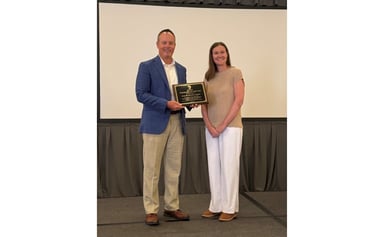
Raychel Garcia is a dedicated member of the Casualty Department, focusing on insurance coverage and general liability claims, including premises liability, motor vehicle negligence, bodily injury (BI), personal injury protection (PIP), catastrophic injuries, wrongful death claims, professional liability, and negligent security actions. In addition, her commercial litigation practice encompasses business torts, breach of contract, fraud, and misrepresentation matters. Raychel manages all aspects of representation in both state and federal courts.
Raychel has represented individuals, professionals and corporate clients in state and federal court resolving cases pertaining to premises liability, retail, negligent security, sex abuse, criminal, and professional liability. She has extensive experience defending clients in complex sexual abuse and molestation cases, including allegations arising in settings such as hotels, scouts, churches, schools, and healthcare providers, providing a thorough and strategic defense tailored to each unique situation.
Prior to joining Marshall Dennehey, she was at an insurance defense law firm in Orlando and served as first chair trial attorney in multiple trials on behalf of the world's leading theme park and resort, an arts and crafts store, a major U.S. convenience store, and an upscale all-suite hotel chain.
Raychel’s experience also includes serving as assistant state attorney with the Orange County State Attorney's Office where she first chaired over 75 criminal jury trials and litigated hundreds of motions and depositions for cases involving misdemeanors and felonies. She was selected to serve in the Special Victim's Unit where she prosecuted capital cases and was assigned high profile cases involving RICO matters and cases pertaining to the hotel industry. For her exemplary work, Raychel received the Orange County Sheriff's Office Citizen Award.
Raychel received her juris doctor from Stetson University College of Law, in May 2011 and Bachelor of Arts cum laude and Bachelor of Science cum laude from the University of Florida in May 2008, graduating with majors in Psychology and political science.
Raychel is licensed to practice law in Florida. She is a board member for the Foundation for Seminole County Schools and a member of the Orange County Bar Association. Raychel previously held positions with the Seminole County Library Board and City of Altamonte Springs Zoning Board.
She is fluent in Spanish.
Results
Sex Trafficking and Abuse Claims Against Hotel Successfully Dismissed
We were successful in having all claims against our client’s hotel dismissed. This case involved deeply distressing allegations of sex trafficking and abuse by the plaintiff’s mother, occurring when the plaintiff was a minor. The claims against our client’s hotel were brought under the Trafficking Victims Protection Reauthorization Act (TVPRA) and Florida law. While the court was unequivocal in acknowledging the tragic and serious nature of the plaintiff’s allegations against her abusers, it ultimately found that the legal claims against our client were not supported by sufficient factual allegations to state a cause of action under either federal or state law. The court had previously dismissed the original complaint without prejudice. However, upon review of the amended complaint, the court agreed with our renewed motion to dismiss and concluded that the plaintiff failed to plausibly allege that our hotel knowingly participated in a trafficking venture or maintained a continuous business relationship with the traffickers. The amended complaint alleged only a single instance of trafficking at our client’s hotel and asserted that the conduct was so blatant that hotel staff should have recognized it. The court found this insufficient to support a claim under the TVPRA. Additionally, the court found that the allegations did not meet the high legal threshold required to sustain a claim for intentional infliction of emotional distress under Florida law.
Summary Judgment Secured in a Slip-and-Fall Premises Liability Case
We were granted final summary judgment in a slip-and-fall premises liability case. The plaintiff alleged she slipped and fell on an unidentified wet substance while waiting in line at the defendant’s convenience store. The plaintiff admitted she did not see the substance prior to her fall and did not know what it was, where it came from or how long it had been there. She testified that the wetness appeared to have been tracked in by other customers, noting their shoes were wet. We moved for summary judgment, arguing that the plaintiff could not meet her burden under § 768.0755, Fla. Stat., to prove that the defendant had actual or constructive knowledge of the alleged condition. Surveillance footage showed multiple customers walking through the area without issue, and no visible hazard appeared on video. The court agreed and granted final summary judgment in favor of the defendant, dismissing the case with prejudice.