.

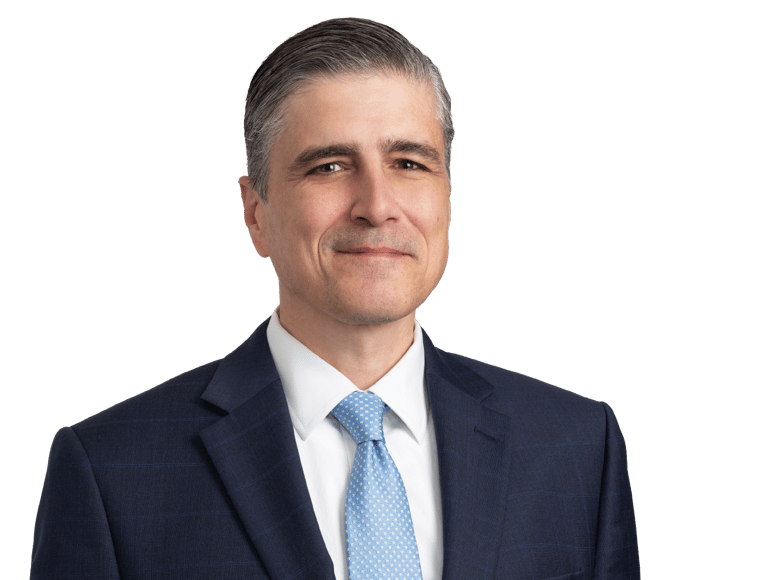
Jason P. Ferrante

Portrait of Jason P. Ferrante

Jason is a member of the Health Care Department and focuses his practice on medical malpractice defense. His litigation practice focuses on representing hospitals, physicians and nursing home/extended care facilities in all manner of health care liability matters. Jason also has experience in product liability, travel law and workers' compensation litigation. He has argued before numerous appellate courts throughout Ohio.

Prior to practicing law, Jason had a successful career in sports marketing and communications. As a member of the Cleveland Browns Trust, he worked to return the Browns to the National Football League. After working for a firm specializing in NASCAR sponsorship and an arena developer, Jason focused on internet development and marketing in Illinois.   

Jason is an alumnus of Ohio University where he served as president of his senior class.  He went on to receive his juris doctor from Cleveland-Marshall College of Law in 2004. In 2010, Jason was recognized as a Rising Star in medical malpractice defense litigation. His active community involvement has also included serving as the Secretary of the Charter Commission for the city of University Heights, Ohio.

Jason is licensed to practice in Ohio and Kentucky.

    • Cleveland State University College of Law (J.D., 2004)
    • Ohio University (B.A., 1996)
    • Ohio, 2004
    • Kentucky, 2005
    • U.S. District Court Southern District of Ohio, 2005
    • U.S. District Court Northern District of Ohio, 2010
    • U.S. Court of Appeals 6th Circuit, 2011
    • The Best Lawyers in America©, Litigation – Health Care (2024-2026)
    • The Best Lawyers in America©, Health Care Law (2026)
    • Ohio Super Lawyers Rising Star (2010)
    • Cleveland Metropolitan Bar Association
    • Ohio State Bar Association
    • "Defending the Compelled Use of Arbitration Agreements," Defense Digest, Vol. 19, No. 4, December 2013

Thought Leadership

Defense Digest

Expert Competency Requirements for Physician Liability Experts in Ohio

April 1, 2022

Key Points: In Johnson v. Abdullah, Ohio Supreme Court opines regarding “active clinical practice” competency requirement for physician liability experts. Court upheld long-standing rule that requires physician liability experts to spend 50% or more their professional time in the “active clinical practice” of medicine. Court noted that “active clinical practice” requirement must be met at the time of trial. The connection between attorney and medical expert is as important as an attorney’s relationship with any health care-related client. Both associations require ongoing communication to not only establish a sound defense, but also to maintain strategy over what may become prolonged discovery and delayed litigation. This is especially true as we all move through another year of the COVID pandemic and deal with its effects on trial schedules.  Engaging medical experts at the beginning of litigation and continuing the communication is now even more important following the Ohio Supreme Court’s decision in Johnson v. Abdullah, 2021 WL 4301159 (Ohio Sept. 22, 2021). The Johnson court upheld a long-standing rule that requires physician liability experts to spend 50% or more their professional time in the “active clinical practice” of medicine. This decision provides clarification and cautionary acknowledgement of Ohio Evid.R. 601(B)(5), which states that these experts must “devote at least one half of his or her professional time to the active clinical practice in his or her field of licensure, or to its instruction in an accredited field.” Ohio’s courts have recognized that “active clinical practice” is work “related or adjunctive to patient care as to be necessarily included in that definition for the purpose of determining fault or liability in a medical claim.” Rule 601(B)(5) is understood to preclude testimony from “professional witnesses” and those lacking experience in the field they are opining on. In McCrory v. State, 423 N.E.2d 56 (Ohio 1981), the Ohio Supreme Court defined “active clinical practice” to mean the work of physicians “directly involved” in patient care. An exception to the expert competency rule was most notably created by the Ohio Supreme Court in Celmer v. Rodgers, 871 N.E.2d 557 (Ohio 2007). The Celmer court looked at whether an expert could testify if he or she did not meet the “active clinical practice” standard at the time of a continued trial but was actively practicing according to the rule at the earlier time of the originally scheduled trial. The Celmer decision effectively allowed some experts to assert almost retrospective qualifications even it their “active clinical practice” was not up to standard at the time of trial. It is an important decision to consider in the age of ongoing trial continuances that we live in today. An otherwise qualified expert in 2018 or 2019 may not maintain the required percentage over the extended periods of time associated with some current litigation schedules. The Johnson court’s September 2021 decision, however, dismisses any expert relief created in Celmer. The Johnson court refused to engage in what it considered to be a dilution of Evid.R. 601. The holding strengthened the general rule and emphasized that the active clinical practice requirement must be met at the time of trial. This means that a retained medical liability expert who has transitioned into an administrative role or who has reduced their clinical practice may not survive a motion to exclude his or her trial testimony. The Johnson case specifically dealt with alleged negligence in an emergency medicine setting in 2011. The defendant’s liability expert worked in a hospital management position and served as a medical school professor. He testified at trial about his applicable accomplishments and experience that directly related to the allegations and clinical issues in the case. Arguments were raised that the expert did not meet the Evid.R. 601 competency standard because he was not actively engaged in the clinical practice of medicine. The trial court still allowed him to testify, and the jury ultimately returned a defense verdict. An appeal subsequently found that the expert’s professional time was essentially in an administrative capacity that should have prevented him from testifying. On further appeal, the Johnson court examined what defines the “active clinical practice of medicine to satisfy the standard” set forth in Evid.R. 601. The defendant physician relied on the Celmer exception to argue that the expert was more than qualified at the time of the care at issue. The court, however, would not stray from the confines of the evidentiary rule. The court’s holding not only upheld the decision to exclude the expert, but very clearly stated that the requisite active clinical practice percentage must be satisfied at the time the expert testifies at trial. Transitioning into administration and limited teaching roles during the course of litigation could very likely preclude a physician liability expert from testifying at trial. The requirements of the Johnson opinion should be the focus of any expert communication. Confirming qualifications should be an ongoing process. Counsel ought to focus on medical liability experts who intend to actively engage in clinical work for an extended period of time. Clients should also be mindful of the Ohio requirement when considering expert approval recommendations. *Jason is a shareholder working in in our Cleveland, Ohio, office. He can be reached at 216.912.3808 or JPFerrante@mdwcg.com.   Defense Digest, Vol. 28, No. 1, April 2022 is prepared by Marshall Dennehey Warner Coleman & Goggin to provide information on recent legal developments of interest to our readers. This publication is not intended to provide legal advice for a specific situation or to create an attorney-client relationship. ATTORNEY ADVERTISING pursuant to New York RPC 7.1. © 2022 Marshall Dennehey Warner Coleman & Goggin. All Rights Reserved. This article may not be reprinted without the express written permission of our firm. For reprints, contact tamontemuro@mdwcg.com.

Firm Highlights

Thought Leadership

New Jersey Workers’ Compensation Legislation Updates

Since June 1, 2026, there have been no new New Jersey workers’ compensation related cases from the Appellate or Supreme Courts. As such, below will highlight any new legislative updates since February. A1023 | S3984 - Medical Use of Cannabis Under Certain Circumstances This requires workers’ compensation, PIP, and health insurance coverage for the medical use of cannabis under certain circumstances. It was introduced on January 13, 2026 and referred to the Assembly Financial Institutions and Insurance Committee. It was also introduced on March 19, 2026 and referred to the Senate Commerce Committee. A1045  - Certain Injuries to Volunteer and Professional Public Safety and Law Enforcement Personnel This revises workers’ compensation coverage for certain injuries to volunteer and professional public safety and law enforcement personnel. It was introduced on January 13, 2026 and referred to the Assembly Labor Committee. A1384 | S2757 - Reduce Statute of Limitations in Medical Fee Disputes This reduces statute of limitations from six years to two years in medical fee disputes in workers’ compensation matters. It was introduced on January 13, 2026 and referred to the Senate Labor Committee. It was also introduced on the same day and referred to the Assembly Labor Committee. A1870 | S1379 - Workers' Compensation Benefits For Certain Workers Due to September 11, 2001 Terrorist Attacks This provides workers’ compensation benefits for certain public safety workers who developed illness or injury as result of responding to September 11, 2001 terrorist attacks. It was introduced on January 13, 2026 and referred to the Assembly Labor Committee. It was also introduced on the same day and referred to the Senate Labor Committee. On February 5, 2026, it was reported from the Senate Committee, 2nd Reading, and referred to the Senate Budget and Appropriations Committee. A2779 | S1521 - Excludes Certain Illegal Aliens This excludes certain illegal aliens from workers’ compensation and temporary disability benefits. It was introduced on January 13, 2026 and referred to the Senate Labor Committee. It was also introduced on the same day and referred to the Assembly Labor Committee. A2792 | S1555 -  Prevent Intoxicated Employees from Workers’ Compensation This prevents intoxicated employees from receiving workers’ compensation. It was introduced on January 13, 2026 and referred to the Senate Labor Committee. It was also introduced on the same day and referred to the Assembly Labor Committee. A3167 | S2372 - Workers’ Compensation Insurance Requirements for Certain Corporations and Partnerships This concerns workers’ compensation insurance requirements for certain corporations and partnerships. It was introduced on January 13, 2026 and referred to the Senate Labor Committee. It was also introduced on the same day and referred to the Assembly Labor Committee. A3548 | S3571 – Maximum Benefits for Certain Volunteers This provides certain volunteer and other workers with maximum compensation benefit for workers' compensation claim regardless of outside employment. It was introduced on January 13, 2026 and referred to the Senate Labor Committee. On March 2, 2026, it was reported from the Senate Committee, 2nd Reading, and referred to the Senate Budget and Appropriations Committee. It was also introduced on the same day and referred to the Assembly Labor Committee. On May 7, 2026, it was reported and referred to Assembly State and Local Government Committee. A3724 - Personal Liability to Employer Officers for Failure to Pay for Coverage This provides personal liability for owner, executive officer, or executive director of employer for failure to pay for workers' compensation coverage. It was introduced on January 13, 2026 and referred to the Assembly Labor Committee. On May 7, 2026, it was reported and referred to Assembly Judiciary Committee. A4617  - Certain Workers' Compensation Supplemental Benefits and Funding Method This concerns certain workers' compensation supplemental benefits and funding method. For a permanently and totally disabled worker or surviving dependents after December 31, 1979, with some exceptions, this bill provides for an annual cost of living adjustment in the weekly workers’ compensation benefit rate. It was introduced on March 10, 2026 and referred to the Assembly Labor Committee. S241 - Inclusion in Database of Appointed Officials This requires that workers’ compensation judges and administrative law judges be included in database of appointed officials. It was introduced on January 13, 2026 to the Senate, Referred to Senate State Government, Wagering, Tourism & Historic Preservation Committee. S2290 -  Mandatory Retirement Age This increases statutory mandatory retirement age for Supreme Court Justices, Superior Court Judges, Tax Court Judges, Administrative Law Judges, and Workers’ Compensation Judges from 70 to 72. It was introduced on January 13, 2026 and referred to the Senate Judiciary Committee. S3144 - Testimony in Workers’ Compensation This concerns submission of testimony in workers’ compensation claims. It was introduced on January 13, 2026 and referred to the Senate Labor Committee. S3342  - Increase Mandatory Retirement Age This increases statutory mandatory retirement age for Supreme Court Justices, Superior Court Judges, Tax Court Judges, Administrative Law Judges, and Workers’ Compensation Judges from 70 to 75. It was introduced on February 5, 2026 and referred to the Senate Judiciary Committee.

Thought Leadership

Commonwealth Court Holds That a Claimant Who Was Struck By a Car While Crossing the Street During an Unpaid Break Was In the Course and Scope of Employment

This case involved a claim petition filed by a claimant who sustained injuries after being struck by a vehicle while crossing the street in front of the employer’s premises. The employer denied the claim based on course and scope, as the accident occurred during one of two mandatory fifteen (15) minute breaks provided to the claimant. The claimant would punch out at the beginning of a break and punch back in when the break was over.  On the date of the incident, the claimant punched out and left the building to get lunch at a restaurant, which required her to cross the employer’s parking lot, and then a public street, where the injury occurred. The Workers Compensation Judge (WCJ) dismissed the petition, noting that that during the two mandatory fifteen-minute breaks per shift allowed by the employer, the claimant was free to leave the employer’s premises, and during breaks, permitted to engage in whatever activity she desired. The WCJ found that at the time of the accident, the claimant was on her own time, in the middle of the street, and going to get lunch.   The claimant filed an appeal with the Worker’s Compensation Appeal Board (Board), and the Board reversed.  According to the Board, the claimant’s location was still on the employer’s premises, as the claimant was taking her customary route while using a reasonable ingress/egress from the employer.  Further, the Board found that the “Personal Comfort Doctrine” applied, as the claimant was on a momentary departure to take care of her personal comfort, within the window of time she was allotted for her break.  The Board remanded the case, and a WCJ granted the claim petition.  The Board affirmed, and the employer appealed to the Commonwealth Court. Before the Court, the employer argued that the claimant was not in the course and scope of her employment, because the injury did not occur on its premises, and the claimant was outside the bounds of the Personal Comfort Doctrine. The Court, however, rejected these arguments, and dismissed the employer’s appeal.  The Court noted that the break given to the claimant was so cursory, when she set out to relieve her hunger for her own personal comfort,  she remained in the course of her employment when she sustained her injuries.  A Petition for Allowance of Appeal in the Supreme Court has been filed by the Employer, Giant Eagle.

Thought Leadership

Appellate Court Rejects Horizontal Immunity Defense to Company Not Acting as Statutory Subcontractor

The First District Court of Appeal held that a property management company was not entitled to horizontal immunity under section 440.10(1)(e), Florida Statutes, in a negligence action brought by an employee of another company working on the property. The claimant was injured while servicing a swimming pool at an apartment complex. His employer had contracted with the property owner to maintain the pool. Following the accident, the claimant received workers' compensation benefits through his employer’s carrier. The claimant subsequently filed a negligence action against the property management company, alleging that it failed to maintain the premises in a reasonably safe condition and failed to warn him of a dangerous condition that caused his injuries. The property management company had been retained by the property owner to maintain the complex in good operating condition and to perform routine maintenance and repair work. The property management company argued that it was immune from suit under section 440.10(1)(e) of Florida’s Workers’ Compensation Law. That provision grants immunity to a subcontractor providing services in conjunction with a contractor on the same project or contract work from civil actions brought by employees of another subcontractor, subject to limited exceptions. According to the property management company, it qualified as a subcontractor working on the same project as the claimant’s employer and was therefore entitled to horizontal immunity. The trial court agreed and entered summary judgment in its favor. On appeal, however, the claimant argued, and the appellate court agreed, that horizontal immunity applies only when a contractor has sublet work arising from a contractual obligation owed to a third party. The court noted that prior decisions consistently held that an entity acting solely on its own behalf as the owner of property, rather than pursuant to a contract with a third party, is not a “contractor” under section 440.10(1), even when it hires other companies to perform work on the property. In Teed, the property management company could not establish that the property owner had a primary contractual obligation to a third party to maintain either the apartment complex or the swimming pool, which it then delegated to the claimant’s employer or the property management company. As a result, the property owner did not qualify as a statutory contractor, and the property management company was not a subcontractor entitled to horizontal immunity under section 440.10(1)(e). The First District therefore reversed the lower court’s ruling and remanded the case for further proceedings on the claimant’s negligence claim.