.

Charles T. Gura

Supervising Attorney Health Care Department - New York & Connecticut Offices

Office Managing Attorney

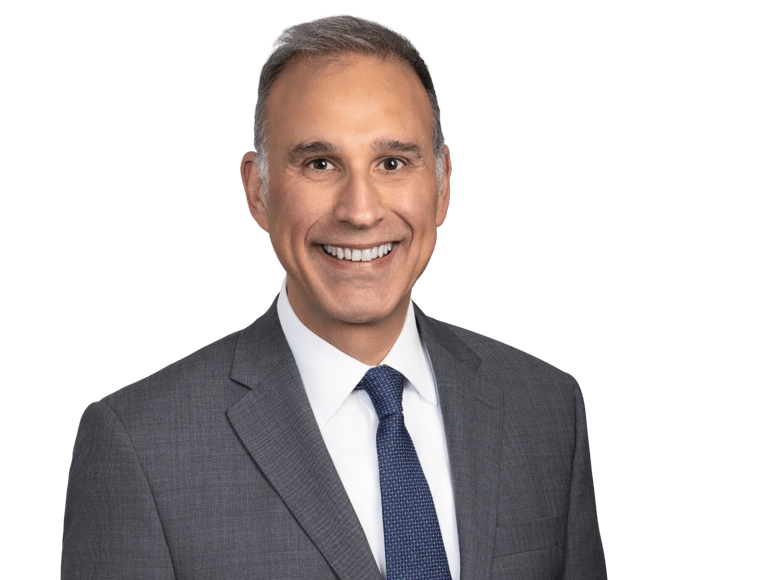
Portrait of Charles T. Gura

Charles has gained experience in a diverse range of practice areas throughout his career, with a specific focus on medical malpractice defense litigation since 2004. He has handled more than 200 hundred medical malpractice cases to date, representing physicians and hospitals through all phases of litigation, including trial. Charles has also represented health care providers in disciplinary hearings.

In addition to representing health care providers, Charles has experience defending commercial property owners in premises liability cases, owners and contractors in construction accident cases under New York Labor Law, a boiler manufacturer in mass-tort asbestos litigation and a major commercial airline in aviation matters. He has also defended dram shop cases.

Charles has obtained defense verdicts and achieved settlement of cases well below the amount demanded during trial and beforehand through motion practice. For instance, in representing obstetricians in birth-related injury cases, Charles successfully petitioned the court to perform genetic testing on the infant-plaintiff, the results of which led to a substantial reduction in the settlement demand.

While attending New York Law School, Charles was employed as a claims examiner for a large insurer of doctors and hospitals in the state of New York. During that time he worked with physicians in all fields of surgery and medicine, oversaw a hospital account, and worked on risk management and regulatory issues. 

Charles began his legal career at Jones Hirsch Connors Miller & Bull P.C. He practices mainly in the New York City metropolitan area, in both State and Federal Courts, as well as the State of Connecticut.

Charles is a member of the New York State Medical Defense Bar Association and the New York State Bar Association. An active member of his community, Charles is a student mentor at New York Law School and has served in various leadership roles at his church.

    • New York Law School (J.D., 1997)
    • State University of New York at Oswego (B.A., 1990)
    • Connecticut, 1997
    • New York, 1997
    • U.S. District Court Eastern District of New York
    • U.S. District Court Southern District of New York
    • Hudson Valley Magazine, Top Lawyer, 2022
    • New York State Medical Defense Bar Association
    • New York State Bar Association
    • Defense verdict for two internists and their practice group in a wrongful death case involving failure to diagnose lung cancer in a 58-year-old patient.
    • Defense verdict in a case involving failure to diagnose an ectopic pregnancy leading to rupture and requiring emergency surgery.
    • Defense verdict in a case involving alleged negligent administration of anesthesia causing sepsis.
    • Directed verdict and dismissal of all claims against three intensivists and a urologist in a  case involving complications in the SICU following cardiothoracic surgery.
    • Bothe v. Vytra Health Plans Long Island, 13 A.D.3d 586 (App.Div.2d Dep’t 2004) summary judgment affirmed dismissing medical malpractice claim against an HMO based on ERISA preemption.
    • Civil Litigation State of Affairs – The Impact of COVID-19 in New York and Connecticut & What’s Next, Marshall Dennehey Client Webinar, May, 2021
    • New York Case Law Update, Health Care Law Seminar, Marshall Dennehey, November 9, 2016
    • Representation of indigent defendants in Fair Debt Collection Practices Act matters.

Thought Leadership

Defense Digest

On the Pulse…Our New Haven, Connecticut, Office

October 1, 2022

In March 2022, Marshall Dennehey opened its newest office in New Haven, Connecticut, to serve the needs of existing and future clients. Located at 700 State Street, our office is a short walk from the state and federal courts in New Haven and provides Marshall Dennehey with a platform centrally located in coastal Connecticut to allow for convenient access to courts in all judicial districts throughout the state. For the past several years, Marshall Dennehey has been handling a substantial Connecticut caseload, primarily out of the firm’s Westchester, New York, office. However, increasing client demand and opportunities led to the opening of the firm’s newest office, which is staffed with four experienced attorneys, a paralegal who is in her final year of law school, and outstanding legal support professionals. I am honored to be the managing attorney of this office. I have watched Marshall Dennehey’s practice in the state of Connecticut grow steadily since I joined the firm in July 2014, along with my fellow shareholder and Connecticut office colleague, Daniel Corde. I came to Marshall Dennehey with two decades of experience devoted almost entirely to the defense of medical malpractice cases. While I attended New York Law School, I worked as a claims examiner for Medical Liability Mutual Insurance Company (MLMIC), one of the largest medical malpractice insurance carriers in the country, which gave me a strong foundation for my legal career. My practice has expanded over the years into other areas of litigation, while continuing to represent health care providers and facilities in both New York and Connecticut. In addition to representing physicians, medical practices and hospitals, our defense of long-term care, rehabilitation and therapy facilities has grown markedly in the past few years. The pandemic had also brought increased demand for psychotherapy and mental health care services, and our defense of professionals and institutions in these fields has expanded as well. Daniel Corde serves multiple jurisdictions, with admissions in both New York and Connecticut, where he has defended matters for well-known clients including IKEA, Hyatt, Raymour & Flanagan, and Dollar General. Dan has 35 years of litigation experience, including trials to verdict, arbitrations and mediations, in a wide range of practice areas such as product liability, premises liability, premises security, transportation product liability, and toxic tort, mold, and asbestos litigation matters. Further, Dan is a FAA-licensed pilot and has spent a considerable number of years managing claims for a major aviation insurer. He has served as monitoring counsel in this type of litigation, working with insurance companies, primary and excess insurers, fixed-based aviation clients and local counsel, to establish, coordinate and manage the defense of cases. He has conducted mediations across the United States. David Lane, a shareholder in the firm’s Professional Liability Department, focuses his practice on privacy and data security, intellectual property and technology litigation. With respect to privacy and data security, David represents clients through all stages of data breach response, including investigations, compliance with data breach notification laws and regulatory investigations. David has been accredited by the International Association of Privacy Professionals (IAPP) as a certified information privacy professional (CIPP/US). In addition, he has significant experience in insurance coverage and bad faith litigation, and consumer financial services litigation, defending clients and claims brought under the Fair Debt Collection Practices Act and Fair Credit Reporting Act. David also has an appellate practice, working on appeals in a variety of matters. He is admitted in New York state and federal courts and Florida state courts. He practiced out of the firm’s Manhattan office for 12 years before joining us in New Haven. Caroline Skelton is an associate in the firm’s Casualty Department. Caroline has considerable civil defense litigation experience in both New York and Connecticut, where she has handled matters involving catastrophic losses. She has handled cases involving premises liability, construction accidents and accidents in the transportation industry. Caroline’s skills in motion practice, her attention to detail and her depth of knowledge have led to many successes in motions for summary judgment. She also litigates complex breach of contract actions in which she has represented high-profile clients such as General Motors. The New Haven office is also fortunate to have a dedicated support staff comprised of Michelle Ernandez, a paralegal now in her final year of law school, two administrative assistants, Amanda Britton and Caitlin Murtha, as well as one scheduling clerk, Mara Bonnell. I look forward to developing the New Haven, Connecticut, office into a site that will extend the firm’s reach throughout the state of Connecticut and beyond. Our office is located at 700 State Street, Suite 303, New Haven, CT 06511. Our main office phone number is 203-714-4560, and our fax number 203.714.4561. My direct line 203-714-4562, and my email is ctgura@mdwcg.com.   Defense Digest, Vol. 28, No. 3, October 2022 is prepared by Marshall Dennehey to provide information on recent legal developments of interest to our readers. This publication is not intended to provide legal advice for a specific situation or to create an attorney-client relationship. ATTORNEY ADVERTISING pursuant to New York RPC 7.1. © 2022 Marshall Dennehey. All Rights Reserved. This article may not be reprinted without the express written permission of our firm. For reprints, contact tamontemuro@mdwcg.com.

Firm Highlights

Thought Leadership

New Jersey Workers’ Compensation Legislation Updates

Since June 1, 2026, there have been no new New Jersey workers’ compensation related cases from the Appellate or Supreme Courts. As such, below will highlight any new legislative updates since February. A1023 | S3984 - Medical Use of Cannabis Under Certain Circumstances This requires workers’ compensation, PIP, and health insurance coverage for the medical use of cannabis under certain circumstances. It was introduced on January 13, 2026 and referred to the Assembly Financial Institutions and Insurance Committee. It was also introduced on March 19, 2026 and referred to the Senate Commerce Committee. A1045  - Certain Injuries to Volunteer and Professional Public Safety and Law Enforcement Personnel This revises workers’ compensation coverage for certain injuries to volunteer and professional public safety and law enforcement personnel. It was introduced on January 13, 2026 and referred to the Assembly Labor Committee. A1384 | S2757 - Reduce Statute of Limitations in Medical Fee Disputes This reduces statute of limitations from six years to two years in medical fee disputes in workers’ compensation matters. It was introduced on January 13, 2026 and referred to the Senate Labor Committee. It was also introduced on the same day and referred to the Assembly Labor Committee. A1870 | S1379 - Workers' Compensation Benefits For Certain Workers Due to September 11, 2001 Terrorist Attacks This provides workers’ compensation benefits for certain public safety workers who developed illness or injury as result of responding to September 11, 2001 terrorist attacks. It was introduced on January 13, 2026 and referred to the Assembly Labor Committee. It was also introduced on the same day and referred to the Senate Labor Committee. On February 5, 2026, it was reported from the Senate Committee, 2nd Reading, and referred to the Senate Budget and Appropriations Committee. A2779 | S1521 - Excludes Certain Illegal Aliens This excludes certain illegal aliens from workers’ compensation and temporary disability benefits. It was introduced on January 13, 2026 and referred to the Senate Labor Committee. It was also introduced on the same day and referred to the Assembly Labor Committee. A2792 | S1555 -  Prevent Intoxicated Employees from Workers’ Compensation This prevents intoxicated employees from receiving workers’ compensation. It was introduced on January 13, 2026 and referred to the Senate Labor Committee. It was also introduced on the same day and referred to the Assembly Labor Committee. A3167 | S2372 - Workers’ Compensation Insurance Requirements for Certain Corporations and Partnerships This concerns workers’ compensation insurance requirements for certain corporations and partnerships. It was introduced on January 13, 2026 and referred to the Senate Labor Committee. It was also introduced on the same day and referred to the Assembly Labor Committee. A3548 | S3571 – Maximum Benefits for Certain Volunteers This provides certain volunteer and other workers with maximum compensation benefit for workers' compensation claim regardless of outside employment. It was introduced on January 13, 2026 and referred to the Senate Labor Committee. On March 2, 2026, it was reported from the Senate Committee, 2nd Reading, and referred to the Senate Budget and Appropriations Committee. It was also introduced on the same day and referred to the Assembly Labor Committee. On May 7, 2026, it was reported and referred to Assembly State and Local Government Committee. A3724 - Personal Liability to Employer Officers for Failure to Pay for Coverage This provides personal liability for owner, executive officer, or executive director of employer for failure to pay for workers' compensation coverage. It was introduced on January 13, 2026 and referred to the Assembly Labor Committee. On May 7, 2026, it was reported and referred to Assembly Judiciary Committee. A4617  - Certain Workers' Compensation Supplemental Benefits and Funding Method This concerns certain workers' compensation supplemental benefits and funding method. For a permanently and totally disabled worker or surviving dependents after December 31, 1979, with some exceptions, this bill provides for an annual cost of living adjustment in the weekly workers’ compensation benefit rate. It was introduced on March 10, 2026 and referred to the Assembly Labor Committee. S241 - Inclusion in Database of Appointed Officials This requires that workers’ compensation judges and administrative law judges be included in database of appointed officials. It was introduced on January 13, 2026 to the Senate, Referred to Senate State Government, Wagering, Tourism & Historic Preservation Committee. S2290 -  Mandatory Retirement Age This increases statutory mandatory retirement age for Supreme Court Justices, Superior Court Judges, Tax Court Judges, Administrative Law Judges, and Workers’ Compensation Judges from 70 to 72. It was introduced on January 13, 2026 and referred to the Senate Judiciary Committee. S3144 - Testimony in Workers’ Compensation This concerns submission of testimony in workers’ compensation claims. It was introduced on January 13, 2026 and referred to the Senate Labor Committee. S3342  - Increase Mandatory Retirement Age This increases statutory mandatory retirement age for Supreme Court Justices, Superior Court Judges, Tax Court Judges, Administrative Law Judges, and Workers’ Compensation Judges from 70 to 75. It was introduced on February 5, 2026 and referred to the Senate Judiciary Committee.

Thought Leadership

Commonwealth Court Holds That a Claimant Who Was Struck By a Car While Crossing the Street During an Unpaid Break Was In the Course and Scope of Employment

This case involved a claim petition filed by a claimant who sustained injuries after being struck by a vehicle while crossing the street in front of the employer’s premises. The employer denied the claim based on course and scope, as the accident occurred during one of two mandatory fifteen (15) minute breaks provided to the claimant. The claimant would punch out at the beginning of a break and punch back in when the break was over.  On the date of the incident, the claimant punched out and left the building to get lunch at a restaurant, which required her to cross the employer’s parking lot, and then a public street, where the injury occurred. The Workers Compensation Judge (WCJ) dismissed the petition, noting that that during the two mandatory fifteen-minute breaks per shift allowed by the employer, the claimant was free to leave the employer’s premises, and during breaks, permitted to engage in whatever activity she desired. The WCJ found that at the time of the accident, the claimant was on her own time, in the middle of the street, and going to get lunch.   The claimant filed an appeal with the Worker’s Compensation Appeal Board (Board), and the Board reversed.  According to the Board, the claimant’s location was still on the employer’s premises, as the claimant was taking her customary route while using a reasonable ingress/egress from the employer.  Further, the Board found that the “Personal Comfort Doctrine” applied, as the claimant was on a momentary departure to take care of her personal comfort, within the window of time she was allotted for her break.  The Board remanded the case, and a WCJ granted the claim petition.  The Board affirmed, and the employer appealed to the Commonwealth Court. Before the Court, the employer argued that the claimant was not in the course and scope of her employment, because the injury did not occur on its premises, and the claimant was outside the bounds of the Personal Comfort Doctrine. The Court, however, rejected these arguments, and dismissed the employer’s appeal.  The Court noted that the break given to the claimant was so cursory, when she set out to relieve her hunger for her own personal comfort,  she remained in the course of her employment when she sustained her injuries.  A Petition for Allowance of Appeal in the Supreme Court has been filed by the Employer, Giant Eagle.

Thought Leadership

Appellate Court Rejects Horizontal Immunity Defense to Company Not Acting as Statutory Subcontractor

The First District Court of Appeal held that a property management company was not entitled to horizontal immunity under section 440.10(1)(e), Florida Statutes, in a negligence action brought by an employee of another company working on the property. The claimant was injured while servicing a swimming pool at an apartment complex. His employer had contracted with the property owner to maintain the pool. Following the accident, the claimant received workers' compensation benefits through his employer’s carrier. The claimant subsequently filed a negligence action against the property management company, alleging that it failed to maintain the premises in a reasonably safe condition and failed to warn him of a dangerous condition that caused his injuries. The property management company had been retained by the property owner to maintain the complex in good operating condition and to perform routine maintenance and repair work. The property management company argued that it was immune from suit under section 440.10(1)(e) of Florida’s Workers’ Compensation Law. That provision grants immunity to a subcontractor providing services in conjunction with a contractor on the same project or contract work from civil actions brought by employees of another subcontractor, subject to limited exceptions. According to the property management company, it qualified as a subcontractor working on the same project as the claimant’s employer and was therefore entitled to horizontal immunity. The trial court agreed and entered summary judgment in its favor. On appeal, however, the claimant argued, and the appellate court agreed, that horizontal immunity applies only when a contractor has sublet work arising from a contractual obligation owed to a third party. The court noted that prior decisions consistently held that an entity acting solely on its own behalf as the owner of property, rather than pursuant to a contract with a third party, is not a “contractor” under section 440.10(1), even when it hires other companies to perform work on the property. In Teed, the property management company could not establish that the property owner had a primary contractual obligation to a third party to maintain either the apartment complex or the swimming pool, which it then delegated to the claimant’s employer or the property management company. As a result, the property owner did not qualify as a statutory contractor, and the property management company was not a subcontractor entitled to horizontal immunity under section 440.10(1)(e). The First District therefore reversed the lower court’s ruling and remanded the case for further proceedings on the claimant’s negligence claim.