.

James D. Greco

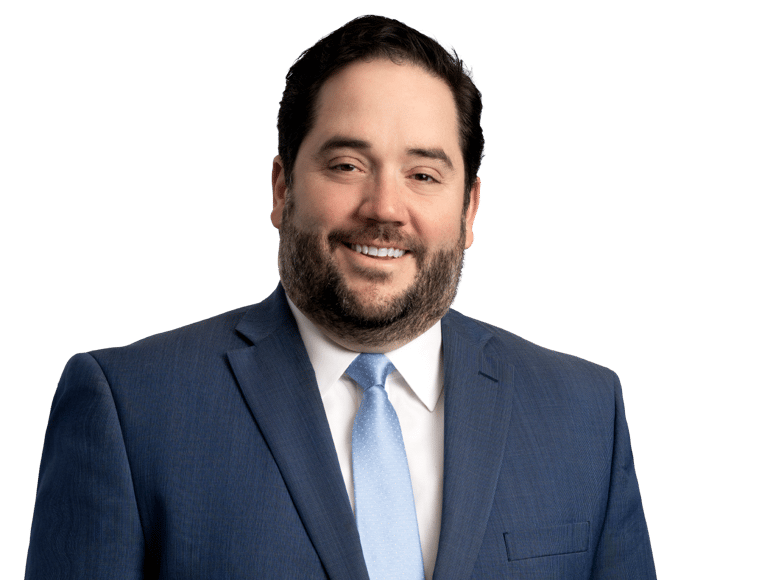
Portrait of James D. Greco

Jim is a member of the Professional Liability Department where he focuses his practice in municipal liability, civil rights law, commercial litigation, homeowners' association litigation, as well as the defense of architects and engineers and various professionals in errors and omissions cases.

Throughout his career he has concentrated in civil litigation representing businesses in various commercial matters, premises liability and products liability matters. He also has experience advising clients with respect to employment issues as well as businesses’ engagements and interactions with independent contractors. Prior to joining Marshall Dennehey, he represented clients in various professional liability matters, including construction and legal malpractice.

Jim earned a Bachelor of Science degree from the College of Business Administration of Fordham University and graduated cum laude from the Western Michigan Thomas M. Cooley School of Law. After completing law school, he clerked for the Hon. Irvin J. Snyder in the Superior Court of New Jersey.

Jim is involved in the local legal community, previously serving as a Board Member of the Young Lawyers Division of the Lackawanna County Bar Association since 2015, most recently as President in 2021.  He is admitted to practice in Pennsylvania State Courts, as well as in the United States District Court for both the Middle and Eastern District of Pennsylvania.

    • Cooley Law School (J.D., cum laude, 2010)
    • Fordham University (B.A., 2007)
    • Pennsylvania, 2010
    • U.S. District Court Eastern District of Pennsylvania, 2011
    • U.S. District Court Middle District of Pennsylvania, 2014
    • Pennsylvania Super Lawyer Rising Star (2020)
    • Lackawanna County Bar Association

Thought Leadership

Legal Updates for Insurance Agents & Brokers

Misrepresentations of the Next Degree: Expanding Broker Liability After Penn Outdoor

May 7, 2026

Services v. Harleyville Insurance Co. There has been a noticeable increase in claims against insurance brokers over recent years, with plaintiffs beginning to frame coverage disputes as actions sounding in negligence and negligent misrepresentations. In this ever-shifting world, disputes regarding coverage have devolved into claims that brokers failed to secure, explain, or accurately advise as to coverage. Such claims, requiring no proof of intent, allow insureds facing scrutiny to look beyond the spoken word of brokers and into the text of standard transaction documents. Pennsylvania’s Superior Court’s decision in Penn Outdoor Servs., LLC v. Harleysville Ins. Co. of New Jersey, 323 A.3d 231 (Pa. Super. Ct. 2024), reargument denied (Sept. 6, 2024), highlights the evolution of the misrepresentation claims against brokers. There, Penn Outdoor Services, LLC subcontracted for snow removal services at an apartment complex it owned with Longford Landscape and Excavation. The contract between Penn and Longford included a hold harmless clause in favor of Penn with respect to the services to be provided by Longford, which specifically stated: Subcontractor agrees to indemnify and save and hold harmless Penn and Penn's clients/customers from and against all claims for damages arising out of the performance of Subcontractor's duties under this Agreement and agrees to, at Subcontractor's expense, defend any suit or action brought against Penn or Penn's clients/customers on account of such claim or damage. Consistent with the parties’ agreement, Longford’s insurance broker, Wharton, Lyon & Lyon provided Penn with a certificate of insurance, naming Penn as an additional insured under Wharton’s insurance policy with Harleysville Insurance Company. Specifically, the subject policy included an endorsement relating to Penn’s coverage as an additional insured, endorsement CG-7524, which provided, If specifically required by the written contract or agreement referenced in Paragraph A above, any coverage provided by this endorsement to an additional insured shall be primary and any other valid and collectible insurance available to the additional insured shall be non-contributory with this insurance. While the contract between Penn and Longford was in effect, a woman was injured in a slip and fall at the complex where Longford provided snow removal services. The woman filed suit and named Penn as a defendant. With the impression it was an additional insured under Longford policy, Penn sought a defense in the matter from Longford and Harleysville; a request that was denied because, as per Harleysville, the coverage provided under Penn’s policy was excess coverage, not primary. After settling the underlying action and incurring extensive legal fees in the course of the same, Penn filed an action against Harleysville and Wharton, including a claim for negligent misrepresentation against Wharton. After a jury verdict was rendered in favor of Penn, Wharton filed a motion for j.n.o.v. arguing that the evidence established that it made no negligent misrepresentation. The trial court disagreed, pointing out that the contract between Penn and Longford required Penn to be named as an additional insured, however, it did not specify that such coverage be primary as required by the applicable endorsement to the Harleysville policy. Wharton’s representative testified that she did not review the complete language of the endorsement in question, thus creating the negligent misrepresentation. By providing the COI naming Penn as an additional insured, Wharton represented that to be the status of insurance extended to Penn. The endorsement of the Harleysville policy provided that “if specially provided” by the contract between the parties, the coverage afforded would be primary, correlating with the text of the COI. The contract in question, however, did not specifically call for the coverage to be primary. Therefore, it was not. While reading like a choose your own adventure novel, Penn Outdoor highlights the need for attention to detail in the issuance of COI’s by brokers. In a world where a broker’s spoken word can get them into hot water, the case casts a light on a new potential pathway to broker liability. While the COI in the present matter contained the necessary buzz words, i.e. “additional insured,” that language alone could not carry the day. Penn Outdoor evidences how critical it is for brokers to choose their words wisely, but also carefully ensures the text of the COI, policy language, and other transaction documents provide the coverage reasonably expected by the insured. By making it ones practice to always reconcile the policy language with the COI, and any applicable contracts, brokers can avoid potential liability in an increasingly litigious world.

Defense Digest

Offensive, But Not Actionable: The Limits of Pennsylvania’s Real Estate Seller Disclosure Law

March 1, 2026

Key Points: Objectively-quantifiable flaw is needed in order to assert a claim for violation of the RESDL. Nazi floor design did not constitute a physical or structural problem with the property. Subjectivity cannot drive RESDL claims. As is well known among real estate agents and brokers, Pennsylvania’s Real Estate Seller Disclosure Law, 68 Pa.C.S. §§ 7301, et seq., places responsibility on sellers to disclose material defects with respect to their property during a real estate sale. Specifically, the RESDL states: Any seller who intends to transfer any interest in real property shall disclose to the buyer any material defects with the property known to the seller by completing all applicable items in a property disclosure statement which satisfies the requirements of [§] 7304 (relating to disclosure form). A signed and dated copy of the property disclosure statement shall be delivered to the buyer in accordance with [§] 7305 (relating to delivery of disclosure form) prior to the signing of an agreement of transfer by the seller and buyer with respect to the property. 68 Pa.C.S. § 7303. Liability under the RESDL is extended to agents of the seller where they have actual knowledge of such defect. While plaintiffs have attempted to expand the reach of the RESDL to more subjective claims, courts throughout the Commonwealth have historically limited permissible claims. Claims are restricted to those regarding defects that substantively impact the value of the real estate, while still being capable of recognition and quantification by objective standards. The foregoing limitation was recently analyzed in Wentworth v. Steinmetz, 2025 WL 3157571 (Pa. Super. Nov. 12, 2025), which analyzed whether a symbol tiled into a floor of a home constituted a “material defect.” Wentworth involved a dispute between the buyers and seller of a residence in Beaver County, Pennsylvania. After closing, the buyers found the basement floor to be tiled with a swastika and what they believed to be a Nazi eagle. This area of the floor had been covered by a rug when they initially viewed the home, thus, the buyers were not aware of it until after the closing. The buyers claimed they could not be expected to live in a home with such condition and asserted that it would cost $30,000.00 to replace the floor, arguing that the seller was liable for compensatory and punitive damages for failing to disclose the condition. The trial court found for the seller, determining that the symbols did not constitute a material defect, which the buyers appealed. The Superior Court looked to Milliken v. Jacono, 103 A.3d 806 (Pa. 2014), as modified on reconsideration (Nov. 12, 2014) (Milliken II), where the Pennsylvania Supreme Court held that purely psychological stigmas are not material defects of property that sellers must disclose. Milliken II involved a claim for violation of the RESDL for the sellers’ failure to disclose a murder-suicide that took place in the residence. If such a duty was to be created, the Milliken II court opined, it should be imposed by the legislature. Applying the analysis set forth in Milliken II, the Superior Court reiterated that an objectively-quantifiable flaw is needed in order to assert a claim for violation of the RESDL, agreeing with the trial court’s position that the floor design did not constitute a physical or structural problem with the property. The court further reiterated that this objective standard is necessary in order to not only apply the law with consistency, but also to limit the burden placed on sellers. Since the floor in question was sound and functional, the presence of the symbols, no matter how abhorrent, did not constitute a material defect. While not involving real estate agents, Wentworth is instructive of how Pennsylvania’s courts analyze the wide variety of claims under the RESDL, and the fact that the court appears disinclined to permit subjectivity to drive such claims. Thus, sellers and agents alike can take solace in the fact that claims based on how a party feels about a feature or fixture of a property, without any physical or structural issue, does not pass muster when it comes to the RESDL. Certainly, this is helpful to real estate agents and brokers who are not only bound by the RESDL where they have actual knowledge of an alleged defect, but also owe a duty to their clients to represent them in a professional manner during the sale of the real estate, including advising sellers as to the information that needs to be disclosed. Indeed, the RESDL does encompass a broad set of areas with respect to the necessary disclosures. However, the courts’ analyses in Milliken II and, more recently, Wentworth, limit the subjective nature of such claims, placing the onus on the legislature if there is to be any expansion with respect to the same. James works in our Scranton, PA office. He can be reached at (570) 496-4662 or JDGreco@mdwcg.com.

Firm Highlights

Thought Leadership

The Enforceability of Online Arbitration Agreements Remains Unresolved in Pennsylvania, But the Pennsylvania Superior Court has Provided Substantive Guidance on the Issue

Key Points: The Pennsylvania Supreme Court confirms that an order compelling arbitration is not immediately appealable as collateral orders. The outcome of Chilutti II has generally left the substantive enforceability issues with browsewrap agreements unresolved in Pennsylvania. Until this issue is resolved by the Pennsylvania courts, companies operating in the Commonwealth should strive to ensure that their registration websites and/or application screens conspicuously present arbitration agreements in manners which ensure their users and consumers assent to the terms of the agreements by following the standards set forth in Chilutti I. Browsewrap agreements have been defined as agreements “‘in which a website offers terms that are disclosed only through a hyperlink and the user supposedly manifests assent to those terms simply by continuing to use the website,’ and typically do not require an electronic signature.” See, Cobb v. Tesla, Inc., 2026 WL 458470, at *1 n. 2 (Pa. Super. Feb. 18, 2026) (citation omitted). They are largely regarded as the “if you keep using this, you agree to everything buried in this link” terms embedded into almost every online agreement consumers and users sign before proceeding with purchases of goods and/or services. While consumers are generally aware of them, many almost never click on the link, nor read them in their entirety. This leaves many consumers and users ignorant of the terms and impact of such agreements. However, one’s ignorance of the otherwise neatly-tucked-away terms rarely renders them unenforceable. The issue of the enforceability of browsewrap agreements has been up for debate for some time in many jurisdictions, including Pennsylvania. Indeed, Pennsylvania had a brief grip on this issue for a period in time. Specifically, in 2023, an en banc Superior Court set forth heightened standards for companies to meet in order to secure assent and enforce browsewrap arbitration agreements. See Chilutti v. Uber Techs., Inc., 300 A.3d 430 (Pa.Super. 2023) (en banc) (“Chilutti I”) Chilutti I involved a husband and wife who sued Uber and its subsidiaries after the wife, a wheelchair bound passenger using Uber’s rideshare service, fell, struck her head, and lost consciousness due to her uber driver failing to provide a seatbelt and making an aggressive turn during the trip. The Chilutti’s filed a negligence lawsuit against Uber and its subsidiaries. In response, the defendants moved to compel arbitration, arguing that “the couple’s conduct on the company’s website and application — when they registered for the ridesharing service — signified that they agreed to be bound by the mandatory arbitration provision found in the hyperlinked terms and conditions.” The trial court granted the defendants’ petition and stayed the proceedings pending the results of arbitration, and the Chilutti’s appealed. On appeal, the Superior Court addressed two issues. First, it addressed the issue of whether it had jurisdiction to hear the appeal. A divided Superior Court determined that it did, with its basis for the holding being that the order from which the Chilutti’s appealed was a collateral order. Next, the Superior Court set out to address the merits of the Chilutti’s substantive claim. The Superior Court concluded that the parties lacked a valid agreement to arbitrate. Its rationale was that Uber’s website and application did not provide reasonably conspicuous notice of the terms to the Chiluttis. In reaching this decision, the en banc Superior Court held that browsewrap arbitration agreements are enforceable in Pennsylvania only if the registration website and application screens explicitly inform consumers that they are waiving the right to a jury trial, the registration process cannot be completed until the consumer is fully informed of this waiver, and, when the agreement is available via hyperlink, the waiver appears at the top of the first page of the terms in bold, capitalized text. Since the ruling, Pennsylvania courts have applied Chilutti I to determine if browsewrap agreements are enforceable.  For instance, the Allegheny County Court of Common Pleas invoked Chilutti I to reject an agreement that lacked an express jury-trial waiver on the assent screen.  See Miller v. Festival Fun Parks, LLC, 92 WDA 2025 (C.P. Alleg. Cnty. Mar. 24, 2025). Similarly, the Superior Court has held that notice which failed to explicitly state the consumer was waiving a jury-trial right did not “me[e]t the strict burden set forth by our en banc Court in Chilutti I.” Pierce v. FloatMe Corp., 348 A.3d 1077, 1088 (Pa. Super. 2025). While the issue of enforceability of browsewrap agreements appeared to have been resolved by Chilutti I, Pennsylvania courts’ grip on this issue has been slackened by the Pennsylvania Supreme Court’s January 21, 2026, opinion in Chilutti II. See Chilutti v. Uber Techs., Inc., 349 A.3d 826 (Pa. 2026) (“Chilutti II”). Therein, the Supreme Court did not address the merits of the Chiluttis’ substantive claim, but rather the issue of whether the Superior Court had appellate jurisdiction to immediately review the orders staying litigation pending arbitration. The Court ultimately vacated the en banc opinion on jurisdictional grounds, holding that the Superior Court did not have appellate jurisdiction because the trial court’s order from which the Chiluttis appealed did not qualify as a collateral order and, thus, the Superior Court erred in holding to the contrary and lacked jurisdiction to entertain the merits” of the Chiluttis’ substantive claim. As such, Chilutti II has rendered Chilutti I nonbinding, and the issue of enforceability of online arbitration agreements remains unresolved. However, in light of the fact the Supreme Court did not address or comment on the merits of the Chiluttis’ appeal, Chilutti I is still meaningful. Specifically, it provides guidance as to the standards a company should strive to meet to ensure they have obtained users’ assent so that they are able to enforce online arbitration agreements. Additionally, it may serve as persuasive authority in judges’ evaluations of petitions and/or motions to compel browsewrap arbitration agreements until this particular issue is properly put before our appellate courts. Keanna works in our Pittsburgh, PA office. She can be reached at (412) 803-1174 or KASeabrooks@MDWCG.com.

Result

No-Cause Jury Verdict Secured in Wrongful Death Trial

We successfully obtained a no-cause jury verdict in a 13-day wrongful death trial. The decedent, a 59-year-old man, was admitted to the emergency room on February 15, 2019, with complaints of abdominal pain, decreased appetite, and constipation, despite the use of laxatives. The patient did not complain of any nausea, vomiting, or diarrhea. He had a significant medical history including diabetes, hypertension, prior coronary artery stenting, morbid obesity (with past gastric bypass surgery), longstanding ventral hernia, and back pain. A CT scan revealed multiple hernias and a potential closed-loop bowel obstruction, leading to a surgery consultation. Our client, an emergency general surgeon, interpreted that the patient did not have a closed loop or any significant obstruction and recommended non-surgical management. The patient was approved to have clear liquids, and had a vomiting incident shortly after, but our client was not notified. The patient was returned to NPO status, and after improving overnight, he was returned to “clears” and additional medical and renal consults were ordered. Our client did not receive any communications from the residents/nurses of any changes in the patient’s condition. On February 18, 2019, two rapid responses were called due to increased heart rate and vomiting. It is believed that the vomiting resulted in aspiration, causing sepsis, ultimately leading to the patient’s death. During the trial, the plaintiff’s sole medical expert highlighted imaging on the wrong hernia, which called into question all of his opinions in the case. We made key objections related to the expert testimony, limiting what the allegations were, and preventing new allegations from being made. After approximately two and a half hours of deliberating, the jury returned a no-cause verdict. 

Thought Leadership

Featured Conversations... Key Takeaways from A.M. Best’s Webinar on the Misuse Defense in Product Liability Claims, Featuring Michael Salvati

Michael Salvati, shareholder in our Philadelphia office, was a panelist for the April A.M. Best webinar, “The Misuse Defense: Strategic Approaches to Defending Product Liability Claims for Insurers.” During the program, Michael and his fellow panelists offered practical, jurisdiction‑specific guidance on how misuse and failure‑to‑warn theories intersect in modern product liability litigation. Michael emphasized the unique challenges these claims present—particularly in states like Pennsylvania, where evidentiary rules diverge sharply from those applied in many other jurisdictions. Failure to Warn as the “Flip Side” of Misuse Salvati explained that failure‑to‑warn allegations often arise as a direct counter to a misuse defense. As he noted, “If our misuse defense is that the plaintiff didn't use a product properly or safely, then the failure to warn claim is that we didn't tell them how to use it properly.” He emphasized that these claims can stem from either the absence of warnings or criticisms of existing warnings, such as insufficient specificity or lack of clarity about risks. Pennsylvania’s Unique Evidentiary Landscape One of Salvati’s most notable points was the stark difference in how Pennsylvania treats evidence of compliance with industry standards. He highlighted that Pennsylvania is “one of the only states…where that evidence is not admissible” in strict liability cases. Manufacturers cannot rely on compliance with ANSI, UL, ISO, or even federal safety standards to defend the product against a strict liability claim—because the focus is solely on the product itself, not the manufacturer’s conduct. Salvati acknowledged the challenge this creates for defense counsel and clients who expect such compliance to carry weight. Understanding the Three Defect Theories Salvati also walked through the three primary defect theories recognized in many jurisdictions: - Design defect – a flaw in the product’s intended design - Manufacturing defect – a deviation affecting a specific unit - Failure to warn – inadequate instructions or warnings He noted that warnings claims are increasingly significant and sometimes stand alone when design or manufacturing theories are weak. As he put it, plaintiffs often default to warnings claims because “the default position seems to be, ‘If I got hurt, there must be something wrong.’” Warranties and State‑by‑State Variations Salvati addressed how breach‑of‑warranty claims fit into the broader framework, explaining that implied warranties—such as merchantability—often overlap with strict liability in Pennsylvania. He emphasized the importance of understanding local nuances, as warranty law and admissibility rules vary widely across states. Looking Ahead: The Growing Importance of Warnings In his closing remarks, Salvati stressed that warnings should never be treated as an afterthought in product liability defense. He observed that warnings‑only claims are becoming more common and urged manufacturers and insurers to continually evaluate the clarity and completeness of their instructions and warnings. His takeaway: “We should always be talking about what are the instructions that come with our products…to bolster a misuse defense.” Listen to the complete webinar here: https://www3.ambest.com/conferences/events/eventregister.aspx?event_id=WEB1074.

Thought Leadership

PA Superior Court Upholds Household Vehicle Exclusion in Favor of Erie When Stacking Was Not Implicated

Key Points: A household vehicle exclusion was upheld under an Erie Policy when the estate of deceased insureds sought UIM coverage when the insureds were occupying a motorcycle owned by the insureds, but the motorcycle was not covered by Erie’s Policy. The PA Superior Court distinguished Gallagher v. GEICO, in which Gallagher, unlike the Erie insured, had recovered UM/UIM, thus rendering the "household exclusion" an impermissible waiver of stacking. Here, with no UIM recovery from any source, the issue of stacking, much less impermissible waiver of stacking, never arose. In sum, the household vehicle exclusion is a valid exclusion when stacking is not implicated. In the Pennsylvania Superior Court case of Erie Ins. Exchange v. Estate of Kennedy, 350 A.3d 219 (Pa. Super. 2025), the court upheld Erie’s denial of coverage under the household vehicle exclusion in the Erie Policy when the insureds were occupying a motorcycle not covered under the policy. Dennis and Elissa Kennedy, Erie insureds, died in a single-vehicle motorcycle accident, with Dennis driving. Dennis insured the motorcycle with Progressive, which paid its liability limits to Elissa, after which Elissa sought household stacked Erie UIM coverage. Erie denied coverage under its "household exclusion" applicable to vehicles owned by insureds, but not covered by Erie's policy. The trial court granted judgment in favor of Erie on the ground that such benefits were barred by an exclusion applicable when an insured has suffered damages while occupying a vehicle owned by a relative and not covered under the policy, i.e. the household vehicle exclusion. Finding that the exclusion was valid, the PA Superior Court affirmed. The court found the facts of the case and policy exclusion analogous to the case of Erie Ins. Exchange v. Mione, 289 A.3d 524 (Pa. 2023). In Mione, a motorcyclist was injured in an accident with another vehicle whose driver was both at fault and underinsured. The motorcyclist's insurance policy did not include UM/UIM coverage. However, the motorcyclist had two household policies covering other vehicles, including stacked UM/UIM coverage, as well a household vehicle exclusion. UM/UIM benefits were therefore denied, and the motorcyclist argued that the exclusion was invalid because it did not comport with the statutory waiver requirements of Section 1738. The PA Supreme Court rejected the argument, explaining that UM/UIM coverage could not be procured in the "first instance" under the motorcyclist's household policies as “[F]or a household vehicle exclusion to be acting as an impermissible de facto waiver of stacking, the insured must have received UM/UIM coverage under some other policy first, or else is not implicated at all.” The motorcyclist had not received any UM/UIM benefits under his own motorcycle policy, so there was nothing for the UM/UIM benefits of the household policies to "stack on" to, and as such, Section 1738 was not implicated. The court also distinguished the case from Gallagher v. Geico, 201 A.3d 131 (Pa. 2009), in which a motorcyclist was injured in an accident caused by another driver who was underinsured. The motorcyclist had purchased two policies, each of which provided stacked UM/UIM benefits. The first policy covered only the motorcycle; the second covered two automobiles, while also containing a "household exclusion," which precluded UM/UIM benefits. The PA Supreme Court held that the exclusion was invalid because the resulting waiver of UM/UIM coverage did not comport with the statutory requirements of Section 1738. The court distinguished the Kennedy’s case from Gallagher as the Kennedy’s were attempting to stack UM/UIM coverages from (a) the Progressive Motorcycle Policy under which Dennis Kennedy was the only insured, and (b) the Erie Policy under which Dennis Kennedy and Elissa J. Kennedy were the insureds. Crucially, the court found that the party from whom the right to stack UM/UIM benefits under the Erie policy was derived (Elissa J. Kennedy) was not an insured under the motorcycle policy. In other words, no one paid for Elissa J. Kennedy to receive UM/UIM benefits under the motorcycle policy, so that policy afforded her no contractual right to such coverage in the first instance. The court further reasoned that the "miscellaneous vehicle" exclusion in the Erie Policy was valid because the insured, Elissa J. Kennedy, had not first received UM/UIM coverage under Dennis Kennedy's Motorcycle Policy. In conclusion, the Court found Gallagher inapposite, and Mione compelled the affirmance of the trial court's ruling upholding Erie’s denial of coverage pursuant to the household vehicle exclusion. Christin is a Shareholder in our King of Prussia, Pennsylvania, office. She can be reached at 610-354-8279 or clkochel@mdwcg.com.