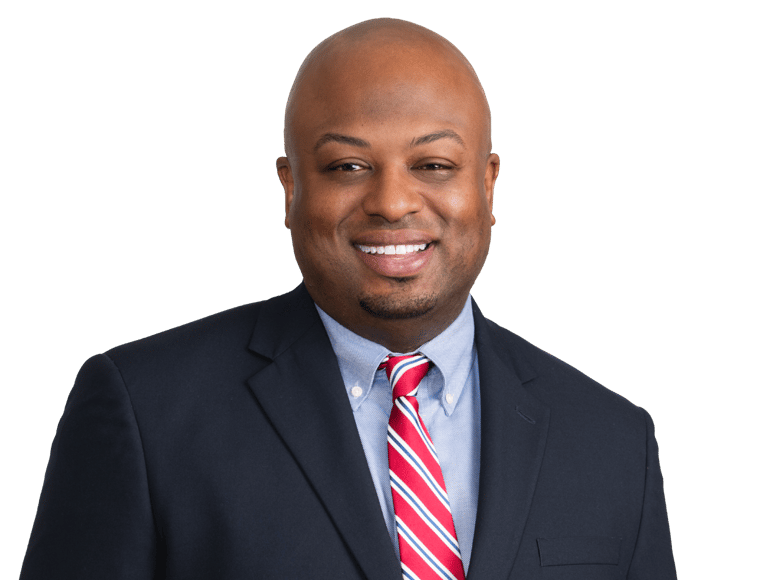
Alan Carroll “A.C.” Nash is a senior civil defense attorney and business leader whose practice focuses on the defense of insureds, corporations, and public entities in complex, high-exposure litigation. He concentrates on negligent security, wrongful death, product liability, automobile and commercial transportation claims, liquor liability, construction liability and premises liability matters.
A.C. also maintains a substantial public-sector and municipal defense practice, representing municipalities and law enforcement agencies in state and federal civil rights litigation, including claims alleging false arrest, malicious prosecution, and excessive force. His experience in this space includes defending matters throughout Florida in both trial and appellate courts.
A.C. serves as the Casualty Supervisor of the Fort Lauderdale office of Marshall Dennehey, where he oversees the day-to-day operations of the casualty department and leads a large team of attorneys handling complex and catastrophic-loss cases. In this role, he is responsible not only for legal strategy and quality control, but also for client relationships, attorney development, and overall practice performance.
Before joining Marshall Dennehey, A.C. was a trial associate at a Fort Lauderdale–based law enforcement and municipal defense firm with more than 30 years of history. Working closely with firm leadership, he played a key role in defending public entities and law enforcement officers in high-stakes civil rights litigation across Florida.
A.C. earned his juris doctor from Florida State University College of Law in 2007. While in law school, he served as a certified legal intern with the Second Judicial Circuit, trying approximately 40 jury and non-jury criminal cases. He was a member and coach of the Mock Trial Team, served as a student ambassador and traveling recruiter, sat on the Dean’s Cabinet, acted as the Fifth Circuit Governor for the American Bar Association, and received the Distinguished Pro Bono Award upon graduation.
A South Florida native, A.C. earned his undergraduate degree in Public Relations from the University of Florida, graduating early. Prior to law school, he worked in public relations and marketing, including managing state and national accounts for a Miami-based firm and later executing advertising and marketing programs for two Fortune 100 companies. This background continues to inform his approach to client development and litigation strategy.
A.C. is deeply committed to mentorship and community involvement. He mentors students at the elementary, secondary, undergraduate, and law school levels and has served in leadership and advisory roles with multiple professional and civic organizations.
Thought Leadership
Defense Digest
On the Pulse…The Blitz Is Coming: Pranks, Perception and the Risk of Draft Day
June 1, 2025
In April, the high-stakes world of the NFL Draft took over the airwaves. Millions were made and fumbled away as each round unfolded. Scouting reports were dissected, 40-yard dash times debated, and the patience of each player was tested. Beyond the fanfare stood a cautionary tale for civil defense lawyers. In litigation, as in football, perception, reputation, and outside interference can blindside the best-prepared team. Shadeur Sanders and his father, Deion, commanded headlines throughout the college football season and into the draft. However, it was Jaxson Ulbrich, son of Falcons defensive coordinator, Jeff Ulbrich, who stole a moment of spotlight both infamously and immaturely. After obtaining a private draft-day phone number, Jaxson prank-called Sanders, whose draft stock had unexpectedly fallen. He claimed that Sanders would be drafted by the Saints but would have to wait. While it was quickly revealed that he had been “trolled,” this event signifies how easily misinformation can spread and how pranks can carry real consequences. The NFL fined Jeff Ulbrich $100,000, and the Falcons organization was fined $250,000. In civil defense cases, surprises, misinformation, public manipulation, and ambush tactics are commonplace. Plaintiff lawyers, while mostly ethical, can sometimes push the envelope. According to the ABA, almost 300,000 lawyers are publicly disciplined for ethical misconduct each year. Therefore, a video that paints your client in unfavorable light, one that it is selectively edited, like Shannon Sharpe alleges, or one that is outright misleading, may become the order of the day. Once public, the reputational harm spreads faster than the truth can catch up. Headlines follow, juries are tainted, and the reputation of your client can plummet overnight. Insurers then start asking hard questions. The call to Sanders wasn’t just a joke. It could be actionable. In Florida and many other jurisdictions, the actions of Ulbrich could possibly be considered tortious interference with a current or prospective business relationship. This tort occurs when a third party intentionally disrupts a known business relationship, thereby causing damages. More specifically, the elements of the tort for tortious interference with a business relationship includes: (1) the existence of a business relationship or contract, (2) knowledge of the business relationship or contract on the part of the defendant, (3) an intentional and unjustified interference with the business relationship, and (4) damages. See Howard v. Murray, 184 So. 3d 1155 (Fla. 1st DCA 2015). An action for tortious interference with a prospective business relationship requires a business relationship evidenced by an actual and identifiable understanding or agreement which, in all probability, would have been completed had the defendant not interfered. See Ferguson Transp., Inc. v. North Am. Van Lines, Inc., 687 So. 2d 821, 822 (Fla. 1996). Although numerous explanations for his draft slide exist (i.e., his lack of a real agent, combine opt-out, alleged poor interviews, etc.), Sanders could argue that the prank compounded doubt, shifted teams’ perceptions about drafting him, and thereby contributed to his slide. The same dynamic applies in tort litigation. When perception turns, the liability profile of a company can collapse, even without wrongdoing. In 2005, Anna Ayala alleged that she found a human finger in her chili at a Wendy’s in California. After a month-long investigation, it was determined that the incident was a hoax orchestrated by Ayala. Unfortunately, Wendy’s suffered work cutbacks as business fell as much as 50% in some areas. In 2020, rumors began on Reddit that Wayfair was allegedly involved in child trafficking. The claims were that their throw pillows and storage cabinets were a front for these nefarious activities. Social media ran with this information, complete with photographs, screen shots, and celebrity statements. The rumors were a hoax. In 2011, not even the Golden Arches was safe. A photo was captured and spread on social media that provided that, as an insurance measure due, in part, to a string of robberies, certain customers would be required to pay an additional fee of $1.50 per transaction. This, too, was a hoax, and McDonald’s stated: “This is, unfortunately, an example of how rumors can out speed the truth. Over the last 48 hours, we've been tweeting and striving to clarify that this is a hoax.” Nevertheless, the public was slow to believe McDonald’s statement, and the hashtag #SeriouslyMcDonalds trended. The law is catching up to the age of virility and meme culture. However, as the aforementioned warnings demonstrate, hoaxes can have impacts that far outlive the “joke.” It can be a draft-day prospect losing millions or a client losing trust; in all scenarios, narrative controls and perception matters. Whether it is Sanders waiting for a life-changing call or a business defending its decades of good will, the threats aren’t always head-on. Sometimes, the blitz is coming from your blindside. Defense Digest, Vol. 31, No. 2, June 2025, is prepared by Marshall Dennehey to provide information on recent legal developments of interest to our readers. This publication is not intended to provide legal advice for a specific situation or to create an attorney-client relationship. ATTORNEY ADVERTISING pursuant to New York RPC 7.1. © 2025 Marshall Dennehey. All Rights Reserved. This article may not be reprinted without the express written permission of our firm. For reprints, contact tamontemuro@mdwcg.com.
Legal Update for Florida Civil Litigation
Florida Passes Tort Reform: What You Need to Know
March 27, 2023
On March 24, 2023, Florida Governor Ron DeSantis signed House Bill 837, “Civil Remedies,” into law. HB 837 contains sweeping tort reform that will uproot the landscape of Florida civil litigation. The changes apply to causes of action accruing after the effective date—March 24, 2023. Prior to the bill becoming law, plaintiffs’ firms, anticipating this monumental change, filed approximately 100,000 lawsuits. These filings represent approximately 77% of the total cases filed since January 1, 2023.[1] Below is a brief summary of the changes and the potential impact the new law brings. NEW MODIFIED COMPARATIVE NEGLIGENCE STANDARD HB 837 changes Florida’s standard from “pure” comparative negligence to “modified” comparative negligence. This aligns Florida with a majority of the other states who have already adopted a “modified” comparative negligence standard. This new standard does not apply in medical negligence actions. Previously, a plaintiff was entitled to recover a percentage of damages proportionate to the degree of fault of the defendant. Under “modified” comparative negligence, if a plaintiff is more negligent than the defendant, the plaintiff cannot recover. This new standard will likely reduce the number of cases brought in which the plaintiff was the predominant cause of his or her own harm. TWO-YEAR STATUTE OF LIMITATIONS FOR GENERAL NEGLIGENCE CLAIMS HB 837 amends section 95.11, Florida Statutes, which sets forth the statutes of limitations for various causes of action. The bill now reduces the statute of limitations for general negligence from four years to two years. This may encourage plaintiffs to file suit earlier as plaintiffs and their counsel will prepare their cause of action and evaluate the validity of their claims at an earlier juncture. This will also increase the ability to obtain evidence closer to the time of the alleged incident. Where liability is contested, plaintiffs may be deterred from filing suit sooner. The two-year statute of limitations could also be used as leverage to effectuate earlier settlement and resolution of claims, especially pre-suit. ADMISSIBILITY OF EVIDENCE IN PAST AND FUTURE MEDICAL EXPENSES HB 837 changes the evidence that plaintiffs can introduce to establish past and future medical expenses. Previously, with the exception of services paid by Medicare or Medicaid, plaintiffs were permitted to board the full amount of medical bills charged for services rendered. This was without evidence of any adjustments or reductions and was prior to a post-verdict setoff for adjustments by private insurance. If plaintiffs had Medicare or Medicaid, only the amounts actually paid by Medicare or Medicaid were admissible as evidence of past medical expenses. Now, the evidence offered to prove the amount of damages for past medical bills that have been satisfied is limited to the evidence of the amount actually paid, regardless of the source of payment. For unpaid past medical bills, admissible evidence will depend whether the plaintiff has health care coverage, Medicare, or Medicaid: • If plaintiff has health care coverage but obtains treatment under letter of protection or does not submit charges, evidence of amount that health care coverage would have paid to satisfy charges, plus plaintiff’s share of medical expenses, is admissible. Evidence of reasonable amounts that were billed to plaintiff for medically-necessary treatment or services is also admissible. • If plaintiff does not have insurance, or has Medicare or Medicaid, evidence of 120 percent of Medicare reimbursement rate in effect is admissible. • If there is no applicable Medicare rate, evidence admissible is 170 percent of applicable state Medicaid rate. Damages that may be recovered may not include any amount in excess of the evidence of medical treatment and services expenses admitted. Further, it cannot exceed the sum of amounts actually paid, amounts necessary to satisfy charges due and owing, and the amounts necessary for reasonable and necessary future medical treatment and services. For future medical bills, the “usual and customary” amount also depends on whether the plaintiff has health care coverage: • If plaintiff has health care coverage other than Medicare or Medicaid, evidence of amount that could be satisfied if charges were submitted, in addition to portion of medical expenses under insurance contract, is admissible. • If plaintiff does not have insurance, or has Medicare or Medicaid, evidence of 120 percent of Medicare reimbursement rate in effect is admissible. • If there is no applicable Medicare rate, evidence admissible is 170 percent of applicable state Medicaid rate. LETTERS OF PROTECTION AND REFERRALS MUST BE DISCLOSED If a plaintiff treats under a letter of protection, the letter of protection must be disclosed, as must all bills for medical expenses, which must be itemized and coded. Whether the plaintiff was referred for treatment under the letter of protection must also be disclosed, along with who referred the plaintiff. If the plaintiff is referred for treatment under a letter of protection by their attorney, disclosure of the referral is permitted, notwithstanding the attorney-client privilege, as the financial relationship between the law firm and the medical provider is relevant to the issue of bias of the testifying medical provider. This new law overturns the Florida Supreme Court’s decision in Worley v. Central Florida Young Men’s Christian Ass’n, Inc., 228 So. 2d 18 (Fla. 2017). BAD FAITH – NEW DUTY OF INSUREDS AND IMPACT ON DAMAGES Now, in every bad faith action in Florida, the insured, claimant, and/or their representative have a duty to act in good faith in providing information, making demands, setting deadlines, and attempting to settle the claim. The trier of fact may consider whether the insured, claimant and/or their representative acted in good faith and may reasonably reduce the amount of damages awarded. Mere negligence remains insufficient to bring a claim for bad faith against an insurer. BAD FAITH – CHANGES TO 90-DAY PERIOD, ADMISSIBILITY, AND STATUTE OF LIMITATIONS No bad faith action can lie if an insurer tenders the lesser of the policy limits or the amount demanded by the plaintiff within 90 days after receiving actual notice of the claim and sufficient evidence supporting the claim. It is not bad faith if the insurer does not tender, and the existence of the 90 days is inadmissible in any action seeking bad faith. Should the insurer not tender, the statute of limitations is extended for an additional 90 days. BAD FAITH – WHEN INSURER IS NOT LIABLE FOR FAILURE TO PAY POLICY LIMITS FOR MULTIPLE CLAIMS EXCEEDING LIMITS If multiple claims arising out of a single occurrence exceed the policy limits, the insurer is not liable beyond the policy limits for failure to pay any or all of the policy limits within 90 days if: • The insurer files an interpleader to determine rights of claims, and if found in excess of policy limits, claimants are entitled to a prorated share; or • The insurer makes full policy limits available at binding arbitration, in which claimants are entitled to a pro rata share of policy limits as determined by the arbitrator, who must also consider comparative fault and the likely outcome of trial. If a claim is resolved by the arbitrator, a general release must be executed by the claimant to the insured party whose claim is resolved. NEGLIGENT SECURITY – NEW PRESUMPTION AGAINST LIABILITY AND CONSIDERATION OF FAULT OF ALL PARTIES In a negligent security action against the owner or operator of real property by a person lawfully on the property who was harmed by the criminal act of a third party, the trier of fact is now required to consider the fault of all persons who contributed to the injury or death, including the criminal actor. Moreover, the owner or operator of the property cannot be held negligent for damages to a third party attempting to commit, or engaged in committing, any criminal act on the property. HB 837 also creates a presumption against negligent security liability for the owner or operator of a “multifamily residential property” if the burden of proof is met to demonstrate “substantial compliance” with crime assessments, crime and safety training for employees, and safety and security measures which include: • Security camera system at points of exit and entry that maintains the video retrievable for 30 days; • A lighted parking lot from dusk to dawn; • Lighting in common areas, porches, walkways, and laundry rooms from dusk to dawn; • A deadbolt measuring at least one inch in every door; • Locking devices on every window and sliding door; • Locked gates at pool fence areas; and • A peephole or viewer on door that does not have a window or window next to the door. CONTINGENCY FEE MULTIPLIER – NEW LODESTAR FEE PRESUMPTION Previously, Florida case law allowed for courts to consider and award contingency fee multipliers to attorneys’ fees, based on factors which included but were not limited to: the relevant market if contingency fee multipliers were required to obtain competent counsel; whether the attorney mitigated the risk of nonpayment; the amount involved, the results obtained, the type of fee arrangement between the attorney and client; and likelihood of success at the outset of the action. HB 837 now changes the ability to obtain a contingency fee multiplier by creating a “strong presumption” that the “lodestar” fee, the number of hours which would have reasonably been spent by an attorney and multiplying that number by a reasonable hourly rate, is sufficient and reasonable. This can only be overcome in rare and exceptional circumstances in which evidence has been presented that competent counsel could otherwise not have been retained. ONE-WAY ATTORNEYS’ FEES – LIMITED APPLICABILITY Previously, “one-way attorneys’ fees” applied in situations in which an insured prevailed in an action against an insurer. One-way attorneys’ fees in insurance cases now only apply to declaratory judgment actions for the determination of insurance coverage against an insurer after a denial of coverage of a claim, which does not include a defense under a reservation of rights. If a declaratory judgment is granted in favor of the insured against the insurer, the court shall award reasonable attorneys' fees, which are limited to those incurred in the action. Further, section 768.79, Florida Statutes, also known as the “offer of judgment” or “proposal for judgment” statute, will apply to any civil action involving an insurance contract. ______________________________________________ [1] Ron Hurtibise, Civil Case Filings Surge Before DeSantis Signed Sweeping Lawsuit Reform Bill, SUN-SENTINEL, (March 24, 2023, 6:55 p.m.), https://www.sun-sentinel.com/news/politics/fl-bz-case-filing-surge-before-tort-reform-20230324-7ze7uzxslbcndcaaessd4bmgzy-story.html. The material in this law alert has been prepared for our readers by Marshall Dennehey. It is solely intended to provide information on recent legal developments and is not intended to provide legal advice for a specific situation or to create an attorney-client relationship. We welcome the opportunity to provide such legal assistance as you require on this and other subjects. If you receive the alerts in error, please send a note to tamontemuro@mdwcg.com. ATTORNEY ADVERTISING pursuant to New York RPC 7.1. © 2023 Marshall Dennehey. All Rights Reserved.