.

Marshall Dennehey Expands Pittsburgh Office with Addition of Seven Attorneys from Walsh Barnes

July 22, 2025
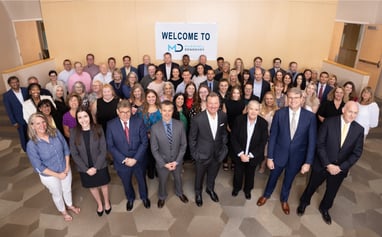
Group photo of Marshall Dennehey's Pittsburgh office employees with new attorney additions from Walsh Barnes

Marshall Dennehey announced that it has added the majority of the talent and existing business of Pittsburgh-based civil defense litigation firm Walsh Barnes, P.C. The move brings seven attorneys, including former Walsh Barnes named partner Adam M. Barnes and two other shareholders, to Marshall Dennehey's Pittsburgh office. Paul J. Walsh, III, founder and managing partner of Walsh Barnes, is stepping away from active litigation after 35 years and will devote his full attention to mediation. Walsh Barnes will be closing as of July 31, 2025.

"The union will not only strengthen our firm by bringing in litigators with diverse expertise and a strong client base, but enrich our culture with individuals who embody the very best of Pittsburgh's character," said G. Mark Thompson, Marshall Dennehey's President and CEO. "Our confidence in the success of this match is further bolstered by the fact that our lawyers, and those of Walsh Barnes, have worked together on a variety of cases and long known, liked and respected one another. We believe Walsh Barnes' decision to partner with us is a testament to the enduring power of Marshall Dennehey to attract great lawyers."  

"I have had the pleasure of litigating many cases with Marshall Dennehey over the years and have found the firm to be home to exceptional attorneys with the highest ethical standards," said Walsh. "I am thrilled that our attorneys and staff have been afforded the opportunity to continue their careers at such an esteemed firm."

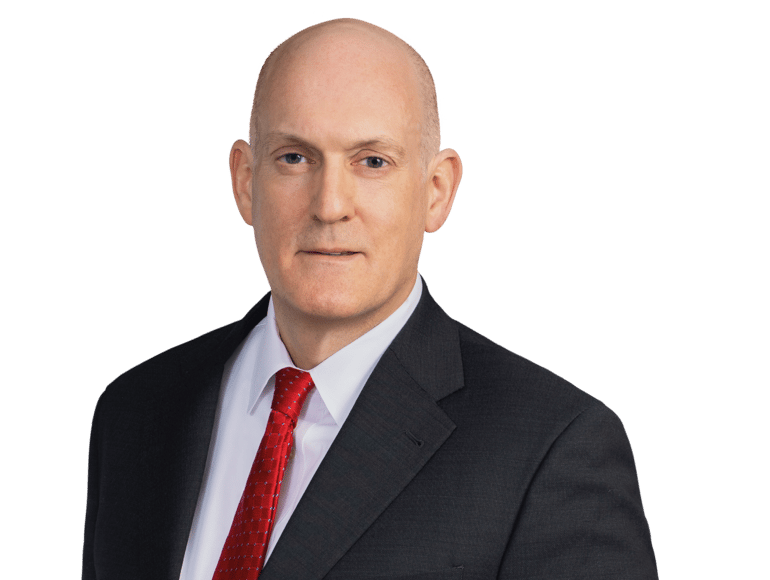
Barnes joins Marshall Dennehey as a shareholder in the Casualty Department. He has more than 25 years of experience litigating general liability and coverage cases in Pennsylvania, West Virginia, and Ohio. His experience includes matters involving premises liability, product liability, auto liability, fire losses and employment liability. Barnes received his J.D. from Indiana University School of Law – Bloomington and his B.A., cum laude, from Indiana University – Bloomington.

Guy E. Blass will also join Marshall Dennehey as a shareholder in the Casualty Department. Blass, who has tried more than 50 civil jury trials to verdict, has over two decades of experience in matters involving construction claims, product liability, toxic torts, premises liability, motor vehicle accidents and general liability. He received his J.D. from Duquesne University School of Law and his B.A. from Illinois Wesleyan University.

Susan A. Kostkas joins Marshall Dennehey as a shareholder in the Health Care Department. Kostkas has nearly 30 years of experience defending nursing homes and personal care facilities in professional negligence claims resulting in personal injury and death. Prior to becoming a lawyer, Kostkas was a registered nurse in cardiology and intermediate care units and she continues to maintain her RN license. She earned her J.D. from Duquesne University School of Law and a B.S.N. from Gannon University.

Edward A. Yurcon, who joins the firm as special counsel in the Casualty Department, has 45 years of litigation experience. He defends companies and individuals in a wide variety of matters including wrongful death, bodily injury and catastrophic loss claims arising from gas explosion and fire, industrial, tractor trailer, automobile accident, premises liability, defamation and product liability claims. Yurcon ran his own firm for many years and holds a J.D. from Villanova University School of Law and a B.A., cum laude, from the University of Pittsburgh.

Gretchen J. Fitzer will be special counsel in the Casualty Department. She defends personal injury actions, including premises liability, product liability, auto liability, and professional negligence. Fitzer, who has more than 30 years' experience, earned her J.D. from Duquesne University School of Law and her B.A. from Allegheny College.

Ryan Joyce is joining Marshall Dennehey's Professional Liability Department as special counsel. With 15 years of experience, he focuses his practice on the defense of professional malpractice claims. Joyce received his J.D. from the University of Pittsburgh School of Law, his M.A. from Temple University, and his B.A. from Allegheny College.

Alyssa McKenzie joins Marshall Dennehey as an associate in the Casualty Department. She concentrates her practice on the defense of bodily injury and property damage claims arising out of motor vehicle liability, premises liability and product liability claims. McKenzie received her J.D. from Ohio Northern University Pettit College of Law and her B.A, magna cum laude, from Ohio Northern University.

In addition to the seven attorneys, the support staff of Walsh Barnes will join Marshall Dennehey's Pittsburgh office.


Firm Highlights

Thought Leadership

Ohio Supreme Court Holds That a Binding Appraisal Award May Not Be Set Aside Absent Specific Evidence of Manifest Mistake or Fraud

On July 23, 2026, the Ohio Supreme Court issued a rare opinion on the binding effect of an appraisal award in a property insurance policy.  The Court in One Church held: A binding appraisal award will not be set aside unless an error is so palpably wrong that it undermines the intent of the agreement, such as corruption or gross mistake, not a mere error of judgment—To plead a claim of mistake with particularity as required by Civ.R. 9(B), facts alleged in a complaint must constitute the elements of mistake—Allegation that additional, hidden damage was discovered after appraisal award failed to state a claim of mistake that could justify setting aside binding appraisal.  The case arose out of a claim brought by One Church against its insurer, Brotherhood Mutual Insurance Company for roof damage from a storm. Pursuant to the terms of the insurance policy, the parties agreed to submit the matter to appraisal. The two appraisers inspected the building, and both appraisers agreed that the damages were $313,271.98. The insurer paid the agreed appraised amount.  Thereafter, the insured submitted a claim for an additional $206,663.09 in damages. The insured argued that these additional damages were not discovered until after the repairs began, and that they should be permitted to submit an additional claim, even though there had already been a binding appraisal of damages. The insurer refused to pay the additional damages, and the insured sued for breach of contract and bad faith.  In the trial court, the insurer moved to dismiss for failure to state a claim, arguing that the binding appraisal award barred any further claims. The insured took the position that additional hidden damages could not be discovered until after the repairs began, and therefore there was a mutual mistake. The trial court dismissed the case on the insurer’s motion, because there was no “evidence of fraud, misfeasance, or mistake”. The Court of Appeals agreed that appraisal awards are generally binding, but noted that an appraisal award can be set aside for fraud or manifest mistake. The Court of Appeals reversed and remanded the case to the trial court, finding that the insured had pled mistake with sufficient particularity. The insurer appealed to the Ohio Supreme Court. On appeal, the Ohio Supreme Court reversed the Court of Appeals, and reinstated the trial court decision dismissing the case for failure to state a claim upon which relief can be granted. The Supreme Court found that since the insured had already demanded appraisal, and the appraisal award was binding, “something more than error of judgement, such as corruption in the arbitrator, or gross mistake” must be pled with particularity, and proven for the insured to override the appraisal award. Since the complaint did not allege fraud or manifest mistake with sufficient particularity, something more than a mere error of judgment, the complaint was insufficient to state a claim.  The complaint in this case did not challenge the appraisal award. It pled that additional damages were discovered that were not apparent when the appraisal was done. It did not specify “who discovered the damages, how they were discovered, where they were found, why they were previously hidden, or why they rise to the level of a manifest mistake that the “appraiser would have corrected...had it been called to his attention”. Id at ¶22 citing Lakewood Mfg. Co. v. Home Ins. Co. of New York, 422 F.2d 796, 798 (6th Cir. 1970). Cases deciding the effect of appraisal awards are unusual. The Ohio Supreme Court’s decision in One Church relies primarily on 19th century case law for its conclusion. This emphasizes the fact that there is minimal case law deciding the effect of binding appraisal clauses in property insurance policies, and makes this case all the more significant. A lengthy dissent was written by Justice Fisher, who would have affirmed the Court of Appeals decision reversing and remanding the case for a decision on the merits. Of course, the decision works both ways, and an insurer dissatisfied with a binding appraisal award will likewise be without further recourse absent evidence of corruption, fraud, misfeasance, or manifest mistake, which must be pled with particularity. To constitute manifest mistake, “the mistake must be of such character that the arbitrator or appraiser would have corrected it had it been called to his attention.”  Lakewood Mfg. Co. v. Home Ins. Co. of New York, 422 F.2d 796, 798 (6th Cir. 1970).  The majority opinion does not specifically identify what would have been sufficient to plead mistake with particularity, or if the insured could have amended the complaint to overcome the deficiencies. The dissent argues that this was not really a case alleging mistake, but rather a question of contract interpretation. The insured did not challenge the appraisal, but argued that the hidden damage was not part of the appraisal, and the appraisal only covered the known damages.  However, this argument did not carry the day with the majority.  *Thomas F. Glassman, a shareholder in Marshall Dennehey’s Cincinnati office, filed a brief in the Ohio Supreme Court on behalf of the Ohio Association of Civil Trial Attorneys, in support of the insurer’s position.

Result

No-Cause Jury Verdict Secured in Wrongful Death Trial

We successfully obtained a no-cause jury verdict in a 13-day wrongful death trial. The decedent, a 59-year-old man, was admitted to the emergency room on February 15, 2019, with complaints of abdominal pain, decreased appetite, and constipation, despite the use of laxatives. The patient did not complain of any nausea, vomiting, or diarrhea. He had a significant medical history including diabetes, hypertension, prior coronary artery stenting, morbid obesity (with past gastric bypass surgery), longstanding ventral hernia, and back pain. A CT scan revealed multiple hernias and a potential closed-loop bowel obstruction, leading to a surgery consultation. Our client, an emergency general surgeon, interpreted that the patient did not have a closed loop or any significant obstruction and recommended non-surgical management. The patient was approved to have clear liquids, and had a vomiting incident shortly after, but our client was not notified. The patient was returned to NPO status, and after improving overnight, he was returned to “clears” and additional medical and renal consults were ordered. Our client did not receive any communications from the residents/nurses of any changes in the patient’s condition. On February 18, 2019, two rapid responses were called due to increased heart rate and vomiting. It is believed that the vomiting resulted in aspiration, causing sepsis, ultimately leading to the patient’s death. During the trial, the plaintiff’s sole medical expert highlighted imaging on the wrong hernia, which called into question all of his opinions in the case. We made key objections related to the expert testimony, limiting what the allegations were, and preventing new allegations from being made. After approximately two and a half hours of deliberating, the jury returned a no-cause verdict.
