.

Sean P. Greenwalt

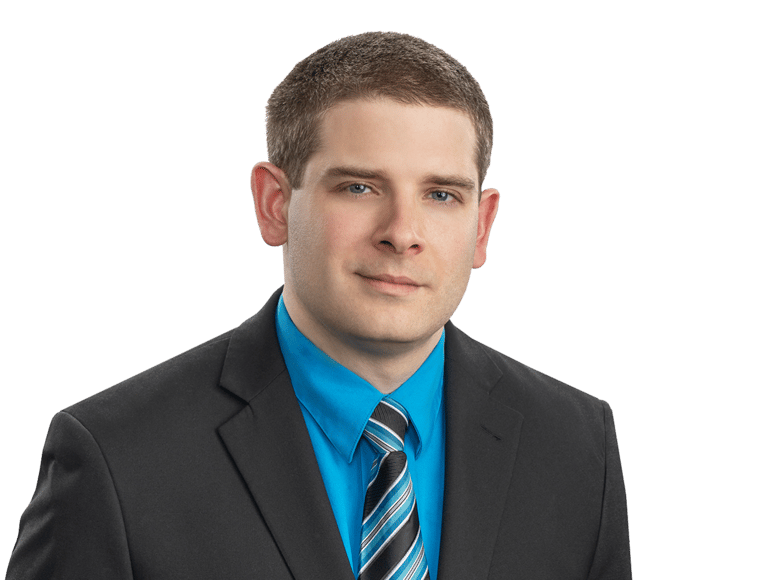
Portrait of Sean P. Greenwalt

Sean is a shareholder in the firm’s Casualty Department where he focuses his practice on amusement, sports, and recreation matters as well as fraud and personal injury protection disputes. Sean litigates a variety of complex matters on behalf of corporations involving premises liability, commercial auto liability, catastrophic loss, wrongful death and commercial contract disputes. He also has experience defending first-party auto coverage suits and conducting examinations under oath.

Sean is a member of the Florida Defense Lawyers Association and Claims Litigation Management Alliance. He routinely writes articles and presents on legal developments in the insurance industry, and has also been published in Insurance Journal. Sean also volunteers as a Guardian ad Litem child advocate in Hillsborough County.

Prior to joining Marshall Dennehey, Sean worked as outside counsel for a national automobile insurance company and previously worked as in-house counsel for a national automobile insurance company. Before working in civil litigation, Sean was an attorney for Florida's Department of Children and Families, where he successfully litigated countless legal issues and obtained numerous successful bench trial verdicts that protected the vulnerable and allowed children to become adopted.

Sean earned his juris doctor and graduated magna cum laude from Ave Maria School of Law in Naples, Florida. During law school, Sean served as an Associate Editor on Law Review and a member of the Moot Court Board. He also was a Judicial Intern for the Honorable Judge Douglas Frazier of the US District Court, Middle District of Florida. Sean obtained his Bachelor of Arts degree from Old Dominion University where he was inducted into the honor society for Communication majors, Lambda Pi Eta.

    • Ave Maria School of Law (J.D., magna cum laude, 2016)
    • Old Dominion University (B.A., 2012)
    • Florida, 2016
    • U.S. District Court Middle District of Florida, 2023
    • Florida Bar Association
    • Florida Defense Lawyers Association
    • Claims & Litigation Management Alliance (CLM) Western Florida Chapter
    • Asian Pacific American Bar Association of Tampa Bay (APABA-TB)
    • A Proposal for Settlement for All Seasons: Effective Use of the PFS in Florida’s New Legal Landscape, Florida Liability Claims Conference, Lake Buena Visit, FL, June 18, 2025
    • First Party Auto (PIP) and Property Year in Review Preview, The Institutes CPCU Society - Central Florida Chapter, November 14, 2024
    • Guardian ad Litem, Hillsborough County

Results

Thought Leadership

SIU Spotlight

Florida Appellate Court Sets Record Straight on Longtime Misconception of Examinations Under Oath as Admissible Evidence

May 15, 2026

The Florida Third District Court of Appeal recently overturned a long standing assumption regarding the admissibility of examinations under oaths (“EUOs”) as trial evidence in Universal X Rays, Corp. v. United Auto. Ins. Co., 422 So. 3d 1203 (Fla. 3d DCA 2025), reh'g denied (Nov. 3, 2025). For years, a longstanding mythos existed around EUOs in Florida that they could not be used in litigation because of a multitude of reasoning: hearsay, trustworthiness, due process, creation in anticipation of litigation, among other common critiques. Such was the situation that great evidence could be potentially unearthed in an EUO, but if it could not be independently verified by other means, certain evidence as to fraudulent or denied coverage claims would never see the light of day. In Universal X Rays, the assignee and insured, Miguel LaRosa-Ferrer sat for an examination under oath per his insurance policy following a car accident. The EUO was conducted via videoconference with a court reporter and the insured had an attorney present. During the required examination, the insured admitted that he had moved to a new address shortly before applying for the insurance policy but continued to list his old address on the application. This resulted in a lower premium for the insured. Two months later, United Auto sent a letter to the insured rescinding the policy, citing material misrepresentation of the garaging address, and returned the premium. Several months later, the appellant, Universal, sued United Auto for breach of contract after it denied a medical billing reimbursement request for no-fault personal injury protection benefits. United Auto eventually moved for summary judgment on the issue of material misrepresentation with its key piece of evidence being the EUO transcript. Universal argued that the EUO transcript was inadmissible as improper hearsay, an out of court statement by a declarant offered for its truth, and that it violated section 92.33, Florida Statutes (2025) because the insurer did not provide a copy of the transcript to the insured. However, Universal offered no actual evidence disputing that the insured committed a material misrepresentation. The lower trial court disagreed with Universal’s legal arguments and because no evidence disputing the material misrepresentation was presented, entered final judgment for United Auto. Unsurprisingly, Universal promptly appealed, as there is a history of trial courts in Florida finding EUOs to be inadmissible for numerous reasons leading to a long fabled belief in the industry as to the same. For example, in JJZ Medical Center, Inc., v. United Auto. Ins. Co., 32 Fla. L. Weekly Supp. 432a, (Fla. 11th Jud. Cir. Cty. 2024), a Miami-Dade trial court declined to review an examination under oath demonstrating material misrepresentation after an insured signed an affidavit to the contrary and it was submitted as evidence. The court held that the EUO could not be admissible because there was no cross-examination of the witness making it “inherently untrustworthy.” The court went on to state that an EUO transcript met no exception to hearsay exclusions under Florida law either such as former testimony or a business records exception. Another County Court in Miami-Dade excluded an EUO transcript involving a material misrepresentation summary judgment because it was not provided to the declarant nor adopted by the declarant per § 92.33 Fla. Stat, and would be considered hearsay. Manuel V. Feijoo, M.D., aao Andisleydis Sordo Perez v. United Auto. Ins. Co., 31 Fla. L. Weekly Supp. 382a (Fla. 11th Jud. Cir. Cty. 2023). In this case, the court honed in on the argument that an examination under oath, while sworn, lacks personal knowledge of the declarant because it is not provided to them, nor do they adopt it after it is transcribed. § 92.33 Fla. Stat requires a written statement by an injured party to be provided to that individual or it may not be used in a later civil action. The court held this statute to applicable and, thus, excluded the EUO transcript. Both of these common lower court arguments were then brought up on appeal by Universal. They argued to the Third District Court of Appeal that the EUO was inadmissible hearsay, violating Florida Statute § 92.33, which requires a copy of a written statement to be provided to the declarant. However, Third District Court of Appeal rejected both arguments and for a reason that seemed to catch the appellant off-guard. First, the court cited Florida’s revised summary judgment standard, which in 2021, aligned Florida’s Rule 1.510 with the federal summary judgment standard Rule 56. Using the full benefit of federal case law, the court held that hearsay is permissible “as long as it can” be presented in admissible form at trial—such as through live testimony. In such instances, the proper response from an opposing party is to present conflicting evidence of the statement. However, in this case, Universal put forth no evidence that the insured’s garage address was not materially misrepresented, and, thus, they lost this issue. The Third District rejected the argument that the insurer violated § 92.33 Fla. Stat., noting that the statute only requires “written statements” to be provide to an injured person. The court held that an EUO, which is a sworn transcribed statement, would not even be covered by § 92.33, and the appellant failed to provide any authority to the contrary. Given that appellant’s statutory argument did not apply and it presented no evidence to contradict the examination under oath, which could be reduced to admissible form at trial, the Third District affirmed the admissibility of the EUO in favor of the insurer. The significance of the Universal X Rays opinion now means EUOs are an even stronger fraud deterrent in Florida. They can be taken with confidence and utilized to stem frivolous litigation and claims at much earlier phases than before. Rather than ignore the EUO transcript, opposing parties now must affirmatively disprove that fraud has occurred once it is admitted.

Arbitration Near and Far: Fla.’s Fifth District Court of Appeal Issues Guidance for Arbitration Scope Disputes

December 3, 2025

In Urban Air Jacksonville v. Hinton, Florida’s Fifth District Court of Appeal clarified the standard for determining the scope of an arbitration agreement in a dispute over whether activity was related or unrelated to an overall contractual agreement.

Firm Highlights

Thought Leadership

Featured Conversations... Key Takeaways from A.M. Best’s Webinar on the Misuse Defense in Product Liability Claims, Featuring Michael Salvati

Michael Salvati, shareholder in our Philadelphia office, was a panelist for the April A.M. Best webinar, “The Misuse Defense: Strategic Approaches to Defending Product Liability Claims for Insurers.” During the program, Michael and his fellow panelists offered practical, jurisdiction‑specific guidance on how misuse and failure‑to‑warn theories intersect in modern product liability litigation. Michael emphasized the unique challenges these claims present—particularly in states like Pennsylvania, where evidentiary rules diverge sharply from those applied in many other jurisdictions. Failure to Warn as the “Flip Side” of Misuse Salvati explained that failure‑to‑warn allegations often arise as a direct counter to a misuse defense. As he noted, “If our misuse defense is that the plaintiff didn't use a product properly or safely, then the failure to warn claim is that we didn't tell them how to use it properly.” He emphasized that these claims can stem from either the absence of warnings or criticisms of existing warnings, such as insufficient specificity or lack of clarity about risks. Pennsylvania’s Unique Evidentiary Landscape One of Salvati’s most notable points was the stark difference in how Pennsylvania treats evidence of compliance with industry standards. He highlighted that Pennsylvania is “one of the only states…where that evidence is not admissible” in strict liability cases. Manufacturers cannot rely on compliance with ANSI, UL, ISO, or even federal safety standards to defend the product against a strict liability claim—because the focus is solely on the product itself, not the manufacturer’s conduct. Salvati acknowledged the challenge this creates for defense counsel and clients who expect such compliance to carry weight. Understanding the Three Defect Theories Salvati also walked through the three primary defect theories recognized in many jurisdictions: - Design defect – a flaw in the product’s intended design - Manufacturing defect – a deviation affecting a specific unit - Failure to warn – inadequate instructions or warnings He noted that warnings claims are increasingly significant and sometimes stand alone when design or manufacturing theories are weak. As he put it, plaintiffs often default to warnings claims because “the default position seems to be, ‘If I got hurt, there must be something wrong.’” Warranties and State‑by‑State Variations Salvati addressed how breach‑of‑warranty claims fit into the broader framework, explaining that implied warranties—such as merchantability—often overlap with strict liability in Pennsylvania. He emphasized the importance of understanding local nuances, as warranty law and admissibility rules vary widely across states. Looking Ahead: The Growing Importance of Warnings In his closing remarks, Salvati stressed that warnings should never be treated as an afterthought in product liability defense. He observed that warnings‑only claims are becoming more common and urged manufacturers and insurers to continually evaluate the clarity and completeness of their instructions and warnings. His takeaway: “We should always be talking about what are the instructions that come with our products…to bolster a misuse defense.” Listen to the complete webinar here: https://www3.ambest.com/conferences/events/eventregister.aspx?event_id=WEB1074.

Thought Leadership

Legal Update for Special Education Law: Recent Positive Outcomes From the Group

Hearing Officer Confirms District Acted Appropriately Under IDEA and Section 504 William J. McPartland (Scranton) obtained a finding in favor of our client, a school district, on all issues following a due process hearing. The parent had filed a due process complaint alleging that the school district had breached its child find duty under the IDEA and Section 504, that the school district had discriminated against the student on the basis of disability in violation of Section 504, and that the school district had denied a free and appropriate public education to the student both by developing inadequate IEPs and via an actionable procedural violation.  Specifically, the student had received a Section 504 evaluation in October 2023, after a number of behavioral infractions culminating in a fight in September 2023, was identified as having anxiety and a sleep disorder, and received appropriate Section 504 accommodations. The student had never previously demonstrated signs of a learning disability, and the parent denied the school district permission to evaluate the student for special education needs in November 2023, and January 2024. The parent granted the district permission to evaluate the student in October 2024, after a private psychologist diagnosed the student with Attention Deficit Hyperactivity Disorder, possible Oppositional Defiance Disorder, a learning disorder, and anxiety. The school district issued a special education evaluation report in December 2024, finding that the student had an emotional disturbance and other health impairment, and an IEP providing an itinerant level of emotional support, as well as instruction in academics and social skills, was issued in January 2025, and amended in February, March, and April 2025. The student withdrew from the school district in April 2025, to attend a cyber charter school. The hearing officer determined that the school district had not violated its child find duty to the student in violation of either the IDEA or Section 504 where the district developed a Section 504 plan for the student within a month and a half of the parent’s first request for a Section 504 evaluation and where the parent repeatedly denied consent to conduct an IDEA evaluation of the student. The hearing officer noted that the student’s sporadic record of behavioral infractions prior to September 2023, did not suggest that the student had a disability prior to the parent’s initial request for an evaluation. The hearing officer further determined that no evidence had been produced to suggest that the student was discriminated against on the basis of disability in violation of Section 504. Additionally, the hearing officer determined that the IEP offered to the student was substantively adequate and that, to the extent the social and emotional programming offered by the school district was not received by the student, this resulted from the parent’s refusal to accept the same. The hearing officer finally determined that the school district did not commit an actionable procedural violation by delaying development of an IEP for the student where the parent repeatedly denied consent to evaluate the student. Court Dismisses Three of Four Claims Against School District Christopher J. Conrad and Daniel P. McGannon (Harrisburg) achieved a significant early victory on behalf of a school district client in. The team successfully obtained dismissal of three of the four claims asserted in the plaintiff’s amended complaint. The former district superintendent brought multiple claims arising out of his alleged “forced resignation,” including age discrimination under the ADEA, a Section 1983 Equal Protection claim, a Pennsylvania Whistleblower claim, and breach of contract. On behalf of the district, the defense team moved to dismiss the complaint in part, arguing: The plaintiff failed to plead sufficient facts to support a prima facie case of age discrimination. The equal protection claim was barred because the ADEA provides the exclusive federal remedy for age-based employment claims. The breach of contract claim could not stand because the underlying employment agreement had expired prior to the alleged breach. The court agreed, dismissing the ADEA, equal protection, and breach of contract claims in their entirety. As a result, only a single claim under the Pennsylvania Whistleblower Law remains pending. This outcome substantially narrows the scope of the litigation and positions the client for a more efficient defense moving forward.

Result

No-Cause Jury Verdict Secured in Wrongful Death Trial

We successfully obtained a no-cause jury verdict in a 13-day wrongful death trial. The decedent, a 59-year-old man, was admitted to the emergency room on February 15, 2019, with complaints of abdominal pain, decreased appetite, and constipation, despite the use of laxatives. The patient did not complain of any nausea, vomiting, or diarrhea. He had a significant medical history including diabetes, hypertension, prior coronary artery stenting, morbid obesity (with past gastric bypass surgery), longstanding ventral hernia, and back pain. A CT scan revealed multiple hernias and a potential closed-loop bowel obstruction, leading to a surgery consultation. Our client, an emergency general surgeon, interpreted that the patient did not have a closed loop or any significant obstruction and recommended non-surgical management. The patient was approved to have clear liquids, and had a vomiting incident shortly after, but our client was not notified. The patient was returned to NPO status, and after improving overnight, he was returned to “clears” and additional medical and renal consults were ordered. Our client did not receive any communications from the residents/nurses of any changes in the patient’s condition. On February 18, 2019, two rapid responses were called due to increased heart rate and vomiting. It is believed that the vomiting resulted in aspiration, causing sepsis, ultimately leading to the patient’s death. During the trial, the plaintiff’s sole medical expert highlighted imaging on the wrong hernia, which called into question all of his opinions in the case. We made key objections related to the expert testimony, limiting what the allegations were, and preventing new allegations from being made. After approximately two and a half hours of deliberating, the jury returned a no-cause verdict.