.

Kyle T. McGee

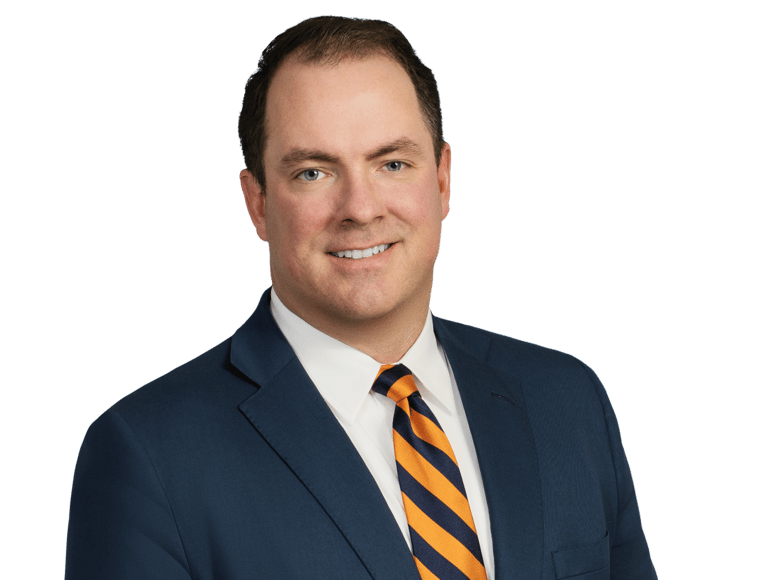
Portrait of Kyle T. McGee

Kyle is a member of the Professional Liability Department where he focuses his practice on civil rights and public entity litigation, professional liability, employment litigation and general liability/casualty litigation throughout Pennsylvania and West Virginia in both state and federal courts.

In his civil rights and public entity practice, Kyle is involved in the defense of police officers, municipal and government officials and public entities. Many of these claims allege police misconduct, such as claims of false arrest or excessive force, while other claims involve public entities and officials for constitutional claims, such as equal protection or due process, and other claims of misconduct and unlawful actions.

Kyle's professional liability practice involves the defense of engineers, architects, accountants, real estate agents, insurance agents and brokers, home inspectors and other professionals in a wide variety of legal claims. These matters require Kyle to work with individual professionals, firms, companies and agencies with respect to lawsuits, investigations and administrative claims.

As part of his employment practice, Kyle has represented both private and public employers and labor suppliers in employment-related disputes, including contract, harassment, retaliation, hostile work environment and discrimination claims. Kyle has experience representing employers in investigations, lawsuits and before administrative agencies, such as the Equal Employment Opportunity Commission, Office of Federal Contract Compliance Program, Occupational Safety and Health Administration, Pennsylvania Human Relations Commission and West Virginia Human Rights Commission.

Kyle has also successfully investigated and litigated general liability matters, including casualty matters, product liability, sexual and physical assault and abuse, and commercial and business litigation.

Additionally, Kyle currently serves as General Counsel for several property insurance companies where he provides general legal advice and risk management, as well as ensures compliance with applicable legal and regulatory requirements. In this capacity, Kyle works closely with the management team and board of directors in addressing legal, regulatory and compliance matters.

Kyle is trained as a mediator and has served on the Pro Bono Mediator Task Force for the Court of Common Pleas of Allegheny County, Pennsylvania.

In 2004, Kyle obtained his Bachelor of Science degree in Computer Science & Engineering from Bucknell University. He remains dedicated to his alma matter, having served on the Alumni Association Board of Directors since 2016 and currently serving as President of the Board. In 2007, Kyle obtained his juris doctor from the Thomas R. Kline School of Law of Duquesne University and has been engaged in the private practice of law ever since. 

    • Thomas R. Kline School of Law of Duquesne University (J.D., 2007)
    • Bucknell University (B.S., 2004)
    • New Jersey, 2007
    • Pennsylvania, 2007
    • U.S. Court of Appeals 3rd Circuit, 2007
    • U.S. District Court Western District of Pennsylvania, 2007
    • West Virginia, 2009
    • U.S. District Court Northern District of West Virginia, 2009
    • U.S. District Court Southern District of West Virginia, 2009
    • U.S. Court of Appeals 4th Circuit, 2020
    • U.S. District Court Middle District of Pennsylvania, 2020
    • U.S. District Court Eastern District of Pennsylvania, 2021
    • U.S. District Court District of New Jersey, 2022
    • Allegheny County Bar Association, 2007-present
    • Pennsylvania Bar Association, 2007-present
    • Pennsylvania Defense Institute
    • West Virginia Bar Association, 2009-present
    • Mediation Training
    • Collaborative Law Practice Training
    • Pro Bono Mediator for Allegheny County, Pennsylvania's Pro Bono Mediation Program
    • Member of the Prisoner Pro Bono Counsel Program for the United States District Court for the Western District of Pennsylvania
    • Youth Soccer Coach, Peters Township Soccer Association
    • Defeated class certification in a case where the plaintiffs sought to certify a class of individuals alleging that the strip search policy at a local prison was unconstitutional.  After class certification was denied, we prepared and filed a Motion for Summary Judgment. This motion was granted and the case was dismissed, with prejudice. 

Firm Highlights

Thought Leadership

Legal Update for Special Education Law: Recent Positive Outcomes From the Group

Hearing Officer Confirms District Acted Appropriately Under IDEA and Section 504 William J. McPartland (Scranton) obtained a finding in favor of our client, a school district, on all issues following a due process hearing. The parent had filed a due process complaint alleging that the school district had breached its child find duty under the IDEA and Section 504, that the school district had discriminated against the student on the basis of disability in violation of Section 504, and that the school district had denied a free and appropriate public education to the student both by developing inadequate IEPs and via an actionable procedural violation.  Specifically, the student had received a Section 504 evaluation in October 2023, after a number of behavioral infractions culminating in a fight in September 2023, was identified as having anxiety and a sleep disorder, and received appropriate Section 504 accommodations. The student had never previously demonstrated signs of a learning disability, and the parent denied the school district permission to evaluate the student for special education needs in November 2023, and January 2024. The parent granted the district permission to evaluate the student in October 2024, after a private psychologist diagnosed the student with Attention Deficit Hyperactivity Disorder, possible Oppositional Defiance Disorder, a learning disorder, and anxiety. The school district issued a special education evaluation report in December 2024, finding that the student had an emotional disturbance and other health impairment, and an IEP providing an itinerant level of emotional support, as well as instruction in academics and social skills, was issued in January 2025, and amended in February, March, and April 2025. The student withdrew from the school district in April 2025, to attend a cyber charter school. The hearing officer determined that the school district had not violated its child find duty to the student in violation of either the IDEA or Section 504 where the district developed a Section 504 plan for the student within a month and a half of the parent’s first request for a Section 504 evaluation and where the parent repeatedly denied consent to conduct an IDEA evaluation of the student. The hearing officer noted that the student’s sporadic record of behavioral infractions prior to September 2023, did not suggest that the student had a disability prior to the parent’s initial request for an evaluation. The hearing officer further determined that no evidence had been produced to suggest that the student was discriminated against on the basis of disability in violation of Section 504. Additionally, the hearing officer determined that the IEP offered to the student was substantively adequate and that, to the extent the social and emotional programming offered by the school district was not received by the student, this resulted from the parent’s refusal to accept the same. The hearing officer finally determined that the school district did not commit an actionable procedural violation by delaying development of an IEP for the student where the parent repeatedly denied consent to evaluate the student. Court Dismisses Three of Four Claims Against School District Christopher J. Conrad and Daniel P. McGannon (Harrisburg) achieved a significant early victory on behalf of a school district client in. The team successfully obtained dismissal of three of the four claims asserted in the plaintiff’s amended complaint. The former district superintendent brought multiple claims arising out of his alleged “forced resignation,” including age discrimination under the ADEA, a Section 1983 Equal Protection claim, a Pennsylvania Whistleblower claim, and breach of contract. On behalf of the district, the defense team moved to dismiss the complaint in part, arguing: The plaintiff failed to plead sufficient facts to support a prima facie case of age discrimination. The equal protection claim was barred because the ADEA provides the exclusive federal remedy for age-based employment claims. The breach of contract claim could not stand because the underlying employment agreement had expired prior to the alleged breach. The court agreed, dismissing the ADEA, equal protection, and breach of contract claims in their entirety. As a result, only a single claim under the Pennsylvania Whistleblower Law remains pending. This outcome substantially narrows the scope of the litigation and positions the client for a more efficient defense moving forward.

Result

No-Cause Jury Verdict Secured in Wrongful Death Trial

We successfully obtained a no-cause jury verdict in a 13-day wrongful death trial. The decedent, a 59-year-old man, was admitted to the emergency room on February 15, 2019, with complaints of abdominal pain, decreased appetite, and constipation, despite the use of laxatives. The patient did not complain of any nausea, vomiting, or diarrhea. He had a significant medical history including diabetes, hypertension, prior coronary artery stenting, morbid obesity (with past gastric bypass surgery), longstanding ventral hernia, and back pain. A CT scan revealed multiple hernias and a potential closed-loop bowel obstruction, leading to a surgery consultation. Our client, an emergency general surgeon, interpreted that the patient did not have a closed loop or any significant obstruction and recommended non-surgical management. The patient was approved to have clear liquids, and had a vomiting incident shortly after, but our client was not notified. The patient was returned to NPO status, and after improving overnight, he was returned to “clears” and additional medical and renal consults were ordered. Our client did not receive any communications from the residents/nurses of any changes in the patient’s condition. On February 18, 2019, two rapid responses were called due to increased heart rate and vomiting. It is believed that the vomiting resulted in aspiration, causing sepsis, ultimately leading to the patient’s death. During the trial, the plaintiff’s sole medical expert highlighted imaging on the wrong hernia, which called into question all of his opinions in the case. We made key objections related to the expert testimony, limiting what the allegations were, and preventing new allegations from being made. After approximately two and a half hours of deliberating, the jury returned a no-cause verdict. 

Thought Leadership

Featured Conversations... Key Takeaways from A.M. Best’s Webinar on the Misuse Defense in Product Liability Claims, Featuring Michael Salvati

Michael Salvati, shareholder in our Philadelphia office, was a panelist for the April A.M. Best webinar, “The Misuse Defense: Strategic Approaches to Defending Product Liability Claims for Insurers.” During the program, Michael and his fellow panelists offered practical, jurisdiction‑specific guidance on how misuse and failure‑to‑warn theories intersect in modern product liability litigation. Michael emphasized the unique challenges these claims present—particularly in states like Pennsylvania, where evidentiary rules diverge sharply from those applied in many other jurisdictions. Failure to Warn as the “Flip Side” of Misuse Salvati explained that failure‑to‑warn allegations often arise as a direct counter to a misuse defense. As he noted, “If our misuse defense is that the plaintiff didn't use a product properly or safely, then the failure to warn claim is that we didn't tell them how to use it properly.” He emphasized that these claims can stem from either the absence of warnings or criticisms of existing warnings, such as insufficient specificity or lack of clarity about risks. Pennsylvania’s Unique Evidentiary Landscape One of Salvati’s most notable points was the stark difference in how Pennsylvania treats evidence of compliance with industry standards. He highlighted that Pennsylvania is “one of the only states…where that evidence is not admissible” in strict liability cases. Manufacturers cannot rely on compliance with ANSI, UL, ISO, or even federal safety standards to defend the product against a strict liability claim—because the focus is solely on the product itself, not the manufacturer’s conduct. Salvati acknowledged the challenge this creates for defense counsel and clients who expect such compliance to carry weight. Understanding the Three Defect Theories Salvati also walked through the three primary defect theories recognized in many jurisdictions: - Design defect – a flaw in the product’s intended design - Manufacturing defect – a deviation affecting a specific unit - Failure to warn – inadequate instructions or warnings He noted that warnings claims are increasingly significant and sometimes stand alone when design or manufacturing theories are weak. As he put it, plaintiffs often default to warnings claims because “the default position seems to be, ‘If I got hurt, there must be something wrong.’” Warranties and State‑by‑State Variations Salvati addressed how breach‑of‑warranty claims fit into the broader framework, explaining that implied warranties—such as merchantability—often overlap with strict liability in Pennsylvania. He emphasized the importance of understanding local nuances, as warranty law and admissibility rules vary widely across states. Looking Ahead: The Growing Importance of Warnings In his closing remarks, Salvati stressed that warnings should never be treated as an afterthought in product liability defense. He observed that warnings‑only claims are becoming more common and urged manufacturers and insurers to continually evaluate the clarity and completeness of their instructions and warnings. His takeaway: “We should always be talking about what are the instructions that come with our products…to bolster a misuse defense.” Listen to the complete webinar here: https://www3.ambest.com/conferences/events/eventregister.aspx?event_id=WEB1074.

