
.

Marshall Dennehey Expands Pittsburgh Office with Addition of Seven Attorneys from Walsh Barnes

July 22, 2025
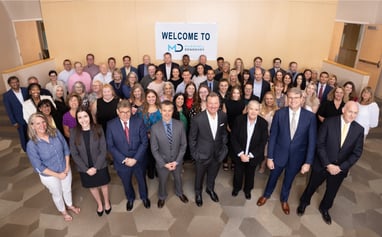
Group photo of Marshall Dennehey's Pittsburgh office employees with new attorney additions from Walsh Barnes

Marshall Dennehey announced that it has added the majority of the talent and existing business of Pittsburgh-based civil defense litigation firm Walsh Barnes, P.C. The move brings seven attorneys, including former Walsh Barnes named partner Adam M. Barnes and two other shareholders, to Marshall Dennehey's Pittsburgh office. Paul J. Walsh, III, founder and managing partner of Walsh Barnes, is stepping away from active litigation after 35 years and will devote his full attention to mediation. Walsh Barnes will be closing as of July 31, 2025.

"The union will not only strengthen our firm by bringing in litigators with diverse expertise and a strong client base, but enrich our culture with individuals who embody the very best of Pittsburgh's character," said G. Mark Thompson, Marshall Dennehey's President and CEO. "Our confidence in the success of this match is further bolstered by the fact that our lawyers, and those of Walsh Barnes, have worked together on a variety of cases and long known, liked and respected one another. We believe Walsh Barnes' decision to partner with us is a testament to the enduring power of Marshall Dennehey to attract great lawyers."  

"I have had the pleasure of litigating many cases with Marshall Dennehey over the years and have found the firm to be home to exceptional attorneys with the highest ethical standards," said Walsh. "I am thrilled that our attorneys and staff have been afforded the opportunity to continue their careers at such an esteemed firm."

Barnes joins Marshall Dennehey as a shareholder in the Casualty Department. He has more than 25 years of experience litigating general liability and coverage cases in Pennsylvania, West Virginia, and Ohio. His experience includes matters involving premises liability, product liability, auto liability, fire losses and employment liability. Barnes received his J.D. from Indiana University School of Law – Bloomington and his B.A., cum laude, from Indiana University – Bloomington.

Guy E. Blass will also join Marshall Dennehey as a shareholder in the Casualty Department. Blass, who has tried more than 50 civil jury trials to verdict, has over two decades of experience in matters involving construction claims, product liability, toxic torts, premises liability, motor vehicle accidents and general liability. He received his J.D. from Duquesne University School of Law and his B.A. from Illinois Wesleyan University.

Susan A. Kostkas joins Marshall Dennehey as a shareholder in the Health Care Department. Kostkas has nearly 30 years of experience defending nursing homes and personal care facilities in professional negligence claims resulting in personal injury and death. Prior to becoming a lawyer, Kostkas was a registered nurse in cardiology and intermediate care units and she continues to maintain her RN license. She earned her J.D. from Duquesne University School of Law and a B.S.N. from Gannon University.

Edward A. Yurcon, who joins the firm as special counsel in the Casualty Department, has 45 years of litigation experience. He defends companies and individuals in a wide variety of matters including wrongful death, bodily injury and catastrophic loss claims arising from gas explosion and fire, industrial, tractor trailer, automobile accident, premises liability, defamation and product liability claims. Yurcon ran his own firm for many years and holds a J.D. from Villanova University School of Law and a B.A., cum laude, from the University of Pittsburgh.

Gretchen J. Fitzer will be special counsel in the Casualty Department. She defends personal injury actions, including premises liability, product liability, auto liability, and professional negligence. Fitzer, who has more than 30 years' experience, earned her J.D. from Duquesne University School of Law and her B.A. from Allegheny College.

Ryan Joyce is joining Marshall Dennehey's Professional Liability Department as special counsel. With 15 years of experience, he focuses his practice on the defense of professional malpractice claims. Joyce received his J.D. from the University of Pittsburgh School of Law, his M.A. from Temple University, and his B.A. from Allegheny College.

Alyssa McKenzie joins Marshall Dennehey as an associate in the Casualty Department. She concentrates her practice on the defense of bodily injury and property damage claims arising out of motor vehicle liability, premises liability and product liability claims. McKenzie received her J.D. from Ohio Northern University Pettit College of Law and her B.A, magna cum laude, from Ohio Northern University.

In addition to the seven attorneys, the support staff of Walsh Barnes will join Marshall Dennehey's Pittsburgh office.


Firm Highlights

Thought Leadership

U.S. Supreme Court Decides Key Issue Regarding Interstate Freight Broker Liability

Freight brokers are intermediaries.  They connect shippers of goods with trucking companies that transport those goods.  Freight brokers match a load of freight with a trucking company and oversee the logistics of the transportation. For a number of years there has been a division among the Federal Circuits regarding the potential liability of freight brokers when the trucking companies that they retain for interstate loads are involved in accidents.  At the center of this division was the Federal Aviation Administration Authorization Act of 1994 (FAAAA).  Some Federal Circuit Courts have held that state law negligent hiring claims against freight brokers were preempted by the FAAAA .  Other Federal Circuits Courts have held that even if preemption applied, the “safety exception” in the FAAAA saved state law negligent hiring claims from federal preemption.  On May 14, 2026, the U.S. Supreme Court addressed the conflict in Montgomery v. Caribe Transport II, LLC, et al, No24-1238. In that case freight broker C.H. Robinson selected Caribe Transport to haul an interstate load. The commercial truck driver employed by Caribe Transport allegedly caused an accident and the plaintiff, Montgomery, was seriously injured. Montgomery brought an action against the driver, Caribe Transport and C.H. Robinson. The allegation against C.H. Robinson was that it negligently retained Caribe Transport when it knew, or should have known, that it was an unsafe company. The Seventh Circuit Court of Appeals held that Montgomery’s claims against C.H. Robinson were preempted by the FAAAA. The plaintiff appealed to the U.S. Supreme Court.  The U.S. Supreme Court’s decision focused primarily on the safety exception in the FAAAA.  That provision provides that the FAAAA preemption “…shall not restrict the safety regulatory authority of a State with respect to motor vehicles.” C.H. Robinson argued, as freight brokers historically have, that their function was not “with respect to motor vehicles” because they do not own trucks or employ drivers. They are merely intermediaries, connecting entities who need freight moved with entities who can do that job. Therefore, C.H. Robinson argued that preemption applied, not the safety exception. The U.S. Supreme Court did not accept that argument. The Court focused on the meaning of the phrase “with respect to” in the safety exception. The Court held that it means “referring to”, “concerning” or “regarding”. Therefore, writing for a unanimous Court, Justice Barrett concluded that “[r]equiring C.H. Robinson to exercise ordinary care in selecting a carrier therefore “concerns” motor vehicles—most obviously, the trucks that will transport the goods. So, Montgomery’s negligent-hiring claim falls within the FAAAA’s safety exception, which saves it from preemption.” Justice Kavanaugh, in his concurring opinion, noted the effect this ruling may have on freight brokers and their insurers throughout the country: Importantly, the Court's decision today should not be read to mean that brokers will routinely be subject to state tort liability in the wake of truck accidents. As even plaintiff's counsel stressed, brokers should be able to successfully defend against state tort suits if the brokers have acted reasonably and arranged transportation with reputable trucking companies. Tr. of Oral Arg. 27-29. In plaintiff's counsel's words, the brokers "just have to hire carriers that actually have a reasonable policy," and "the broker is not going to have a problem if it's asking the hard questions of the carrier." Id., at 42, 45. In addition, the proximate-cause requirement in typical state tort law should help protect brokers from excessive liability. Id., at 25. That said, the brokers rightly caution against naivete. In the real world, as the brokers forcefully respond, state tort law can be unpredictable, and the costs to brokers of litigation and insurance may be significant even when brokers prevail in lawsuits. Moreover, the costs of litigation and insurance, as well as the costs of brokers' conducting more substantial inquiries into trucking companies, will cascade through the economy and be paid in part by American consumers in the form of higher prices. The concerns expressed by the brokers are legitimate and weighty. The key point here is that freight brokers can no longer claim they are protected from negligent retention claims by the FAAAA (in cases involving interstate transportation). The challenge will be to determine what is considered ”reasonable efforts” used by brokers when retaining transportation companies. 

Thought Leadership

PA Middle District Dismisses Claims Against School District and its Superintendent, Principal, Special Education Director, and Classroom Teacher

A five-year-old special education student was enrolled in the Wyoming Valley West School District and attended the State Street Elementary School during the 2024-2025 school year. The student refused to clean up classroom toys at dismissal. When his teacher allegedly grabbed him by the wrist to walk him back to his seat, the student dropped to the floor and began crying. The teacher then allegedly grabbed the student by the ankle and dragged him across the floor. Following an investigation, criminal charges were not advanced by the county DA, and the school permitted the teacher to return to the classroom. The student’s parents sued, lodging thirteen legal counts under both state and federal law, which sought monetary damages from the teacher, the school district, the superintendent, the principal, and the director of special education. The plaintiff’s 42 USC 1983 claims were dismissed as to the school district for failure to allege a policy or custom violation, and the failure to alleged deliberate indifference in the failure-to-train context. As to the superintendent, building principal, and special education director, the Section 1983 claims were also dismissed for failure to allege personal involvement on the part of the individuals. Regarding an equal protection claim asserted against all defendants, the motion to dismiss was also granted for a failure to advance a plausible equal protection claim, holding that “plaintiffs' single-act allegations do not include a factual basis to even infer that the act was motivated by discriminatory animus rather than some other non-discriminatory impulse.” The court further dismissed the plaintiff’s negligence-based claims including negligence against the teacher and district administrators, NIED, and vicarious liability under the Political Subdivision Tort Claims Act (PSTCA). The federal claims under the IDEA, Section 504, and the ADA were also dismissed in various respects. The IDEA claim was dismissed against all defendants with prejudice for failure to exhaust administrative remedies. The Section 504 claims against the individual defendants were also dismissed with prejudice, as districts, not individuals, are the recipients of federal funds under Section 504. However, the Section 504 and ADA claims were dismissed without prejudice as to defendant Wyoming Valley West, and the plaintiff was permitted leave to amend.

Result

No-Cause Jury Verdict Secured in Wrongful Death Trial

We successfully obtained a no-cause jury verdict in a 13-day wrongful death trial. The decedent, a 59-year-old man, was admitted to the emergency room on February 15, 2019, with complaints of abdominal pain, decreased appetite, and constipation, despite the use of laxatives. The patient did not complain of any nausea, vomiting, or diarrhea. He had a significant medical history including diabetes, hypertension, prior coronary artery stenting, morbid obesity (with past gastric bypass surgery), longstanding ventral hernia, and back pain. A CT scan revealed multiple hernias and a potential closed-loop bowel obstruction, leading to a surgery consultation. Our client, an emergency general surgeon, interpreted that the patient did not have a closed loop or any significant obstruction and recommended non-surgical management. The patient was approved to have clear liquids, and had a vomiting incident shortly after, but our client was not notified. The patient was returned to NPO status, and after improving overnight, he was returned to “clears” and additional medical and renal consults were ordered. Our client did not receive any communications from the residents/nurses of any changes in the patient’s condition. On February 18, 2019, two rapid responses were called due to increased heart rate and vomiting. It is believed that the vomiting resulted in aspiration, causing sepsis, ultimately leading to the patient’s death. During the trial, the plaintiff’s sole medical expert highlighted imaging on the wrong hernia, which called into question all of his opinions in the case. We made key objections related to the expert testimony, limiting what the allegations were, and preventing new allegations from being made. After approximately two and a half hours of deliberating, the jury returned a no-cause verdict.