.

President & CEO

Chairman, Executive Committee

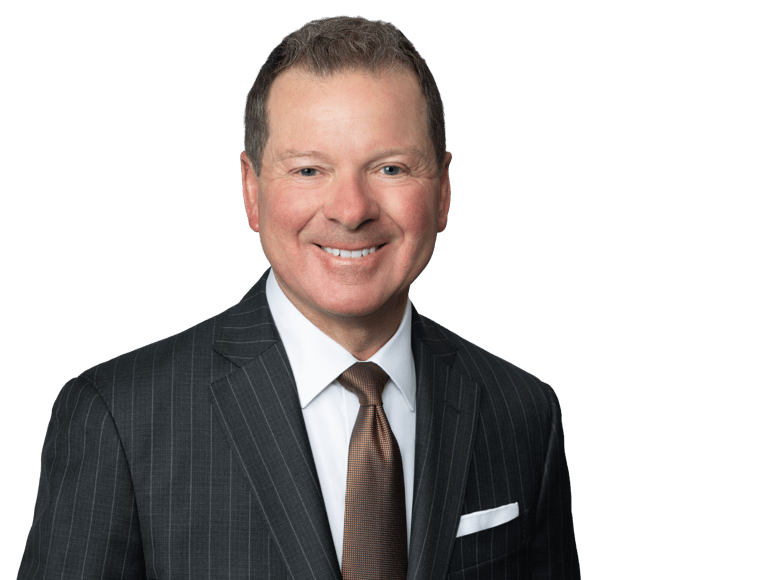
Portrait of G. Mark Thompson

Defense Digest

Message From the Executive Committee

Defense Digest, Vol. 27, No. 4, September 2021

September 1, 2021

by G. Mark Thompson

Have you experienced a greater appreciation lately for the things you used to take for granted? I have. Downing a cup of coffee and leaving the house for work feels better than ever. I’m happy knowing we are all back in the office and spurred by how wonderful that feels. This past year helped me realize how much the people of Marshall Dennehey mean to me and how much better I am around them. I look forward each day to the boost I get from the folks I’m fortunate to work alongside.

Our sense of community, and all its positive energy, is back. Across the firm, hallways are louder as attorneys, paralegals, and support staff linger to talk, laugh and check in on one another. We have gone back to holding doors and sharing elevators. And in our kitchens, baked goods, pizza and all kinds of unhealthy treats have reappeared. It’s marvelous!

There really is an antidote for much of the frustration and fatigue we have come to experience in the past year. Just look up. Look up and take stock of all we have to be grateful for. Do that and you’ll find it impossible to be grateful and discouraged at the same time.

When I look around I smile, thinking of the 17 new attorneys we recently onboarded at Marshall Dennehey. I told them during an in-person orientation that they had chosen an exceptional firm that does exceptional things. I meant and declared it with conviction because I know it to be true. I am both grateful to say that and for the talented lawyers I was able to say it to.

Whether you are a client or an employee of Marshall Dennehey, I want you to feel good about what this firm stands for and know you are part of something special.

You enable us, when others falter, to step forward and lead. And we are grateful. It is because of you we press on, always striving to do the right thing, regardless of circumstance. And it is why, I believe, we are blessed to be an exceptional firm.

Think about this, last year Marshall Dennehey was able to accomplish what 95% of the Am Law 200 could not.

This prestigious group, among which we are proud to be ranked, represent the 200 largest, most successful law firms in the country. The best of the best. And yet last year, when faced with adversity, they flinched.

Ninety-five percent of these firms opted to lay off or cut the pay of their employees. The majority did both.

I am grateful we took a different path.

At Marshall Dennehey, we determined to take care of each other. We committed to keeping our entire 1,200-member family together, safe, fully employed and fully paid. It is a commitment from which we have never wavered. And it’s something we achieved without PPP, stimulus checks or bank loans.

We did it through hard work, shared sacrifice and a healthy dose of providence. Facing an uncertain future, our shareholders put the pursuit of good before the pursuit of profit. Everyone participating in our 401(K) plan gave up their employer match. We deferred employer-paid social security taxes and we saved on expenses. And together we did what our peers did not. We avoided layoffs, pay cuts, and the hardship those measures would have imposed on our employees and their families. We chose character over compromise. We did what was right and emerged grateful and intact from the largest threat to ever confront our 59-year-old firm.

Why do I think we’re exceptional? Why am I grateful to work at Marshall Dennehey? Because putting us ahead of me has always been part of our culture. Instilled by our founders, it’s a guiding principle that provides clarity, calmness and strength. And our resolve to follow that tenet makes all the difference.

Putting us ahead of me explains our distinct pay structure. Marshall Dennehey doesn’t compensate its lawyers based on origination. A recent ALM Intelligence survey found that 83% of law firms still do. This is a tired but pervasive practice in which the lawyer who first touched (or originated) the client receives credit, often in perpetuity, for all subsequent assignments. He or she might then share credit with the lawyer who grows the account and/or the attorney who performs most of the client’s legal work. The lawyers are then paid on the basis of these “originations.”

These systems encourage hoarding. They create incentives and shape behaviors that are me-focused and counter to most clients’ interest. Lawyers end up disregarding venue, subject matter expertise or experience, all in an effort to retain a file and preserve origination credit.

At Marshall Dennehey, we’d rather focus on client-oriented performance. Spurning origination credit allows us to easily assign the right matter to the right lawyer in the right location. Our lawyers are also able to specialize in distinct areas of law such as ride sharing, employment, insurance coverage or appellate advocacy. By contrast, where compensation is based on origination, lawyers tend to juggle multiple disciplines in an effort to keep matters under their own name.

Our unique approach puts our clients’ interest first but also fosters sharing, team work and trust among our lawyers, putting us ahead of me and strengthening the firm.

This past year, as the world staggered from order to disorder, it was putting us ahead of me that galvanized and drove our firm to recalibrate, remain ahead of the curve and continue providing clients superior legal services. I’m still in awe of what our people, working together, were able to accomplish.

The firm’s IT department scaled our remote work capacity almost overnight to serve more than 1,100 employees working from home—including nearly 500 administrative staff who had never before worked remotely. Our finance department got immediately to work bringing innovation, digitization and greater efficiency to invoicing while our lawyers learned to market, litigate and resolve cases virtually, successfully and as never before. In fact, it was Marshall Dennehey attorneys who led the way when first virtual and then socially distanced, in-person civil jury trials resumed.

Here in Philadelphia, putting us ahead of me meant a legal aid clinic, founded and continuously staffed by our firm since 2015, pushed through a pandemic and continued operating virtually with a dedicated team of volunteer attorneys spanning associates to senior management.

Putting us ahead of me accounts for why Marshall Dennehey was one of only a few firms in the country to honor its commitment to law students and run a fully intact, multi-state Summer Associate program last year, something it’s doing again this summer.

Putting us ahead of me explains why we continued to provide opportunity when other firms were laying people off, onboarding 67 new attorneys in the past year and a half.

And when asked what we were doing returning to the office while others sat at home—putting us ahead of me - became our proud reply.

It is something we did with a sense of urgency, balancing risk with obligation to our employees, our clients and our future. Working together, we brought back 20 offices across six different states safely, methodically and without any incidence of outbreak. These offices have now been up and running for months.

Which brings me back to where I started—looking up and seeing the value of community. To say it’s important is a gross understatement. To Marshall Dennehey, community is everything. It is what enlightens and protects us as an organization. It is what holds us accountable, teaches, refines, motivates and encourages us. It is in community that we are informed, that we collaborate, improve as a law firm and better serve our clients.

It’s a notion we have always grasped and one that’s catching on. It was reported earlier this month that Morgan Stanley’s CLO, Eric Gross, recently delivered a message to outside counsel, declaring the legal industry’s apprenticeship model vital to the development of young lawyers. He noted “individual lawyers learn and perform best and collectively deliver the best results when they are together -actually together.” He went on to opine that “...firms that return to the office will have a significant performance advantage over those that do not, and will see that advantage reflected in their client service and ability to deliver successful outcomes...”

We agree and have always known we’re better together.

That being said, we also see the value of flexibility and are trying to strike the right balance. Long before the pandemic, Marshall Dennehey had developed and implemented a remote work program for attorneys. Inspired by its success and our experience last year, we have now expanded the program to include paralegals and administrative staff. At present, we are operating under a hybrid model and seeking the right mix. Our attorneys and paralegals are required to come into the office at least three days a week and our administrative staff four. Everyone can otherwise work remotely. It’s a popular arrangement that emphasizes community while still affording some flexibility.

It appears to be working well.

Which can also be said of our firm.

I hope after reading this you have a better understanding of what we stand for, what makes Marshall Dennehey special and why I am so grateful to be its CEO. Our story is a powerful proof of concept: no matter what we face, we can do the right thing and still succeed.


Firm Highlights

Result

No-Cause Jury Verdict Secured in Wrongful Death Trial

We successfully obtained a no-cause jury verdict in a 13-day wrongful death trial. The decedent, a 59-year-old man, was admitted to the emergency room on February 15, 2019, with complaints of abdominal pain, decreased appetite, and constipation, despite the use of laxatives. The patient did not complain of any nausea, vomiting, or diarrhea. He had a significant medical history including diabetes, hypertension, prior coronary artery stenting, morbid obesity (with past gastric bypass surgery), longstanding ventral hernia, and back pain. A CT scan revealed multiple hernias and a potential closed-loop bowel obstruction, leading to a surgery consultation. Our client, an emergency general surgeon, interpreted that the patient did not have a closed loop or any significant obstruction and recommended non-surgical management. The patient was approved to have clear liquids, and had a vomiting incident shortly after, but our client was not notified. The patient was returned to NPO status, and after improving overnight, he was returned to “clears” and additional medical and renal consults were ordered. Our client did not receive any communications from the residents/nurses of any changes in the patient’s condition. On February 18, 2019, two rapid responses were called due to increased heart rate and vomiting. It is believed that the vomiting resulted in aspiration, causing sepsis, ultimately leading to the patient’s death. During the trial, the plaintiff’s sole medical expert highlighted imaging on the wrong hernia, which called into question all of his opinions in the case. We made key objections related to the expert testimony, limiting what the allegations were, and preventing new allegations from being made. After approximately two and a half hours of deliberating, the jury returned a no-cause verdict. 

Thought Leadership

What’s Hot in Workers’ Comp - News and Results*

RESULTS* Ben Durstein (Wilmington) obtained a favorable decision involving a claimant who fractured his patella in a work accident requiring two surgeries. The IAB rejected the claimant’s medical expert’s opinion that he sustained a 25% permanent impairment to the right lower extremity. Instead, the board accepted the opinion of the employer’s medical expert that the appropriate permanency was 13% utilizing the 6th Edition of the AMA Guides to the Evaluation of Permanent Impairment. Tony Natale III (King of Prussia) successfully had a claim petition alleging new injuries and periods of disability dismissed based on full recovery. The claimant was injured when his skid loader was struck by another loader in the process of baling hay. Original injuries were accepted and the claimant returned to work. Thereafter, the claimant abandoned work and filed a claim petition to assert new injuries and extended disability. Cross examination of the claimant’s medical expert stunningly revealed his failure to review claimant testimony, his lack of awareness of a social security disability decision detailing the existence of claimant’s alleged work-related conditions prior to the date of work injury, and his failure to understand that the claimant admitted to full recovery of injuries for which he was continuing to treat. Tony Natale III (King of Prussia) successfully obtained a defense verdict in a Medicare conditional payment lien third level appeal. The United States government alleged a Medicare conditional lien payment was due and owing in the upper six-figure range based on an auto accident and PIP policy for which the government conditionally became the primary carrier. The government argued that our client, the PIP carrier, was the primary payer and, under federal law, must reimburse the government for its conditional lien payment. At the third-level appeal hearing, the government’s position was refuted by the revelation that the date of injury tied to the medical bills associated with the lien was glaringly and chronologically prior to the insurer’s PIP policy date. The court held that based on this evidence and argument, the government could not meet its requirements to assert a lien against our client. A. Judd Woytek (King of Prussia) and John Abda (Scranton) successfully had a workers’ compensation claim petition granted for medical benefits only for a closed period with no wage loss awarded. The claimant alleged multiple injuries as the result of a very minor motor vehicle incident where a co-worker’s delivery van rolled down an incline of approximately six feet, and bumped into the rear of the claimant’s delivery van. He claimed he was thrown forward and suffered head and neck injuries, along with aggravating a pre-existing ankle injury. The claimant was also terminated following the accident for having a large hunting knife in his van, which was against the employer’s workplace violence policy. The judge granted the claim for a mild concussion and an ankle contusion, but terminated medical benefits as of the date of our IME’s. The judge found that no wage loss benefits were payable as the claimant was terminated for cause and work remained available to him. The judge found our medical experts to be more credible than the claimant’s, along with finding our four employer witnesses to all be credible. The trial team was assisted by paralegal Bonnie Zemek (King of Prussia). Eric Scott Thompson (Wilmington) was successful in a workers’ compensation matter in Delaware. On October 15, 2024, the claimant was injured while performing fire training in a multistory building when he tripped over a fire line, injuring his right knee. The claimant received regular and consistent treatment for the right knee through August 29, 2025, when he presented with left knee complaints for the first time. His treating orthopedist diagnosed a hamstring strain. The claimant was next seen October 15, 2025, with continued left knee complaints, and was referred to a total knee doctor within the practice. He was then diagnosed with a posterior root tear of the medial meniscus. Our expert testified that it was not plausible for a lateral hamstring strain to progress to a meniscal tear in two months. The claimant required a total knee replacement that was ultimately performed in February 2026. In the six months between the time of initial presentation with left knee complaints and the total knee replacement, conservative care consisted of a single injection. Our expert testified that posterior root media meniscal tears can respond to conservative care, and it was not known if it would with the claimant because it was not adequately explored. The Industrial Accident Board agreed with our expert and determined that the claimant failed to meet the burden of establishing more likely than not that the left knee complaints were caused by overloading/overuse as a result of the compensable injury to the right knee. They also agreed that the claimant was able to return to work in a sedentary capacity as opined by his physicians and our expert prior to the left total knee replacement and that there were employment opportunities available within his restrictions and capabilities as presented by the vocational expert. As a result, the claimant was no longer entitled to total disability benefits and will receive partial disability benefits for which he is limited to 300 weeks. Michele Punturi (Philadelphia) and Alana Staniszewski (Pittsburgh) had a termination petition granted in a Pennsylvania workers’ compensation case. The petition involved an echocardiography technologist with long-term employment at a local hospital who sustained a right shoulder injury resulting in surgery in January 2024. Following surgery, the claimant was diagnosed with a frozen shoulder and underwent additional surgery in June 2024, with a recommendation for a third surgery. The opinions of the defense medical expert, a Board-certified orthopedic surgeon, were found credible, persuasive, and competent based upon the extensive history he obtained from the claimant, analysis of the mechanism of injury, and review of records, along with comparison of MRIs from October 2023, February 11, 2024, and January 6, 2025, which failed to reveal any causal relationship other than a strain/sprain of the right shoulder. This evidence supported that the claimant had fully recovered, and was not in need of any ongoing medical treatment and/or restrictions. In particular, despite allegations of injuries beyond a sprain/strain, the defense medical expert identified that those allegations were not consistent with what was found at the time of surgery, and elements of the surgery were to treat a chronic and degenerative condition. Additionally there were no ongoing issues or problems with the subscapularis, which was intact, consistent with the follow-up MRI of February 11, 2024, and the claimant did not have evidence of a frozen shoulder. In fact, the MRIs and mechanism of injury, he opined, did not support any injury causing tendonitis or inflammatory conditions within the bicep tendon. Furthermore, multiple days of surveillance footage demonstrated the claimant’s normal use, with the ability to sweep and shovel snow, operate her vehicle, raise her arms above shoulder level, and use a broom – all without any observable difficulty, which challenged the claimant’s credibility of a disability and further established a lack of causation. As a result of this favorable decision, supersedeas fund reimbursement will be obtained for both wage loss and medical benefits through the supersedeas fund recovery process. *Prior Results Do Not Guarantee a Similar Outcome NEWS Heather Carbone (Jacksonville) was a panelist for a webinar hosted by The Workers’ Compensation Claims Professionals (WCCP) Association. As part of the “Meet the Experts” Series, the speakers addressed “Afterthoughts that Undermine a Successful Mediation,” highlighting the pitfalls and challenges of underprepared or unprepared mediation participants. The discussion included appropriate pre-mediation communications, setting of expectations, management of expectations, and working through the unexpected or unprepared. Attendees gained ideas about how and when to prepare, best practices, and the potential for non-parties (spouse, significant other, risk owners-insurers) to have differing perspectives or concerns than the actual employee and employer. On May 21-22, 2026, A. Judd Woytek, (King of Prussia) joined a panel at the CLM Alliance (Claims and Litigation Management Alliance) Work Comp Conference in Nashville to present "We See You: How Employee Engagement Enhances Work Comp Outcomes." Judd and his fellow panelists discussed the positive impact of employee engagement on claim outcomes, return-to-work timelines, and overall claim costs.

Thought Leadership

NJ Workers' Compensation Legislation Update

A couple more bills were introduced for the 2026-27 session. Any updates since February have been highlighted in bold. A1023 | S3984 Medical use of cannabis under certain circumstances This requires workers’ compensation, PIP, and health insurance coverage for the medical use of cannabis under certain circumstances. It was introduced on January 13, 2026 and referred to the Assembly Financial Institutions and Insurance Committee. It was also introduced on March 19, 2026 and referred to the Senate Commerce Committee. A1045 Certain injuries to volunteer and professional public safety and law enforcement personnel This revises workers’ compensation coverage for certain injuries to volunteer and professional public safety and law enforcement personnel. It was introduced on January 13, 2026 and referred to the Assembly Labor Committee. A3724 Personal liability to employer officers for failure to pay for coverage This provides personal liability for owner, executive officer, or executive director of employer for failure to pay for workers' compensation coverage. It was introduced on January 13, 2026 and referred to the Assembly Labor Committee. On May 7, 2026, it was reported and referred to Assembly Judiciary Committee. A4617 Certain workers' compensation supplemental benefits and funding method This concerns certain workers' compensation supplemental benefits and funding method. For a permanently and totally disabled worker or surviving dependents after December 31, 1979, with some exceptions, this bill provides for an annual cost of living adjustment in the weekly workers’ compensation benefit rate. It was introduced on March 10, 2026, and referred to the Assembly Labor Committee. S241 Inclusion in database of appointed officials This requires that workers’ compensation judges and administrative law judges be included in database of appointed officials. It was introduced on January 13, 2026 to the Senate, Referred to Senate State Government, Wagering, Tourism & Historic Preservation Committee. A1870 | S1379 Workers' compensation benefits for certain workers due to September 11, 2001, terrorist attacks This provides workers’ compensation benefits for certain public safety workers who developed illness or injury as result of responding to September 11, 2001 terrorist attacks. It was introduced on January 13, 2026 and referred to the Assembly Labor Committee. It was also introduced on the same day and referred to the Senate Labor Committee. On February 5, 2026, it was reported from the Senate Committee, 2nd Reading, and referred to the Senate Budget and Appropriations Committee. A2779 | S1521 Excludes Certain Illegal Aliens This excludes certain illegal aliens from workers’ compensation and temporary disability benefits. It was introduced on January 13, 2026 and referred to the Senate Labor Committee. It was also introduced on the same day and referred to the Assembly Labor Committee. A2792 | S1555 Prevent Intoxicated Employees from Workers’ Compensation This prevents intoxicated employees from receiving workers’ compensation. It was introduced on January 13, 2026 and referred to the Senate Labor Committee. It was also introduced on the same day and referred to the Assembly Labor Committee. S2290 Increase Mandatory Retirement Age This increases statutory mandatory retirement age for Supreme Court Justices, Superior Court Judges, Tax Court Judges, Administrative Law Judges, and Workers’ Compensation Judges from 70 to 72. It was introduced on January 13, 2026, and referred to the Senate Judiciary Committee. A3167 | S2372 Workers’ compensation insurance requirements for certain corporations and partnerships. This concerns workers’ compensation insurance requirements for certain corporations and partnerships. It was introduced on January 13, 2026 and referred to the Senate Labor Committee. It was also introduced on the same day and referred to the Assembly Labor Committee. A1384 | S2757 Reduce Statute of Limitations in Medical Fee Disputes This reduces statute of limitations from six years to two years in medical fee disputes in workers’ compensation matters. It was introduced on January 13, 2026 and referred to the Senate Labor Committee. It was also introduced on the same day and referred to the Assembly Labor Committee. S3144 Testimony in Workers’ Compensation This concerns submission of testimony in workers’ compensation claims. It was introduced on January 13, 2026, and referred to the Senate Labor Committee. S3342 Increase Mandatory Retirement Age This increases statutory mandatory retirement age for Supreme Court Justices, Superior Court Judges, Tax Court Judges, Administrative Law Judges, and Workers’ Compensation Judges from 70 to 75. It was introduced on February 5, 2026, and referred to the Senate Judiciary Committee. A3548 | S3571 Maximum benefits for certain volunteers This provides certain volunteer and other workers with maximum compensation benefit for workers' compensation claim regardless of outside employment.. It was introduced on January 13, 2026 and referred to the Senate Labor Committee. On March 2, 2026, it was reported from the Senate Committee, 2nd Reading, and referred to the Senate Budget and Appropriations Committee. It was also introduced on the same day and referred to the Assembly Labor Committee. On May 7, 2026, it was reported and referred to Assembly State and Local Government Committee.