.

President & CEO

Chairman, Executive Committee

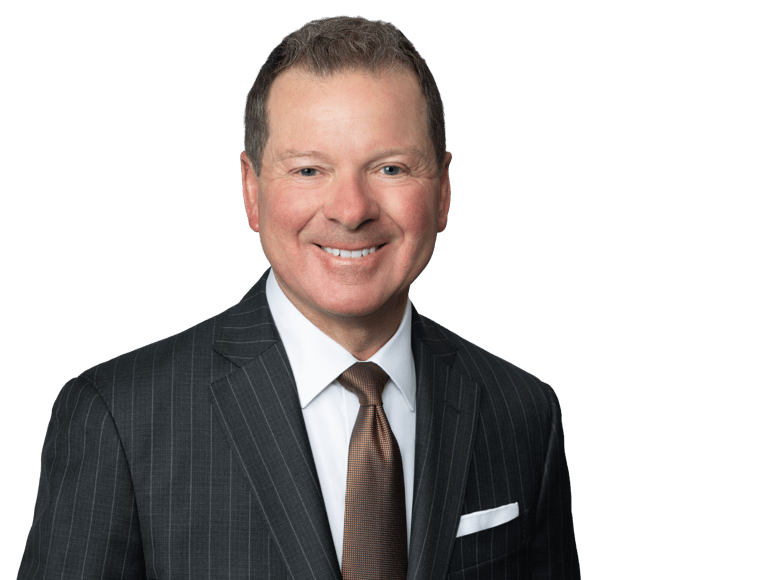
Portrait of G. Mark Thompson

Marshall Dennehey Announces 2025 Shareholder Class And Special Counsel Promotions

December 13, 2024

Marshall Dennehey is pleased to announce that 10 attorneys have been elected shareholders of the firm effective Jan. 1, 2025. Additionally, two attorneys have been promoted from associate to special counsel. These new shareholders and special counsel represent the firm's four core departments – Casualty, Professional Liability, Health Care and Workers' Compensation – and come from eight of the firm's 19 offices. 

“Marshall Dennehey is proud to celebrate this accomplished group of newly elected shareholders,” said firm President & CEO, G. Mark Thompson. “Their talent, dedication, and hard work have been instrumental to the success of our clients and the firm. We are particularly proud that 40 percent of this class are either women or minority attorneys, reflecting our commitment to diversity and inclusion. We congratulate them on this milestone and eagerly anticipate their continued contributions to our growth and success.”

Promoted to Shareholder

LONG ISLAND, NEW YORK (MELVILLE)
James M. Boyce, Casualty Department (former Special Counsel)
James focuses his practice on New York construction and Labor Law matters, construction defect litigation and general liability matters. His clients include design professionals, owners, contractors and subcontractors when facing construction defect and delay claims, personal injury claims, fee disputes and New York State Labor Law matters. A member of the American Council of Engineering Companies, he is a graduate of the State University of New York at Albany and Hofstra University School of Law. James is admitted to practice in New York. 

Matthew A. Gray, Casualty Department (former Associate)
Matthew primarily defends insurance carriers in disputes involving New York Personal Injury Protection (PIP) claims. A member of the firm’s Fraud/Special Investigation Practice Group, he is experienced in defending clients against intentional/staged losses and medical provider fraud. He has extensive motion practice experience and with alongside his fellow colleagues to obtain favorable decision for each of his clients, whether through litigation or arbitration. Matthew holds a B.A. and M.A. from St. John’s University and earned his J.D. from the Touro University Jacob D. Fuchsberg Law Center. He is admitted to practice in New York.


MOUNT LAUREL, NEW JERSEY
Mari I. Gangadean, Professional Liability Department (former Special Counsel)
Mari is a member of the firm’s Employment Law Practice Group where she defends employers in employment-related claims involving allegations of discrimination based upon age, gender, race, sexual orientation and disability, as well as retaliation and "whistle blowing" in both federal and state courts. She additionally is experienced in insurance coverage and bad faith litigation as well as defending automobile negligence and uninsured/underinsured motorist claims. Mari is a graduate of Mount Holyoke College and Temple University School of Law. She is admitted to practice in New Jersey and Pennsylvania.

Kiara Hartwell, Workers’ Compensation Department (former Associate)
Kiara devotes her practice to workers' compensation litigation on behalf of employers, insurance carriers and self-insureds. She is a member of the New Jersey State Bar Association's Workers' Compensation Executive Committee, a group charged with studying and developing beneficial changes in the administration and procedures pertaining to workers' compensation. Kiara authors the New Jersey updates for Marshall Dennehey’s monthly workers’ compensation newsletter and frequently writes for external publication. Admitted to practice in New Jersey and Pennsylvania, she is a graduate of New York University and Rutgers University School of Law. 

Jonathan C. Magpantay, CPCU, Casualty Department (former Associate)
As a member of the firm’s Fraud and Special Investigation Unit (SIU) Practice Group, Jonathan focuses on large loss and medical provider fraud, including the filing of affirmative litigation recovery and RICO actions across the country. A Chartered Property and Casualty Underwriter (CPCU), he also handles insurance coverage disputes, bad faith litigation and general defense litigation. He has broad experience in New Jersey Personal Injury Protection (PIP) litigation and appears regularly before the courts and administrative bodies. Jonathan is a member of the Asian Pacific American Lawyers Association of New Jersey (APALA-NJ) and the National Filipino American Lawyers Association (NFALA). A graduate of the University of Pittsburgh and Rutgers University School of Law, he is admitted to practice in New Jersey, the District of Columbia, and Michigan. 


Michael J. Sweeney, CPCU, Casualty Department (former Associate)
As a member of the firm’s Fraud and Special Investigation Unit (SIU) Practice Group, Michael investigates and defends large loss and medical provider fraud matters. He has  litigated and filed affirmative litigation recovery and RICO actions in many states, recovering tens of millions of dollars in restitution and recovery on behalf of the insurance industry. A Chartered Property and Casualty Underwriter (CPCU), Michael has extensive experience handling insurance coverage disputes, SIU investigations, bad faith allegations, and general defense litigation. He is a graduate of the University of Delaware and Villanova University School of Law, and is admitted to practice in New Jersey. 

KING OF PRUSSIA, PENNSYLVANIA
Gabor Ovari, Health Care Department (former Associate)
Gabor focuses his practice on the defense of hospitals, health care systems and medical providers in medical malpractice and health care liability matters. He has second-chaired multiple jury trials and is experienced in all aspects of litigation. Gabor is a member of the Pennsylvania and Montgomery County Bar Associations. He is a graduate of Temple University and Widener University School of Law, and is admitted to practice in Pennsylvania and New Jersey.  

JACKSONVILLE, FLORIDA
Sean J. Reeves, Casualty Department (former Associate)
Sean litigates a wide range of general liability matters representing insureds, self-insureds, and corporations in cases involving motor vehicle negligence, catastrophic product liability matters, personal injury, premises liability, wrongful death and warranty defense. Sean also has experience representing clients in the food and beverage industry in matters involving food allergies, foreign objects, foodborne illness and contamination cases. Sean is a graduate of the University of West Florida; Saint Leo University (MBA); and the University of Florida Levin College of Law. He is admitted to practice in Florida.

PHILADELPHIA, PENNSYLVANIA
Taniesha K. Salmons, Casualty Department (former Associate)
Taniesha concentrates her practice on premises and product liability litigation. On the premises side, her clients include national and regional grocery retailers, condominium and homeowners’ associations, business owners and private property owners. On the product side, she defends manufacturers and distributors of tools, automatic doors, machinery and other heavy industrial equipment. Taniesha additionally assists in the defense of fire loss and complex product liability cases involving catastrophic losses. A certified arbitrator in Philadelphia, Taniesha is admitted to practice in Pennsylvania, New Jersey and Florida. She is a two-time graduate of the University of Miami, where she earned both her Bachelor’s and Juris Doctor degrees.


PITTSBURGH, PENNSYLVANIA
Michael D. Winsko, Casualty Department (former Associate) 
Michael defends corporations, individuals, and local governments in complex civil litigation matters. In this capacity, he has successfully handled numerous high-exposure premises liability, liquor liability, product liability, and catastrophic injury/wrongful death actions throughout the state and federal courts of Pennsylvania. Michael additionally defends clients against design and construction defect claims, trucking/automobile accidents, fall down incidents and negligent security claims. A graduate of Duquesne University and Duquesne University School of Law, he is admitted to practice in Pennsylvania. 

Associates Promoted to Special Counsel

ORLANDO, FLORIDA
Frank L. Madia, Casualty Department
Frank handles matters involving premises and retail liability, personal injury, product liability, negligent security and automobile liability. As former staff counsel with a national insurance company, he also has substantial experience in insurance coverage matters, business litigation, and real estate transactions. Frank is a 30-year veteran of the New York Air National Guard, where he served as a Staff Judge Advocate before retiring as a Lieutenant Colonel in 2017. He is a graduate of the University at Buffalo, the United States Air Force Judge Advocate Training School, and the Touro University Jacob D. Fuchsberg Law Center. Frank also served 18 years as a local municipal judge in the upstate New York township where he previously resided. He is admitted to practice in Florida and New York. 


HARRISBURG, PENNSYLVANIA
Christopher W. Woodward, Professional Liability Department
Christopher focuses his practice on insurance coverage and bad faith litigation. An experienced litigator and former claims examiner, he has a deep understanding of insurance policy and coverage issues arising from commercial, personal, and specialty property and casualty policies, professional liability policies, health/life policies and workers’ compensation policies. He is a graduate of Pennsylvania State University and Widener University School of Law. 

Firm Highlights

Thought Leadership

Featured Conversations... Key Takeaways from A.M. Best’s Webinar on the Misuse Defense in Product Liability Claims, Featuring Michael Salvati

Michael Salvati, shareholder in our Philadelphia office, was a panelist for the April A.M. Best webinar, “The Misuse Defense: Strategic Approaches to Defending Product Liability Claims for Insurers.” During the program, Michael and his fellow panelists offered practical, jurisdiction‑specific guidance on how misuse and failure‑to‑warn theories intersect in modern product liability litigation. Michael emphasized the unique challenges these claims present—particularly in states like Pennsylvania, where evidentiary rules diverge sharply from those applied in many other jurisdictions. Failure to Warn as the “Flip Side” of Misuse Salvati explained that failure‑to‑warn allegations often arise as a direct counter to a misuse defense. As he noted, “If our misuse defense is that the plaintiff didn't use a product properly or safely, then the failure to warn claim is that we didn't tell them how to use it properly.” He emphasized that these claims can stem from either the absence of warnings or criticisms of existing warnings, such as insufficient specificity or lack of clarity about risks. Pennsylvania’s Unique Evidentiary Landscape One of Salvati’s most notable points was the stark difference in how Pennsylvania treats evidence of compliance with industry standards. He highlighted that Pennsylvania is “one of the only states…where that evidence is not admissible” in strict liability cases. Manufacturers cannot rely on compliance with ANSI, UL, ISO, or even federal safety standards to defend the product against a strict liability claim—because the focus is solely on the product itself, not the manufacturer’s conduct. Salvati acknowledged the challenge this creates for defense counsel and clients who expect such compliance to carry weight. Understanding the Three Defect Theories Salvati also walked through the three primary defect theories recognized in many jurisdictions: - Design defect – a flaw in the product’s intended design - Manufacturing defect – a deviation affecting a specific unit - Failure to warn – inadequate instructions or warnings He noted that warnings claims are increasingly significant and sometimes stand alone when design or manufacturing theories are weak. As he put it, plaintiffs often default to warnings claims because “the default position seems to be, ‘If I got hurt, there must be something wrong.’” Warranties and State‑by‑State Variations Salvati addressed how breach‑of‑warranty claims fit into the broader framework, explaining that implied warranties—such as merchantability—often overlap with strict liability in Pennsylvania. He emphasized the importance of understanding local nuances, as warranty law and admissibility rules vary widely across states. Looking Ahead: The Growing Importance of Warnings In his closing remarks, Salvati stressed that warnings should never be treated as an afterthought in product liability defense. He observed that warnings‑only claims are becoming more common and urged manufacturers and insurers to continually evaluate the clarity and completeness of their instructions and warnings. His takeaway: “We should always be talking about what are the instructions that come with our products…to bolster a misuse defense.” Listen to the complete webinar here: https://www3.ambest.com/conferences/events/eventregister.aspx?event_id=WEB1074.

Result

No-Cause Jury Verdict Secured in Wrongful Death Trial

We successfully obtained a no-cause jury verdict in a 13-day wrongful death trial. The decedent, a 59-year-old man, was admitted to the emergency room on February 15, 2019, with complaints of abdominal pain, decreased appetite, and constipation, despite the use of laxatives. The patient did not complain of any nausea, vomiting, or diarrhea. He had a significant medical history including diabetes, hypertension, prior coronary artery stenting, morbid obesity (with past gastric bypass surgery), longstanding ventral hernia, and back pain. A CT scan revealed multiple hernias and a potential closed-loop bowel obstruction, leading to a surgery consultation. Our client, an emergency general surgeon, interpreted that the patient did not have a closed loop or any significant obstruction and recommended non-surgical management. The patient was approved to have clear liquids, and had a vomiting incident shortly after, but our client was not notified. The patient was returned to NPO status, and after improving overnight, he was returned to “clears” and additional medical and renal consults were ordered. Our client did not receive any communications from the residents/nurses of any changes in the patient’s condition. On February 18, 2019, two rapid responses were called due to increased heart rate and vomiting. It is believed that the vomiting resulted in aspiration, causing sepsis, ultimately leading to the patient’s death. During the trial, the plaintiff’s sole medical expert highlighted imaging on the wrong hernia, which called into question all of his opinions in the case. We made key objections related to the expert testimony, limiting what the allegations were, and preventing new allegations from being made. After approximately two and a half hours of deliberating, the jury returned a no-cause verdict. 

Thought Leadership

Legal Update for Special Education Law: Recent Positive Outcomes From the Group

Hearing Officer Confirms District Acted Appropriately Under IDEA and Section 504 William J. McPartland (Scranton) obtained a finding in favor of our client, a school district, on all issues following a due process hearing. The parent had filed a due process complaint alleging that the school district had breached its child find duty under the IDEA and Section 504, that the school district had discriminated against the student on the basis of disability in violation of Section 504, and that the school district had denied a free and appropriate public education to the student both by developing inadequate IEPs and via an actionable procedural violation.  Specifically, the student had received a Section 504 evaluation in October 2023, after a number of behavioral infractions culminating in a fight in September 2023, was identified as having anxiety and a sleep disorder, and received appropriate Section 504 accommodations. The student had never previously demonstrated signs of a learning disability, and the parent denied the school district permission to evaluate the student for special education needs in November 2023, and January 2024. The parent granted the district permission to evaluate the student in October 2024, after a private psychologist diagnosed the student with Attention Deficit Hyperactivity Disorder, possible Oppositional Defiance Disorder, a learning disorder, and anxiety. The school district issued a special education evaluation report in December 2024, finding that the student had an emotional disturbance and other health impairment, and an IEP providing an itinerant level of emotional support, as well as instruction in academics and social skills, was issued in January 2025, and amended in February, March, and April 2025. The student withdrew from the school district in April 2025, to attend a cyber charter school. The hearing officer determined that the school district had not violated its child find duty to the student in violation of either the IDEA or Section 504 where the district developed a Section 504 plan for the student within a month and a half of the parent’s first request for a Section 504 evaluation and where the parent repeatedly denied consent to conduct an IDEA evaluation of the student. The hearing officer noted that the student’s sporadic record of behavioral infractions prior to September 2023, did not suggest that the student had a disability prior to the parent’s initial request for an evaluation. The hearing officer further determined that no evidence had been produced to suggest that the student was discriminated against on the basis of disability in violation of Section 504. Additionally, the hearing officer determined that the IEP offered to the student was substantively adequate and that, to the extent the social and emotional programming offered by the school district was not received by the student, this resulted from the parent’s refusal to accept the same. The hearing officer finally determined that the school district did not commit an actionable procedural violation by delaying development of an IEP for the student where the parent repeatedly denied consent to evaluate the student. Court Dismisses Three of Four Claims Against School District Christopher J. Conrad and Daniel P. McGannon (Harrisburg) achieved a significant early victory on behalf of a school district client in. The team successfully obtained dismissal of three of the four claims asserted in the plaintiff’s amended complaint. The former district superintendent brought multiple claims arising out of his alleged “forced resignation,” including age discrimination under the ADEA, a Section 1983 Equal Protection claim, a Pennsylvania Whistleblower claim, and breach of contract. On behalf of the district, the defense team moved to dismiss the complaint in part, arguing: The plaintiff failed to plead sufficient facts to support a prima facie case of age discrimination. The equal protection claim was barred because the ADEA provides the exclusive federal remedy for age-based employment claims. The breach of contract claim could not stand because the underlying employment agreement had expired prior to the alleged breach. The court agreed, dismissing the ADEA, equal protection, and breach of contract claims in their entirety. As a result, only a single claim under the Pennsylvania Whistleblower Law remains pending. This outcome substantially narrows the scope of the litigation and positions the client for a more efficient defense moving forward.
