.

Chair, Real Estate E&O Liability Practice Group

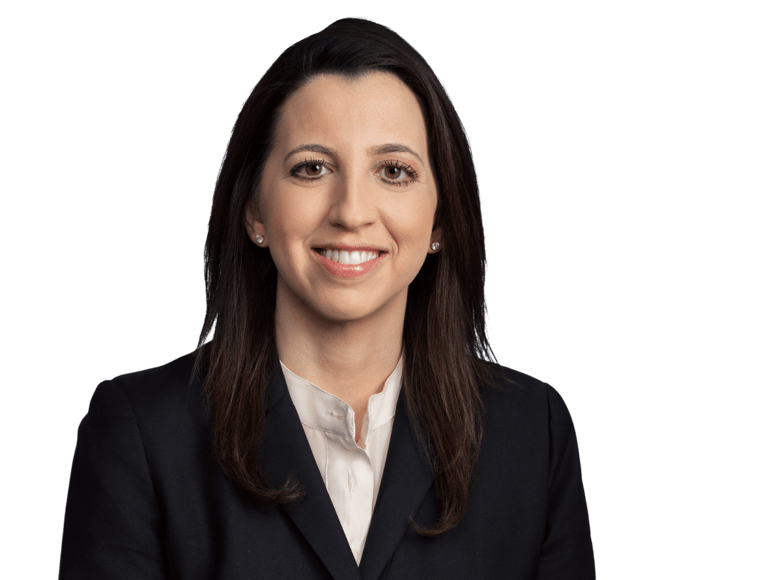
Portrait of Dana A. Gittleman

PLUS Blog

Insurance Broker Best Practices to Reduce AI-Related E&O Risk

Legal Update for Insurance Agents & Brokers

Insurance agencies and brokerages, like most businesses, are increasingly using artificial intelligence and large language models (LLMs), such as ChatGPT and Gemini, in their daily operations. AI can provide significant advantages, including greater efficiency, enhanced productivity, and cost savings. For example, brokers may use AI to generate policy comparisons and proposals, accelerating the quoting process.

However, these benefits come with risks. AI-generated information may be inaccurate, leading to improper advice, coverage misrepresentations, or binding coverage that violates underwriting guidelines. Overreliance on AI may also increase exposure to errors and omissions (E&O) claims and litigation.

Insurance agencies can reduce AI-related risks by following these five best practices:

1. Require Licensed Producer Oversight

AI can improve efficiency, but it does not replace the professional judgment or responsibility of a licensed producer. Treat AI-generated content as a preliminary draft that may contain errors.

Before any quote, proposal, coverage summary, or policy comparison is provided to a client, a qualified individual should independently verify all material information, including coverage terms, limits, deductibles, exclusions and endorsements, against the applicable policy forms and source documents.

2. Establish a Formal AI Policy

  • Agencies should adopt a written AI policy that defines:
  • Approved AI tools;
  • Information that may or may not be entered into AI platforms;
  • AI outputs requiring licensed producer review;
  • Tasks AI may assist with or perform autonomously, if any; and
  • Permitted and prohibited uses.

Approved uses may include document summarization and administrative support. Prohibited uses should include independently binding coverage, modifying limits, providing coverage advice, or communicating coverage determinations without human review.

The policy should be distributed to all employees, supported by training, and reinforced through written acknowledgment of compliance.

3. Manage Third-Party AI and Data Security Risks

Confidential client information, such as loss runs, financial records, proprietary information, or other sensitive data, should not be entered into unapproved public AI platforms.

Agencies should also review contracts with AI vendors to ensure they adequately address confidentiality, cybersecurity controls, data retention, indemnification, insurance requirements, and limitations of liability.

4. Document AI Usage

As with other client communications and insurance placement decisions, agencies should maintain records of AI-related activity.

Documentation should reflect the client’s requests, information available to the producer, AI-generated output, any modifications or verification performed by agency personnel, communications with the client, and the coverage ultimately procured. Such records may provide valuable evidence in defending a future E&O claim.

5. Review Insurance Coverage

Agencies should review their own E&O policies to determine whether any exclusions, limitations, or endorsements affect coverage for AI-related activities.  Likewise, agencies should be aware of any AI-related coverage restrictions contained in policies they recommend or place for clients.

Conclusion

AI is a valuable tool that can help insurance agents and brokers improve efficiency and service. However, it should supplement rather than replace the oversight, expertise, and professional judgment of a licensed producer.

This article was originally published on PLUS Blog, the blog of the Professional Liability Underwriting Society, on August 20, 2026. All rights reserved. Further duplication without prior permission is prohibited. 

Firm Highlights

Thought Leadership

United State District Court for the Middle District of Florida finds Evidence of Replacement Cost Value is Admissible and Recoverable Even When Repairs Have Not Been Made

The plaintiff filed a claim for damage as a result of Hurricane Ian. It claimed damages were over $24 million, but the carrier accepted partial coverage and paid $8,307.49 for secondary components. The carrier found hurricane damage to the building, but it was below the insurance policy’s $3.6 million deductible. The plaintiff sued for breach of the insurance policy. The carrier argued in a motion for summary judgment that plaintiff could not recover replacement cost value (RCV) because the property repairs had not been effectuated. The policy provided for RCV, but only after the repairs were completed. The carrier argued that because the repairs were not completed, the plaintiff was not entitled to RCV damages. The plaintiff argued the carrier could not withhold the actual cost value (ACV) due, which was the main allegation of the lawsuit, then fault it for not making the repairs to unlock the RCV. The United States District Court for the Middle District of Florida rejected the carrier’s argument, finding that when an insurer allegedly breached the policy by withholding coverage, it could not hide behind a repair-contingent provision to block the insured from RCV damages at trial. The court found the issue to be whether the contractual language designed to preclude certain coverage until after repairs are completed barred an insured from seeking those damages at trial when repairs were not complete. The court noted the Eleventh Circuit had not resolved this issue and neither side pointed to a definitive answer from the Florida Supreme Court. The court reasoned that it must look to the Sixth District Court of Appeal (6th DCA), which is the court which would have heard this case if it was in state court. The court noted the 6th DCA recently addressed this issue in Universal Prop. & Cas. Ins. Co. v. Rodriguez, 427 So. 3d 676 (Fla. 6th DCA 2026). The Rodriguez Court found that a breach of contract action is designed to adjudicate not only whether the contract was breached, but also evaluate the damages incurred had the breach not occurred, which the Rodriguez court found to be recovery of the RCV. This court also noted basic Florida contract principles compelled the same result, as a material breach frees the nonbreaching party to suspend its own performance and can demand the full benefit of its bargain, including RCV damages. Finally, the court found the distinction between a full denial and partial denial did not compel a different result. It found the policy required the carrier to acknowledge coverage and pay ACV for all covered damages, and the failure to do that is a material breach, entitling the insured to all of the damages available under the contract, which included the RCV.

Thought Leadership

Appeals Court Reverses Trial Court Order Awarding Attorney’s Fees Due to Lack of Evidence to Support Fee Awarded

The Fourth District Court of Appeal reversed the trial court’s order awarding appellate fees to People’s Trust Insurance Company based upon a lack of evidence to support the attorney’s fee award in RM & Assocs. Consulting, Inc. v. People's Trust Ins. Co., 2026 Fla. App. LEXIS 4654 (Fla. 4th DCA 2026). People’s Trust was the insurer of a residential property that had sustained water damage. RM & Associates Consulting was hired by the homeowner to perform mitigation services at the property. The homeowner assigned post-loss benefits to RM and RM subsequently filed suit against People’s Trust alleging that it had not been paid the money it was owed for the mitigation services. People’s Trust defended the lawsuit on the ground that the policy required the insured to notify the insurer before authorizing repairs so People's Trust could elect to use its preferred contractor. Because the owner did not comply with that provision, People's Trust asserted its liability was limited to the amount that its preferred contractor would have charged for the work, which People's Trust contended was $2,000. People's Trust paid that amount to RM before RM filed suit. People’s Trust filed a motion for summary judgment which was granted. RM appealed the summary judgment ruling and the ruling was upheld by the Fourth District Court of Appeal. The appellate court also granted People’s Trust’s entitlement to appellate attorney’s fees, subject to the trial court’s determination of the amount of fees, based upon an offer of judgment made by People's Trust. On remand, the trial court held an evidentiary hearing to determine the amount of attorney’s fees People’s Trust was entitled to. At the hearing, People’s Trust presented testimony from it’s fee expert, supervising trial counsel and appellate counsel. People’s Trust sought recovery of $24,866.17 for work performed by appellate counsel. The request primarily consisted of work performed in preparation of the answer brief. The fee expert testified that more than ninety hours spent preparing the answer brief was reasonable given the complexity and significance of the underlying issue. The appellate court found that the fee expert’s testimony fell short of meeting the necessary standard of demonstrating that the hours expended were necessary. The appellate court found that the billing records did not serve to cure the deficient testimony, as the billing records did not contain adequate details regarding the specific tasks performed. Rather the records contained entries such as “answer brief” which the appellate court found to be insufficient. The appellate court noted that neither the fee expert or counsel addressed how the prior research and briefing in the parallel litigation informed the work in the instant matter. The appellate court noted this was significant in that a court's attorney's fees award must exclude excessive, redundant, or otherwise unnecessary hours, citing Florida Patient's Compensation Fund v. Rowe, 472 So. 2d 1145 (Fla. 1985). Based upon the record failing to support the finding of the trial court, the 4th DCA remanded the case to the trial court for a reconsideration and redetermination of reasonable appellate attorney’s fees supported by competent substantial evidence. The 4th DCA reiterated that the fee expert’s focus on the quality of the work and the importance of the work to People’s Trust did not make up for the perceived deficiencies in the position that spending over ninety hours on a single answer brief was reasonable. Whether moving for attorney’s fees or challenging the amount of fees being sought by an opposing party, practitioners should be mindful of the evidence being used to support the claims being made. Parties should pay close attention to whether the hours being sought may be impacted by prior litigation either party may have engaged in. A party must be prepared to address how prior litigation efforts did or did not impact the amount of hours being claimed in current litigation. Lastly, billing records must be sufficiently detailed so as to support any potential future fee claim.

Thought Leadership

First DCA Reverses Excessive Jury Award Unsupported by the Evidence

In December 2019, the plaintiffs filed a claim with Universal for damages caused by a water and sewage back up through the plumbing system and existing through multiple fixtures including the washing machine drain, kitchen sink, dishwasher, bathtub and toilet. Universal investigated the claim, issued payment for resulting water damage totaling $7,000.00 in actual cash value ($12,000.00 in replacement cost value). The plaintiffs sought additional benefits for work needed to access the below-slab cast iron plumbing system due to the failure of the system from rust, deterioration, corrosion and breaks in the line. Universal denied any additional benefits for access. In 2021, the plaintiffs filed suit. During litigation, Universal sent a plumber to inspect the home and the plumber concluded the pipes were clogged but could be cleaned. The plaintiffs’ plumber testified that the plumbing system needed to be replaced due to holes and openings in the pipes. The plaintiffs introduced two estimates prepared by Triad Restoration services totaling $79,680.22 in replacement cost value and $50,219.97 in actual cash value and an executed contract with another company for repairs with the amounts of repair redacted. Since the insurance policy did not provide coverage for repair or replacement of the plumbing system, the jury only had to decide whether the plumbing system needed to be replaced, and if it did, Universal would owe for the access costs; the jury verdict form required the jury to determine both the replacement cost value and actual cash value amounts. The jury asked if it had to rely on the Triad estimates for their amounts. The trial court advised the amount awarded had to be based on the evidence presented at trial and the law given by the trial court. The jury awarded $335,000.00 in replacement cost value or $305,000.00 in actual cash value. Universal motioned for a new trial arguing the amount awarded was unsupported by the evidence and then moved for remittitur. The trial court denied both motions and this appeal followed. The court found that while a jury’s verdict should only be disturbed with caution and discretion, the trial court must give the properly challenged award close scrutiny and determine whether it bears a reasonable relation to the damaged provided, is supported by the evidence, and could have been reached in a logical manner by reasonable means §768.74(3), (5)(d)-(e), Fla. Stat. The court found the trial court did consider the statutory requirements at the hearing on Universal’s remittitur motion and was concerned about a reasonable relation to the amount of damages proved and injury suffered and whether the award was supported by the evidence, but ultimately denied the motion, reasoning that the jury had been properly instructed to fairly and adequately compensate the plaintiffs. The court noted the only evidence providing the basis for the jury verdict was Triad’s estimates and those valued the plaintiffs' claimed loss at $79,680.22 in replacement cost value and $50,219.97 in actual cash value; no valuation evidence reasonably supported the jury verdict. The plaintiffs argued that the jury was entitled to consider more than the estimates, but the court conveyed the evidence provided did not give the jury a way to reach the amounts they awarded. The court was also not swayed by the plaintiffs’ argument regarding inflation and later price increases, but the court noted that no evidence via the contract, nor testimony regarding increase in labor, material, fuel or construction costs were entered into the record.  The court concluded the jury may draw reasonable inferences from the evidence, but it may not supply a damages number by speculation. The court did not find any of the plaintiffs’ remaining argument persuasive either. The court reversed the denial of Universal’s remittitur motion and motion for new trial as to damaged and remanded the case. The court ended its opinion with advising the trial court must determine whether replacement cost value or actual cash value is the property measure of damages under the policy and order remittitur in an amount consistent with that determination and the evidence.

News

106 Marshall Dennehey Attorneys Recognized in the 2027 Editions of The Best Lawyers in America® and the Best Lawyers: Ones to Watch® in America

Marshall Dennehey is proud to highlight the firm’s 106 attorneys who have been recognized in the 2027 editions of The Best Lawyers in America® and the Best Lawyers: Ones to Watch® in America. Less than 6% of all practicing lawyers in the U.S. were selected by their peers for this recognition. Additionally, four of the firm’s attorneys received the Best Lawyers® 2027 “Lawyer of the Year” awards in their respective practice areas and demographic regions. Since it was first published in 1983, Best Lawyers® has become universally regarded as the definitive guide to legal excellence. Best Lawyers lists are compiled based on an exhaustive peer-review evaluation. For more information, please visit https://www.bestlawyers.com/. OUR 2027 LAWYERS OF THE YEAR Harrisburg, PA Christopher Reeser, Personal Injury Litigation - Defendants Kacey Wiedt, Workers Compensation Law - Employers Roseland, NJ Justin F. Johnson, Medical Malpractice Law - Defendants Leonard Leicht, Personal Injury Litigation - Defendants   OUR 2026 BEST LAWYERS IN AMERICA Philadelphia, PA Nicholas D. Bowers, Personal Injury Litigation - Defendants Josh J. T. Byrne, Professional Malpractice Law - Defendants Jefferey J. Chomko, Insurance Law James H. Cole, Insurance Law John J. Delany III, Personal Injury Litigation - Defendants Laurianne Falcone, Personal Injury Litigation - Defendants John P. Gonzales, Employment Law - Management John Hare, Appellate Practice Daniel D. Krebbs, Personal Injury Litigation - Defendants Michele Punturi, Workers' Compensation Law - Employers Bradley D. Remick, Product Liability Litigation - Defendants Andrea Cicero Rock, Workers' Compensation Law - Employers Robin M. Romano, Workers' Compensation Law - Employers Daniel J. Ryan, Jr., Personal Injury Litigation - Defendants Gary M. Samms, Professional Malpractice Law - Defendants Christopher N. Santoro, Personal Injury Litigation – Defendants; Product Liability Litigation -Defendants Josh D. Scheets, Personal Injury Litigation - Defendants Robert P. Schenk, Workers' Compensation Law - Employers Robert E. Smith, Insurance Law Robin Snyder, Litigation - Health Care Michael L. Turner, Commercial Litigation; Criminal Defense: White-Collar; Mass Tort Litigation / Class Actions - Defendants Claire Breaux Ventola, Product Liability Litigation - Defendants Pittsburgh, PA Melissa Devich Cochran, Commercial Litigation; Mass Tort Litigation / Class Actions – Defendants; Product Liability Litigation - Defendants  John F. Deasy, Personal Injury Litigation – Defendants; Product Liability Litigation - Defendants Daniel W. Deitrick, Workers' Compensation Law - Employers Douglas C. LaSota, Litigation - Construction; Mass Tort Litigation / Class Actions - Defendants Joseph V. Lesinski, Product Liability Litigation – Defendants   Christian D. Marquis, Personal Injury Litigation - Defendants Patricia A. Monahan, Insurance Law; Litigation - Insurance Patrick T. Reilly, Commercial Litigation; Mass Tort Litigation / Class Actions – Defendants; Product Liability Litigation - Defendants Brett C. Shear, Medical Malpractice Law - Defendants Teresa O. Sirianni, Education Law; Employment Law – Management; Litigation - Labor and Employment Stuart Sostmann, Product Liability Litigation – Defendants Danielle M. Vugrinovich, Mass Tort Litigation / Class Actions - Defendants Scranton, PA Sarah E. Argo, Litigation - Insurance Michael J. Connolly, Personal Injury Litigation – Defendants; Professional Malpractice Law - Defendants Matthew Keris, Litigation - Health Care; Medical Malpractice Law - Defendants John T. McGrath, Jr., Insurance Law; Medical Malpractice Law – Defendants; Product Liability Litigation - Defendants William J. McPartland, Insurance Law John R. Nealon, Product Liability Litigation - Defendants Victoria Scanlon, Health Care Law; Litigation - Health Care; Medical Malpractice Law - Defendants Michael A. Sebastian, Workers' Compensation Law - Employers Thomas A. Specht, Insurance Law; Litigation - Insurance Suzanne Tighe, Litigation Insurance Harrisburg , PA Casey Alan Coyle, Administrative/Regulatory Law; Appellate Practice; Commercial Litigation Brittany E. Bakshi, Personal Injury Litigation - Defendants Shannon P. Fellin, Workers' Compensation Law - Employers Allison Krupp, Insurance Law John R. Ninosky, Litigation – Insurance; Personal Injury Litigation - Defendants Christopher Reeser, Personal Injury Litigation - Defendants Kacey Wiedt, Workers' Compensation Law – Employers King of Prussia, PA  Michael L. Detweiler, Construction Law Joseph L. Hoynoski III, Medical Malpractice Law - Defendants Gregory J. Kelley, Construction Law, Litigation - Construction Anthony Natale III, Workers' Compensation Law - Employers Francis X. Wickersham, Workers' Compensation Law - Employers A. Judd Woytek, Workers' Compensation Law – Employers Erie, PA Patrick M. Carey, Personal Injury Litigation - Defendants Joel M. Snavely, Health Care Law; Insurance Law New Haven, CT Michael Wrona, Commercial Litigation, Litigation - Bankruptcy  Mount Laurel, NJ David D. Blake, Litigation - Insurance Barbara Davis, Personal Injury Litigation - Defendants Lynne Nahmani, Litigation - Health Care John H. Osorio, Personal Injury Litigation - Defendants John L. Slimm, Legal Malpractice Law – Defendants; Professional Malpractice Law – Defendants Roseland, NJ Robert T. Evers, Medical Malpractice Law - Defendants Justin F. Johnson, Medical Malpractice Law - Defendants Julia Klubenspies, Medical Malpractice Law - Defendants Leonard C. Leicht, Personal Injury Litigation - Defendants Patricia M. McDonagh, Appellate Practice Sunny Sparano, Litigation - Construction Randall S. Watts, Health Care Law New York, NY Tonya M. Lindsey, Medical Malpractice Law - Defendants Tampa, FL Michael Archibald, Personal Injury Litigation - Defendants Lindsay G. McCormick, Litigation – Construction Orlando, FL Thomas F. Brown, Personal Injury Litigation - Defendants Dante C. Rohr, Commercial Litigation Fort Lauderdale, FL Kimberly Kanoff Berman, Appellate Practice Patrick M. Delong, Personal Injury Litigation – Defendants Jacksonville, FL  Heather Byrer Carbone, Workers' Compensation Law - Employers Linda Wagner Farrell, Workers' Compensation Law - Employers Elizabeth B. Ferguson, Litigation - Construction James P. Hanratty, Personal Injury Litigation – Defendants Wilmington, DE Sarah B. Cole, Litigation - Insurance Benjamin K. Durstein, Workers' Compensation Law - Employers Maria R. Granaudo, Medical Malpractice Law - Defendants  Keri L. Morris-Johnston, Workers' Compensation Law - Employers Cincinnati, OH Timothy B. Schenkel, Personal Injury Litigation - Defendants David E. Williamson, Personal Injury Litigation - Defendants Cleveland, OH Vincent E. Cononico, Litigation – Insurance, Personal Injury Litigation - Defendants Jillian L. Dinehart, Personal Injury Litigation - Defendants David J. Fagnilli, Insurance Law Jason P. Ferrante, Health Care Law, Litigation - Health Care Andrew H. Isakoff, Transportation Law Leslie M. Jenny, Litigation - Health Care; Medical Malpractice Law – Defendant OUR 2026 BEST LAWYERS: ONES TO WATCH Jacksonville, FL Sean J. Reeves, Personal Injury Litigation – Defendants; Product Liability Litigation - Defendants Orlando, FL Carolin A. Pacheco, Insurance Law Mount Laurel Stacey Gorin, Insurance Law Melville, NY Kimberly Gitlin, Personal Injury Litigation – Defendants Matthew A. Gray, Insurance Law; Personal Injury Litigation - Defendants Philadelphia, PA Holli K. Archer, Health Care Law; Medical Malpractice Law – Defendants; Professional Malpractice Law Emily Pritchyk, Commercial Litigation; Product Liability Litigation – Defendants Pittsburgh, PA Taylor E. Kosko, Mass Tort Litigation / Class Actions – Defendants; Personal Injury Litigation - Defendants Alana Staniszewski, Workers' Compensation Law - Employers Michael D. Winsko, Product Liability Litigation – Defendants; Transportation Law King of Prussia, PA Richard Lechette, Commercial Litigation; Insurance Law, Personal Injury Litigation – Defendants

