.

Director Emeritus, Professional Liability Department

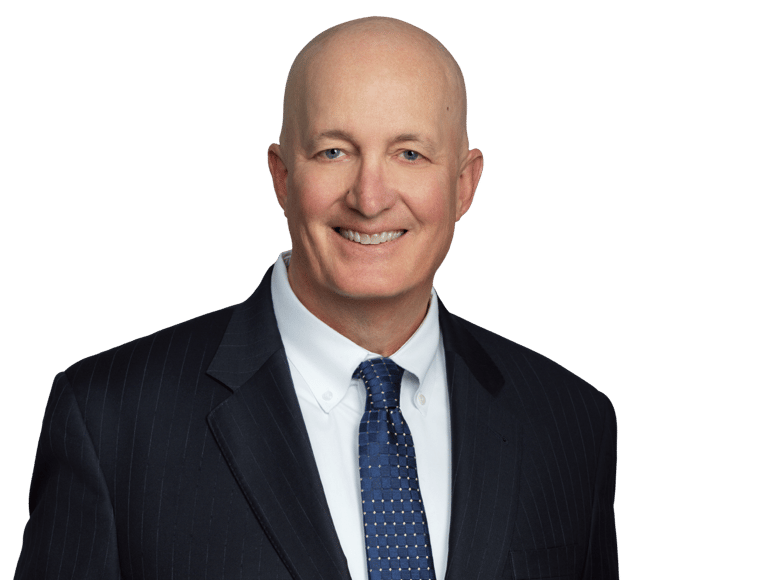
Portrait of Craig S. Hudson

Defense Digest

Message From the Executive Committee

Defense Digest, Vol. 27, No. 2, March 2021

March 1, 2021

by Craig S. Hudson

In the previous Defense Digest, you were provided with a link to a well-deserved and moving video tribute to Chris Dougherty, my predecessor as director of the Professional Liability Department and a member of the Executive Committee, who stepped down from both positions at the end of 2020. If you have not yet watched the video, I urge you to do so. I can envision no greater honor and privilege than to succeed my friend, Chris, as the director of the Professional Liability Department.

Settling into this new position has caused me to reflect on my 28 years at Marshall Dennehey. In 1993, I was a senior associate at the Liebert Short law firm. I was invited to join a group of the partners that had decided to join Marshall Dennehey. I was considering my options when Bob Coleman, who “ran” Marshall Dennehey at the time, called and asked me to meet with him. I did, and we spent an hour together. During our conversation, Bob told me of his vision for Marshall Dennehey’s future. When he was done, I knew that Marshall Dennehey was the firm for me. I said, “Yes.” To this day, I consider my decision to join the firm to be one of my best.

When I first started at Marshall Dennehey, I was part of the Casualty Department. Over the ensuing years, I was fortunate to work with and learn from some very fine attorneys, including Harry Short, Eric Weiss, Keith Heinold and Tom Brophy. I handled a mix of cases, ranging from motor vehicle product liability cases to defending Sesame Place (always an advantage to be representing Big Bird).

A couple of years into my time at Marshall Dennehey, Bob Coleman again called and asked that I come to his office. As I walked down the hall to meet him, I had more than a little bit of trepidation. Bob told me that he recalled from our initial meeting that I told him that one day I would like to get involved in firm management and not just handle cases. Bob said he wanted to give me a chance to see if this was really something I wanted and could do. He asked if I would like to oversee the summer law clerk program. I followed my father’s advice to never turn down opportunities presented to you by your boss (and believe me, Bob was the boss). A couple of years later, I was asked to get involved in associate recruiting. Again, I said yes. I then worked closely with and later succeeded Howard Dwoskin as the firm’s attorney hiring coordinator. I have to admit I take some pride in the fact that some of the attorneys I recruited have become leaders in our firm.

A few years later, I was “recruited” to practice in the Professional Liability Department. Again, I agreed. A short while later, I started working with Phil Toran and Chris Dougherty, who was then the assistant director of the Professional Liability Department, on recruiting and hiring associates. I also was tasked with providing some oversight and direction to the department’s lawyers who practiced out of the Philadelphia office.

After several years in this role, a new opportunity arose. By then, the firm had entered the Florida market, and by 2005, its four offices were growing. Marshall Dennehey’s base was solid, with Mark Thompson as the manager of the Orlando office, but there was a need to strengthen the firm’s additional offices in Fort Lauderdale, Jacksonville and Tampa. I just so happened to be part of a conversation among Phil Toran, Peter Miller and Tom Brophy, where it was stated that the Fort Lauderdale office might benefit from having a stronger connection to Philadelphia. Having recently returned from a business trip to our Florida offices, I somehow thought it was a good idea to suggest that I might be willing to go to Florida and take on that role. Phil, Pete and Tom were surprised and intrigued to hear that I would even consider doing so. Wisely, they suggested that I should first discuss the idea of moving to Florida with my wife, Connie. Good advice. That night I went home and told her what had transpired and what I was contemplating. Fortunately for me, Connie was supportive of the idea. And so, after 22 years of practicing in Pennsylvania and New Jersey, I took and passed another bar exam (with the same MBE score), and in July of 2006, relocated to Fort Lauderdale where I became the managing attorney of the Fort Lauderdale office and the supervising attorney of the Florida Professional Liability attorneys.

In addition to my management duties, I also handled cases. When I first arrived in Fort Lauderdale, we had a small office. All of the attorneys had to handle a variety of cases. Over the next 13 years, I handled almost every type of professional liability case. I have represented lawyers, accountants, real estate and insurance agents, architects and engineers, debt collectors, and HOA and condominium boards. Over the last several years, I also handled a number of employment matters. I tried cases in state and federal courts in all four of the South Florida counties.

During the next 14 years, Marshall Dennehey emerged as one of the leading civil defense firms in Florida. Today, we have a combined 67 attorneys practicing out of our four Florida offices.

This bring us to 2020. Little did any of us envision what that year had in store for us. For me, startling and life-changing events of 2020 started a bit earlier than for many of you. You see, I turned 60 in January of 2020, and Connie planned a short vacation to celebrate. A day after my birthday, we were walking on the beach, talking about the past and future. Although we both missed certain things about Philadelphia, we liked living in Florida. I was enjoying my position as regional manager of the Florida offices, having succeeded Mark Thompson in that role following his elevation to president and CEO. I was looking forward to the upcoming years working with the attorneys in Florida as we continued to grow our presence in the state. While this may sound a bit too “new age” for me, I had reached a state of contentment. Little did we know that our world would change two days later. That was when Mark Thompson came to Fort Lauderdale for a surprise visit. Mark told me that the Executive Committee would like Connie and me to agree to return to Philadelphia so I could become the assistant director of the Professional Liability Department and eventually succeed Chris when he retired. Again, following my father’s advice, I agreed. Lucky for me, so did Connie.

Since February 2020, I have spent my time becoming re-acquainted with Philadelphia, reconnecting with long-term friends and colleagues, and getting to know the shareholders, associates, paralegals and staff who make up the Professional Liability Department. I have been busy—the department has 120 attorneys in 17 distinct practice groups covering a wide variety of specialties. This past year I have come to appreciate, more than ever, those attorneys, paralegals and staff members—a group of talented men and women who are dedicated to providing our clients with top-notch legal representation. They care about the work they do and the services they provide.

Going forward, I pledge to continue the vision and drive for excellence first established by Phil Toran, and then honed by Chris Dougherty. Both of them set the standard for providing top-level service to our clients in a cost-effective manner. We strive to be effective advocates for our clients, while treating everyone, including opposing counsel and the judiciary, with respect. As the director of the Professional Liability Department, I bring my years of management and leadership experience and my 20+ years of legal experience gained from defending professionals and other entities in Pennsylvania and Florida.

As a member of the Executive Committee, I have the good fortune to work with my friends and colleagues, Howard Dwoskin and Mark Thompson. We share a commitment to providing clients with excellent legal representation and service, which has been, and will continue to be, the hallmark of our law firm. Doing so with a sense of humor and respect for one another is what makes Marshall Dennehey the place I am so glad I said “Yes” to 28 years ago.

Defense Digest, Vol. 27, No. 2, March 2021 is prepared by Marshall Dennehey Warner Coleman & Goggin to provide information on recent legal developments of interest to our readers. This publication is not intended to provide legal advice for a specific situation or to create an attorney-client relationship. ATTORNEY ADVERTISING pursuant to New York RPC 7.1. © 2021 Marshall Dennehey Warner Coleman & Goggin. All Rights Reserved. This article may not be reprinted without the express written permission of our firm. For reprints, contact tamontemuro@mdwcg.com.

Firm Highlights

Thought Leadership

Appeals Court Reverses Trial Court Order Awarding Attorney’s Fees Due to Lack of Evidence to Support Fee Awarded

The Fourth District Court of Appeal reversed the trial court’s order awarding appellate fees to People’s Trust Insurance Company based upon a lack of evidence to support the attorney’s fee award in RM & Assocs. Consulting, Inc. v. People's Trust Ins. Co., 2026 Fla. App. LEXIS 4654 (Fla. 4th DCA 2026). People’s Trust was the insurer of a residential property that had sustained water damage. RM & Associates Consulting was hired by the homeowner to perform mitigation services at the property. The homeowner assigned post-loss benefits to RM and RM subsequently filed suit against People’s Trust alleging that it had not been paid the money it was owed for the mitigation services. People’s Trust defended the lawsuit on the ground that the policy required the insured to notify the insurer before authorizing repairs so People's Trust could elect to use its preferred contractor. Because the owner did not comply with that provision, People's Trust asserted its liability was limited to the amount that its preferred contractor would have charged for the work, which People's Trust contended was $2,000. People's Trust paid that amount to RM before RM filed suit. People’s Trust filed a motion for summary judgment which was granted. RM appealed the summary judgment ruling and the ruling was upheld by the Fourth District Court of Appeal. The appellate court also granted People’s Trust’s entitlement to appellate attorney’s fees, subject to the trial court’s determination of the amount of fees, based upon an offer of judgment made by People's Trust. On remand, the trial court held an evidentiary hearing to determine the amount of attorney’s fees People’s Trust was entitled to. At the hearing, People’s Trust presented testimony from it’s fee expert, supervising trial counsel and appellate counsel. People’s Trust sought recovery of $24,866.17 for work performed by appellate counsel. The request primarily consisted of work performed in preparation of the answer brief. The fee expert testified that more than ninety hours spent preparing the answer brief was reasonable given the complexity and significance of the underlying issue. The appellate court found that the fee expert’s testimony fell short of meeting the necessary standard of demonstrating that the hours expended were necessary. The appellate court found that the billing records did not serve to cure the deficient testimony, as the billing records did not contain adequate details regarding the specific tasks performed. Rather the records contained entries such as “answer brief” which the appellate court found to be insufficient. The appellate court noted that neither the fee expert or counsel addressed how the prior research and briefing in the parallel litigation informed the work in the instant matter. The appellate court noted this was significant in that a court's attorney's fees award must exclude excessive, redundant, or otherwise unnecessary hours, citing Florida Patient's Compensation Fund v. Rowe, 472 So. 2d 1145 (Fla. 1985). Based upon the record failing to support the finding of the trial court, the 4th DCA remanded the case to the trial court for a reconsideration and redetermination of reasonable appellate attorney’s fees supported by competent substantial evidence. The 4th DCA reiterated that the fee expert’s focus on the quality of the work and the importance of the work to People’s Trust did not make up for the perceived deficiencies in the position that spending over ninety hours on a single answer brief was reasonable. Whether moving for attorney’s fees or challenging the amount of fees being sought by an opposing party, practitioners should be mindful of the evidence being used to support the claims being made. Parties should pay close attention to whether the hours being sought may be impacted by prior litigation either party may have engaged in. A party must be prepared to address how prior litigation efforts did or did not impact the amount of hours being claimed in current litigation. Lastly, billing records must be sufficiently detailed so as to support any potential future fee claim.

Thought Leadership

First DCA Reverses Excessive Jury Award Unsupported by the Evidence

In December 2019, the plaintiffs filed a claim with Universal for damages caused by a water and sewage back up through the plumbing system and existing through multiple fixtures including the washing machine drain, kitchen sink, dishwasher, bathtub and toilet. Universal investigated the claim, issued payment for resulting water damage totaling $7,000.00 in actual cash value ($12,000.00 in replacement cost value). The plaintiffs sought additional benefits for work needed to access the below-slab cast iron plumbing system due to the failure of the system from rust, deterioration, corrosion and breaks in the line. Universal denied any additional benefits for access. In 2021, the plaintiffs filed suit. During litigation, Universal sent a plumber to inspect the home and the plumber concluded the pipes were clogged but could be cleaned. The plaintiffs’ plumber testified that the plumbing system needed to be replaced due to holes and openings in the pipes. The plaintiffs introduced two estimates prepared by Triad Restoration services totaling $79,680.22 in replacement cost value and $50,219.97 in actual cash value and an executed contract with another company for repairs with the amounts of repair redacted. Since the insurance policy did not provide coverage for repair or replacement of the plumbing system, the jury only had to decide whether the plumbing system needed to be replaced, and if it did, Universal would owe for the access costs; the jury verdict form required the jury to determine both the replacement cost value and actual cash value amounts. The jury asked if it had to rely on the Triad estimates for their amounts. The trial court advised the amount awarded had to be based on the evidence presented at trial and the law given by the trial court. The jury awarded $335,000.00 in replacement cost value or $305,000.00 in actual cash value. Universal motioned for a new trial arguing the amount awarded was unsupported by the evidence and then moved for remittitur. The trial court denied both motions and this appeal followed. The court found that while a jury’s verdict should only be disturbed with caution and discretion, the trial court must give the properly challenged award close scrutiny and determine whether it bears a reasonable relation to the damaged provided, is supported by the evidence, and could have been reached in a logical manner by reasonable means §768.74(3), (5)(d)-(e), Fla. Stat. The court found the trial court did consider the statutory requirements at the hearing on Universal’s remittitur motion and was concerned about a reasonable relation to the amount of damages proved and injury suffered and whether the award was supported by the evidence, but ultimately denied the motion, reasoning that the jury had been properly instructed to fairly and adequately compensate the plaintiffs. The court noted the only evidence providing the basis for the jury verdict was Triad’s estimates and those valued the plaintiffs' claimed loss at $79,680.22 in replacement cost value and $50,219.97 in actual cash value; no valuation evidence reasonably supported the jury verdict. The plaintiffs argued that the jury was entitled to consider more than the estimates, but the court conveyed the evidence provided did not give the jury a way to reach the amounts they awarded. The court was also not swayed by the plaintiffs’ argument regarding inflation and later price increases, but the court noted that no evidence via the contract, nor testimony regarding increase in labor, material, fuel or construction costs were entered into the record.  The court concluded the jury may draw reasonable inferences from the evidence, but it may not supply a damages number by speculation. The court did not find any of the plaintiffs’ remaining argument persuasive either. The court reversed the denial of Universal’s remittitur motion and motion for new trial as to damaged and remanded the case. The court ended its opinion with advising the trial court must determine whether replacement cost value or actual cash value is the property measure of damages under the policy and order remittitur in an amount consistent with that determination and the evidence.

Thought Leadership

United State District Court for the Middle District of Florida finds Evidence of Replacement Cost Value is Admissible and Recoverable Even When Repairs Have Not Been Made

The plaintiff filed a claim for damage as a result of Hurricane Ian. It claimed damages were over $24 million, but the carrier accepted partial coverage and paid $8,307.49 for secondary components. The carrier found hurricane damage to the building, but it was below the insurance policy’s $3.6 million deductible. The plaintiff sued for breach of the insurance policy. The carrier argued in a motion for summary judgment that plaintiff could not recover replacement cost value (RCV) because the property repairs had not been effectuated. The policy provided for RCV, but only after the repairs were completed. The carrier argued that because the repairs were not completed, the plaintiff was not entitled to RCV damages. The plaintiff argued the carrier could not withhold the actual cost value (ACV) due, which was the main allegation of the lawsuit, then fault it for not making the repairs to unlock the RCV. The United States District Court for the Middle District of Florida rejected the carrier’s argument, finding that when an insurer allegedly breached the policy by withholding coverage, it could not hide behind a repair-contingent provision to block the insured from RCV damages at trial. The court found the issue to be whether the contractual language designed to preclude certain coverage until after repairs are completed barred an insured from seeking those damages at trial when repairs were not complete. The court noted the Eleventh Circuit had not resolved this issue and neither side pointed to a definitive answer from the Florida Supreme Court. The court reasoned that it must look to the Sixth District Court of Appeal (6th DCA), which is the court which would have heard this case if it was in state court. The court noted the 6th DCA recently addressed this issue in Universal Prop. & Cas. Ins. Co. v. Rodriguez, 427 So. 3d 676 (Fla. 6th DCA 2026). The Rodriguez Court found that a breach of contract action is designed to adjudicate not only whether the contract was breached, but also evaluate the damages incurred had the breach not occurred, which the Rodriguez court found to be recovery of the RCV. This court also noted basic Florida contract principles compelled the same result, as a material breach frees the nonbreaching party to suspend its own performance and can demand the full benefit of its bargain, including RCV damages. Finally, the court found the distinction between a full denial and partial denial did not compel a different result. It found the policy required the carrier to acknowledge coverage and pay ACV for all covered damages, and the failure to do that is a material breach, entitling the insured to all of the damages available under the contract, which included the RCV.