.

Co-Chair, Real Estate E&O Liability Practice

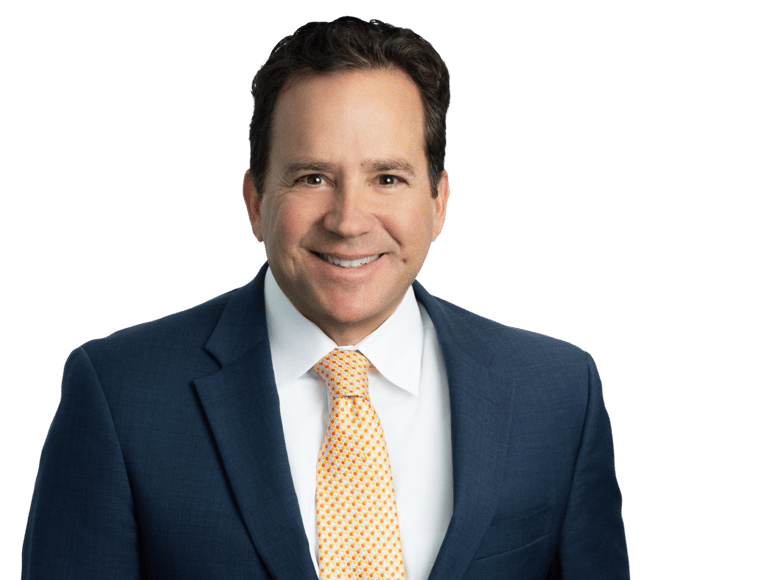
Portrait of Christopher B. Block

Legal Updates for Real Estate E&O Liability

Protecting Real Estate Professionals with Renewed Strength and Expanded Reach

Legal Updates for Real Estate E&O – November 2025

We are excited to announce the reinvigoration of our Real Estate Professional Liability defense team, servicing clients in eight states including Delaware, Florida, Maryland, New Jersey, New York, Ohio, Pennsylvania and West Virginia.

Our Real Estate E&O Liability Practice Group represents real estate professionals and related service providers in high-stakes civil litigation across a wide range of claims. We have extensive experience defending real estate brokers, agents, and REALTORS® against malpractice and breach of duty allegations stemming from residential and commercial transactions, as well as those who play critical roles in facilitating these transactions, including title agents, abstractors, surveyors, mortgage brokers, appraisers, home inspectors and title insurance companies. 

Our attorneys understand the complexities of real estate law and the nuances of professional standards in each of the jurisdictions in which we practice, allowing us to craft targeted defenses that protect our clients’ reputations and livelihoods. We are creative, proactive and strategic, working closely with our clients and their insurers to craft a formidable defense, often helping to resolve matters through negotiation or early motion practice pre-suit. When litigation is unavoidable, we bring deep courtroom experience and an unwavering commitment to defending our clients through trial and appeal, if necessary.

We know that for professionals involved in real estate, litigation can be both financially and professionally disruptive. That’s why we prioritize efficient case management, cost-effective strategies and clear communication throughout the life of a case. Our goal is always to protect our clients’ interests while minimizing the impact on their business operations and professional standing.

With a team that blends deep legal knowledge and real-world insight into the real estate industry, we are trusted counsel to professionals facing complex and often emotionally-charged disputes. Whether the matter involves a multimillion-dollar commercial deal or a single-family home transaction, our attorneys bring the same level of dedication and attention to detail. We are proud to be a reliable defense partner for real estate professionals and the businesses that support them. When your work is under scrutiny, you need a legal team that understands the stakes—and how to win. 


Legal Update for Real Estate E&O – November 2025, is prepared by Marshall Dennehey to provide information on recent legal developments of interest to our readers. This publication is not intended to provide legal advice for a specific situation or to create an attorney-client relationship. We would be pleased to provide such legal assistance as you require on these and other subjects when called upon. ATTORNEY ADVERTISING pursuant to New York RPC 7.1 Copyright © 2025 Marshall Dennehey, all rights reserved. No part of this publication may be reprinted without the express written permission of our firm. For reprints or inquiries, or if you wish to be removed from this mailing list, contact tamontemuro@mdwcg.com.

Firm Highlights

Thought Leadership

Punitive Damages Claim Survives in Distracted Driving Case

In a personal injury action arising out of a motor vehicle accident, the plaintiff alleged he sustained serious injuries, including a left knee injury requiring surgery, when Defendant Snook rear-ended his stopped vehicle in a construction zone on Route 33 in Monroe County. The complaint asserted that Snook, while operating a vehicle owned by the corporate defendants and acting within the scope of his employment, was traveling at an excessive speed, following too closely, and texting while driving, resulting in the collision. Maro v. Snook, No. 1805 CV 2025 (Pa. Ct. Com. Pl. Monroe Cnty.), The Monroe County Court of Common Pleas overruled Defendants’ preliminary objections seeking dismissal of the punitive damages claims and challenging the specificity of the pleadings. The Court held that allegations that Snook was speeding and texting while driving in a construction zone were sufficient to support an inference of reckless indifference to the rights of others, making punitive damages legally viable at the pleading stage. Citing Monroe v. CBH20 LP, the Court noted that recklessness may be averred generally and that Snook’s state of mind must be developed through discovery. The Court also found the complaint adequately pled vicarious liability against the corporate defendants and provided sufficient factual specificity regarding the alleged negligence, statutory violations, and agency relationship to withstand preliminary objections.

Thought Leadership

Constructive Notice of Dangerous Intersection Presents Jury Question

In an action arising out of a motor vehicle accident, the plaintiff alleged that a dangerous condition at an intersection in Bethel Township contributed to a December 1, 2020 collision between a sedan and a tractor-trailer. Leger claimed the Township negligently placed and maintained a stop sign on Shirksville Road where sight distance was allegedly only 300 feet rather than the required 500 feet, and that the Township had actual or constructive notice of this hazardous condition. The trial court granted summary judgment in favor of the Township, concluding Leger failed to present sufficient evidence of notice. Leger v. Martin, No. 253 C.D. 2025 (Pa. Commw. Ct. May 19, 2026). The Commonwealth Court reversed and remanded, holding that actual or constructive notice under the Political Subdivision Tort Claims Act is generally a question of fact for the jury. The Court found Leger produced sufficient evidence to create a genuine issue regarding constructive notice, including evidence that the Township was responsible for the roadway and stop sign, regularly inspected and maintained the sign, had replaced it before the accident, and, according to expert testimony, should have recognized the inadequate sight distance through reasonable inspection. The Court further held that evidence of prior similar crashes at the intersection supported an inference of constructive notice, making summary judgment inappropriate because reasonable minds could differ as to whether the dangerous condition was apparent and should have been discovered by the Township.

Thought Leadership

Mental Health Records Shielded from Discovery in Personal Injury Action

In a personal injury action, the plaintiff sought damages for physical injuries allegedly sustained in an April 11, 2024 motor vehicle accident. During her deposition, Plaintiff testified that the accident aggravated preexisting injuries for which she had previously treated at Wilkes-Barre General Hospital and that she also received treatment at Moses Taylor Hospital after the accident. Defendants subpoenaed records from both facilities, excluding mental health and psychiatric records, while Plaintiff objected on the ground that protected mental health information could be disclosed. Moreck v. Karns, No. 2025 CV 1140 (Pa. Ct. Com. Pl. Lackawanna Cnty.), The Court granted Defendants’ motion to overrule Plaintiff’s objections to the subpoenas, except as to records protected by the Mental Health Procedures Act (MHPA). The Court held that Plaintiff’s medical records from both hospitals were relevant and discoverable because her deposition testimony placed those physical injuries at issue, but that she had not placed her mental health condition at issue and therefore had not waived MHPA confidentiality protections. The Court also granted Plaintiff’s motion to compel Defendant Karns to provide overdue discovery responses within twenty days, but denied Plaintiff’s motion to compel against Black Ops, while warning that Black Ops could be bound by its discovery responses and face consequences if it later attempted to rely on contrary information.