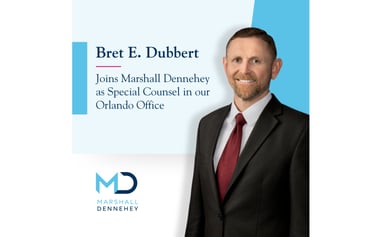
.

Case Law Alerts

The Workers' Compensation Exclusivity Exception Must Be Narrowly Construed and the Contract at Issue Must Contain Sufficient Language to Establish a Third-Party Indemnity Obligation

Hindinger v. J & M Temp, LLC, 2023 WL 2292489 (Del. Super. Feb. 28, 2023)

April 1, 2023

by Lisa L. Maeyer

The plaintiff originally asserted several theories of liability in his complaint, including negligence and breach of express and implied warranties against the defendants, the manufacturer/seller of industrial equipment and the licensor/seller of a piece of equipment used with the industrial equipment. Each defendant filed a third-party complaint against the third-party defendant (the plaintiff’s employer at the time of injury). The Delaware Supreme Court granted the third-party defendant’s motions to dismiss the third-party complaints because the contract at issue prevented the defendants/third-party plaintiffs from being able to recover against the third-party defendant under a theory of contractual indemnification. The court discussed and followed the Delaware Supreme Court’s decision in Precision Air Inc. v. Standard Chlorine of Delaware, Inc., such that the workers’ compensation exclusivity exception permits an employee to recover from a third party where a contract between the employer and the third party contains provisions requiring the employer to (1) perform work in a workmanlike manner and (2) expressly or impliedly indemnify the third party for claims rising from the employer’s own negligence. The court rationalized that implied contractual indemnification, as established in Diamond State Telephone v. University of Delaware, exists only when an employer performs services for a third party under a contract on the third party’s premises; the court declined to apply the “special relationship” test from Roy v. Star Chopper (a U.S. District Court for the District of Rhode Island case) and concluded that the defendants’ third-party complaints did not meet the Diamond requirements to trigger implied indemnity. Therefore, the Delaware Superior Court granted the third-party defendant’s motion to dismiss the third-party complaints, concluding that the workers’ compensation exclusivity exception must be narrowly construed and the contract at issue must contain sufficient language to establish a third-party indemnity obligation. 

Case Law Alerts, 2nd Quarter, April 2023 is prepared by Marshall Dennehey to provide information on recent developments of interest to our readers. This publication is not intended to provide legal advice for a specific situation or to create an attorney-client relationship. Copyright © 2023 Marshall Dennehey, all rights reserved. This article may not be reprinted without the express written permission of our firm.

Firm Highlights

Thought Leadership

Florida Second DCA Clarifies the Timing of Negligence Claims Against Insurance Brokers

One of the recurring issues in insurance broker malpractice litigation is determining when a negligence claim against a broker becomes ripe. The Florida Second District Court of Appeal recently addressed that question in Bullington Insurance Group, LLC v. Gordon, 427 So. 3d 632 (Fla. 2d DCA 2026), reaffirming that a negligence claim against an insurance broker does not accrue while a related coverage dispute with the insurer remains pending. In Bullington, the plaintiff was employed as a driver and was involved in an auto accident. His employer's insurance broker had requested that he be added to the employer's commercial policy, and the insurer confirmed the addition. However, when the policy renewed, the plaintiff was not listed as a driver and was not covered at the time of the accident. Default judgments were entered against the plaintiff and his employer in litigation arising from the accident. The plaintiff then filed suit against the insurer for breach of contract and policy reformation, and separately against the broker for negligence. The broker moved to dismiss the negligence count as premature, arguing the coverage dispute with the insurer had to be resolved first. The trial court denied the motion. The Second District granted certiorari and quashed the order. Applying its 2014 decision in Wells Fargo Insurance Services USA, Inc. v. Blackshear, 136 So. 3d 1235 (Fla. 2d DCA 2014), the court held that the negligence claim against the broker was entirely dependent on a finding that the accident was not covered under the employer's policy. If coverage were established, the claim against the broker would fail as a matter of course. Because the breach of contract and reformation claims against the insurer remained pending, the negligence count against the broker had not yet accrued. The court further addressed the appropriate remedy, rejecting the plaintiff's argument that abatement was warranted. The court distinguished cases holding that abatement is proper in the bad faith context, where an insured brings both an underlying coverage claim and a bad faith claim against the same insurer. Here, the broker and insurer were separate defendants, and Blackshear squarely held that dismissal without prejudice, not abatement, is the proper remedy for a premature broker negligence claim. This decision reinforces the practical significance of sequencing in insurance-related litigation. Where a plaintiff asserts simultaneous claims against both a carrier and a broker, defense counsel for the broker should promptly move to dismiss the broker negligence count as premature. Failure by the trial court to grant such relief constitutes a departure from the essential requirements of law.

Thought Leadership

Insurance Broker Best Practices to Reduce AI-Related E&O Risk

Insurance agencies and brokerages, like most businesses, are increasingly using artificial intelligence and large language models (LLMs), such as ChatGPT and Gemini, in their daily operations. AI can provide significant advantages, including greater efficiency, enhanced productivity, and cost savings. For example, brokers may use AI to generate policy comparisons and proposals, accelerating the quoting process. However, these benefits come with risks. AI-generated information may be inaccurate, leading to improper advice, coverage misrepresentations, or binding coverage that violates underwriting guidelines. Overreliance on AI may also increase exposure to errors and omissions (E&O) claims and litigation. Insurance agencies can reduce AI-related risks by following these five best practices: 1. Require Licensed Producer Oversight AI can improve efficiency, but it does not replace the professional judgment or responsibility of a licensed producer. Treat AI-generated content as a preliminary draft that may contain errors. Before any quote, proposal, coverage summary, or policy comparison is provided to a client, a qualified individual should independently verify all material information, including coverage terms, limits, deductibles, exclusions and endorsements, against the applicable policy forms and source documents. 2. Establish a Formal AI Policy Agencies should adopt a written AI policy that defines: Approved AI tools; Information that may or may not be entered into AI platforms; AI outputs requiring licensed producer review; Tasks AI may assist with or perform autonomously, if any; and Permitted and prohibited uses. Approved uses may include document summarization and administrative support. Prohibited uses should include independently binding coverage, modifying limits, providing coverage advice, or communicating coverage determinations without human review. The policy should be distributed to all employees, supported by training, and reinforced through written acknowledgment of compliance. 3. Manage Third-Party AI and Data Security Risks Confidential client information, such as loss runs, financial records, proprietary information, or other sensitive data, should not be entered into unapproved public AI platforms. Agencies should also review contracts with AI vendors to ensure they adequately address confidentiality, cybersecurity controls, data retention, indemnification, insurance requirements, and limitations of liability. 4. Document AI Usage As with other client communications and insurance placement decisions, agencies should maintain records of AI-related activity. Documentation should reflect the client’s requests, information available to the producer, AI-generated output, any modifications or verification performed by agency personnel, communications with the client, and the coverage ultimately procured. Such records may provide valuable evidence in defending a future E&O claim. 5. Review Insurance Coverage Agencies should review their own E&O policies to determine whether any exclusions, limitations, or endorsements affect coverage for AI-related activities.  Likewise, agencies should be aware of any AI-related coverage restrictions contained in policies they recommend or place for clients. Conclusion AI is a valuable tool that can help insurance agents and brokers improve efficiency and service. However, it should supplement rather than replace the oversight, expertise, and professional judgment of a licensed producer. This article was originally published on PLUS Blog, the blog of the Professional Liability Underwriting Society, on August 20, 2026. All rights reserved. Further duplication without prior permission is prohibited. 

News

106 Marshall Dennehey Attorneys Recognized in the 2027 Editions of The Best Lawyers in America® and the Best Lawyers: Ones to Watch® in America

Marshall Dennehey is proud to highlight the firm’s 106 attorneys who have been recognized in the 2027 editions of The Best Lawyers in America® and the Best Lawyers: Ones to Watch® in America. Less than 6% of all practicing lawyers in the U.S. were selected by their peers for this recognition. Additionally, four of the firm’s attorneys received the Best Lawyers® 2027 “Lawyer of the Year” awards in their respective practice areas and demographic regions. Since it was first published in 1983, Best Lawyers® has become universally regarded as the definitive guide to legal excellence. Best Lawyers lists are compiled based on an exhaustive peer-review evaluation. For more information, please visit https://www.bestlawyers.com/. OUR 2027 LAWYERS OF THE YEAR Harrisburg, PA Christopher Reeser, Personal Injury Litigation - Defendants Kacey Wiedt, Workers Compensation Law - Employers Roseland, NJ Justin F. Johnson, Medical Malpractice Law - Defendants Leonard Leicht, Personal Injury Litigation - Defendants   OUR 2026 BEST LAWYERS IN AMERICA Philadelphia, PA Nicholas D. Bowers, Personal Injury Litigation - Defendants Josh J. T. Byrne, Professional Malpractice Law - Defendants Jefferey J. Chomko, Insurance Law James H. Cole, Insurance Law John J. Delany III, Personal Injury Litigation - Defendants Laurianne Falcone, Personal Injury Litigation - Defendants John P. Gonzales, Employment Law - Management John Hare, Appellate Practice Daniel D. Krebbs, Personal Injury Litigation - Defendants Michele Punturi, Workers' Compensation Law - Employers Bradley D. Remick, Product Liability Litigation - Defendants Andrea Cicero Rock, Workers' Compensation Law - Employers Robin M. Romano, Workers' Compensation Law - Employers Daniel J. Ryan, Jr., Personal Injury Litigation - Defendants Gary M. Samms, Professional Malpractice Law - Defendants Christopher N. Santoro, Personal Injury Litigation – Defendants; Product Liability Litigation -Defendants Josh D. Scheets, Personal Injury Litigation - Defendants Robert P. Schenk, Workers' Compensation Law - Employers Robert E. Smith, Insurance Law Robin Snyder, Litigation - Health Care Michael L. Turner, Commercial Litigation; Criminal Defense: White-Collar; Mass Tort Litigation / Class Actions - Defendants Claire Breaux Ventola, Product Liability Litigation - Defendants Pittsburgh, PA Melissa Devich Cochran, Commercial Litigation; Mass Tort Litigation / Class Actions – Defendants; Product Liability Litigation - Defendants  John F. Deasy, Personal Injury Litigation – Defendants; Product Liability Litigation - Defendants Daniel W. Deitrick, Workers' Compensation Law - Employers Douglas C. LaSota, Litigation - Construction; Mass Tort Litigation / Class Actions - Defendants Joseph V. Lesinski, Product Liability Litigation – Defendants   Christian D. Marquis, Personal Injury Litigation - Defendants Patricia A. Monahan, Insurance Law; Litigation - Insurance Patrick T. Reilly, Commercial Litigation; Mass Tort Litigation / Class Actions – Defendants; Product Liability Litigation - Defendants Brett C. Shear, Medical Malpractice Law - Defendants Teresa O. Sirianni, Education Law; Employment Law – Management; Litigation - Labor and Employment Stuart Sostmann, Product Liability Litigation – Defendants Danielle M. Vugrinovich, Mass Tort Litigation / Class Actions - Defendants Scranton, PA Sarah E. Argo, Litigation - Insurance Michael J. Connolly, Personal Injury Litigation – Defendants; Professional Malpractice Law - Defendants Matthew Keris, Litigation - Health Care; Medical Malpractice Law - Defendants John T. McGrath, Jr., Insurance Law; Medical Malpractice Law – Defendants; Product Liability Litigation - Defendants William J. McPartland, Insurance Law John R. Nealon, Product Liability Litigation - Defendants Victoria Scanlon, Health Care Law; Litigation - Health Care; Medical Malpractice Law - Defendants Michael A. Sebastian, Workers' Compensation Law - Employers Thomas A. Specht, Insurance Law; Litigation - Insurance Suzanne Tighe, Litigation Insurance Harrisburg , PA Casey Alan Coyle, Administrative/Regulatory Law; Appellate Practice; Commercial Litigation Brittany E. Bakshi, Personal Injury Litigation - Defendants Shannon P. Fellin, Workers' Compensation Law - Employers Allison Krupp, Insurance Law John R. Ninosky, Litigation – Insurance; Personal Injury Litigation - Defendants Christopher Reeser, Personal Injury Litigation - Defendants Kacey Wiedt, Workers' Compensation Law – Employers King of Prussia, PA  Michael L. Detweiler, Construction Law Joseph L. Hoynoski III, Medical Malpractice Law - Defendants Gregory J. Kelley, Construction Law, Litigation - Construction Anthony Natale III, Workers' Compensation Law - Employers Francis X. Wickersham, Workers' Compensation Law - Employers A. Judd Woytek, Workers' Compensation Law – Employers Erie, PA Patrick M. Carey, Personal Injury Litigation - Defendants Joel M. Snavely, Health Care Law; Insurance Law New Haven, CT Michael Wrona, Commercial Litigation, Litigation - Bankruptcy  Mount Laurel, NJ David D. Blake, Litigation - Insurance Barbara Davis, Personal Injury Litigation - Defendants Lynne Nahmani, Litigation - Health Care John H. Osorio, Personal Injury Litigation - Defendants John L. Slimm, Legal Malpractice Law – Defendants; Professional Malpractice Law – Defendants Roseland, NJ Robert T. Evers, Medical Malpractice Law - Defendants Justin F. Johnson, Medical Malpractice Law - Defendants Julia Klubenspies, Medical Malpractice Law - Defendants Leonard C. Leicht, Personal Injury Litigation - Defendants Patricia M. McDonagh, Appellate Practice Sunny Sparano, Litigation - Construction Randall S. Watts, Health Care Law New York, NY Tonya M. Lindsey, Medical Malpractice Law - Defendants Tampa, FL Michael Archibald, Personal Injury Litigation - Defendants Lindsay G. McCormick, Litigation – Construction Orlando, FL Thomas F. Brown, Personal Injury Litigation - Defendants Dante C. Rohr, Commercial Litigation Fort Lauderdale, FL Kimberly Kanoff Berman, Appellate Practice Patrick M. Delong, Personal Injury Litigation – Defendants Jacksonville, FL  Heather Byrer Carbone, Workers' Compensation Law - Employers Linda Wagner Farrell, Workers' Compensation Law - Employers Elizabeth B. Ferguson, Litigation - Construction James P. Hanratty, Personal Injury Litigation – Defendants Wilmington, DE Sarah B. Cole, Litigation - Insurance Benjamin K. Durstein, Workers' Compensation Law - Employers Maria R. Granaudo, Medical Malpractice Law - Defendants  Keri L. Morris-Johnston, Workers' Compensation Law - Employers Cincinnati, OH Timothy B. Schenkel, Personal Injury Litigation - Defendants David E. Williamson, Personal Injury Litigation - Defendants Cleveland, OH Vincent E. Cononico, Litigation – Insurance, Personal Injury Litigation - Defendants Jillian L. Dinehart, Personal Injury Litigation - Defendants David J. Fagnilli, Insurance Law Jason P. Ferrante, Health Care Law, Litigation - Health Care Andrew H. Isakoff, Transportation Law Leslie M. Jenny, Litigation - Health Care; Medical Malpractice Law – Defendant OUR 2026 BEST LAWYERS: ONES TO WATCH Jacksonville, FL Sean J. Reeves, Personal Injury Litigation – Defendants; Product Liability Litigation - Defendants Orlando, FL Carolin A. Pacheco, Insurance Law Mount Laurel Stacey Gorin, Insurance Law Melville, NY Kimberly Gitlin, Personal Injury Litigation – Defendants Matthew A. Gray, Insurance Law; Personal Injury Litigation - Defendants Philadelphia, PA Holli K. Archer, Health Care Law; Medical Malpractice Law – Defendants; Professional Malpractice Law Emily Pritchyk, Commercial Litigation; Product Liability Litigation – Defendants Pittsburgh, PA Taylor E. Kosko, Mass Tort Litigation / Class Actions – Defendants; Personal Injury Litigation - Defendants Alana Staniszewski, Workers' Compensation Law - Employers Michael D. Winsko, Product Liability Litigation – Defendants; Transportation Law King of Prussia, PA Richard Lechette, Commercial Litigation; Insurance Law, Personal Injury Litigation – Defendants

Result

No-Cause Jury Verdict Secured in Wrongful Death Trial

We successfully obtained a no-cause jury verdict in a 13-day wrongful death trial. The decedent, a 59-year-old man, was admitted to the emergency room on February 15, 2019, with complaints of abdominal pain, decreased appetite, and constipation, despite the use of laxatives. The patient did not complain of any nausea, vomiting, or diarrhea. He had a significant medical history including diabetes, hypertension, prior coronary artery stenting, morbid obesity (with past gastric bypass surgery), longstanding ventral hernia, and back pain. A CT scan revealed multiple hernias and a potential closed-loop bowel obstruction, leading to a surgery consultation. Our client, an emergency general surgeon, interpreted that the patient did not have a closed loop or any significant obstruction and recommended non-surgical management. The patient was approved to have clear liquids, and had a vomiting incident shortly after, but our client was not notified. The patient was returned to NPO status, and after improving overnight, he was returned to “clears” and additional medical and renal consults were ordered. Our client did not receive any communications from the residents/nurses of any changes in the patient’s condition. On February 18, 2019, two rapid responses were called due to increased heart rate and vomiting. It is believed that the vomiting resulted in aspiration, causing sepsis, ultimately leading to the patient’s death. During the trial, the plaintiff’s sole medical expert highlighted imaging on the wrong hernia, which called into question all of his opinions in the case. We made key objections related to the expert testimony, limiting what the allegations were, and preventing new allegations from being made. After approximately two and a half hours of deliberating, the jury returned a no-cause verdict. 

Thought Leadership

New Jersey Supreme Court Clarifies That Insurance Brokers, Producers, and Agents Are Not Exempt from Consumer Fraud Act Liability

On July 15, 2026, the New Jersey Supreme Court issued an opinion in James G. Lowe, M.D. v. Bernard Audet, wherein the Court addressed many prior conflicting opinions and held that insurance brokers, producers and agents are not exempt from the Consumer Fraud Act (“CFA”), N.J.S.A. 56:8-1, et. seq., under the “learned professional” exception as “semi-professionals” or otherwise.  This opinion reversed a decision from the trial court and Appellate Division where the trial judge determined that insurance brokers, producers, and agents are exempt.  The Supreme Court further indicates in a footnote “to the extent there is any distinction between insurance brokers, insurance producers, and insurance agents, none of those occupations are exempt from the CFA under any exception.” Plaintiff was a neurosurgeon who co-owned the medical practice he worked at, as well as several other unrelated businesses.  The defendants were insurance brokers and producers who marketed, sold, produced and procured policies to and for Plaintiff and his medical practice for thirteen years.  Such policies included loss related to disability.  The defendants failed to advise plaintiff that business interests that were not related to his medical practice may have an effect on any benefits claims.  However, plaintiff alleges he was advised by the defendants that, should he become disabled, he would receive maximum benefits under the policies. In 2021, plaintiff was diagnosed with a permanent vision condition that prevented him from performing neurosurgery.  When the claim was made for maximum benefits under the policies plaintiff purchased from the defendants, only partial benefits were paid due to the other business interests plaintiff was involved in that were unrelated to his medical practice.  Plaintiff filed suit against the defendants, which included a claim for violation of the CFA by negligently failing to obtain sufficient disability insurance for the plaintiff.  At the trial court level, the judge relied upon Plemmons v. Blue Chip Ins. Serv., Inc., 387 N.J. Super. 551 (App. Div. 2006) (holding that insurance brokers are “semi-professionals,” and are “excluded from liability under the CFA for the services they render within the scope of their professional licenses”), but acknowledged the competing appellate decision of Shaw v Shand, 460 N.J. Super. 592 (App. Div. 2019) (holding that the “learned professional” exemption is limited to “those professionals who have historically been recognized as ‘learned’ based on the requirement of extensive learning or erudition”).   The Supreme Court went through the history of opinions which addressed and set the standards for which the CFA applies and where there are exceptions for both “learned professionals” and “semi-professionals.”  Ultimately, the Court ruled that insurance brokers do not fall under either the learned professional or semi-professional exception, and that semi-professionals like insurance brokers, producers and agents are not exempt from the CFA.