
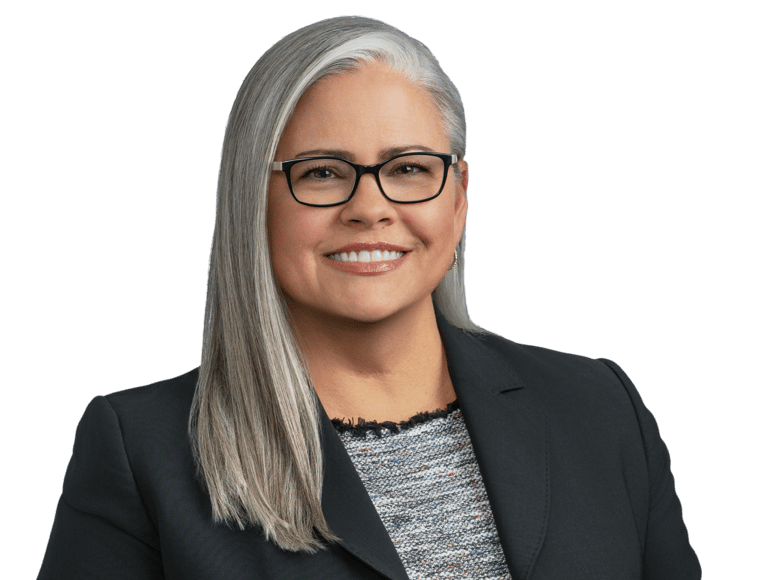
Linda practices exclusively in the area of workers' compensation defense. As an advocate for her clients, Linda not only defends insurance carriers and self-insured employers in workers’ compensation matters, but also provides guidance for implementing effective risk management strategies and workers’ compensation programs with an eye toward cost efficiency. When businesses are audited by the State for workers' compensation coverage compliance or subject to stop-work orders, Linda partners with them to develop a strategic defense approach. She also assists clients with premium disputes and some employment matters, and also represents uninsured employers with regard to workers' compensation claims.
Linda is an active instructor who lectures on various issues involving workers' compensation. She has lectured on behalf of the Workers' Compensation Section of The Jacksonville Bar Association, Lorman Education Services and AAA Construction School. She is also a Certified Instructor of Insurance Education, State of Florida, and often presents seminars to clients. Linda also speaks regularly for the Workers’ Compensation Claims Professionals organization.
Prior to joining Marshall Dennehey, Linda was the workers' compensation practice group leader at one of the leading defense firms in the southeast. Linda has been awarded an AV® Preeminent™ rating by Martindale-Hubbell, the highest rating for professional competence.
Linda is a native of Jacksonville. Before entering law school, she worked as a business consultant for a national management company.
Results
Exceptional Advocacy Leads to Indemnification Win
We were successful in having a motion for indemnification granted. Our client’s subcontractor did not secure workers’ compensation coverage as required by the statute. Therefore, our client—the contractor—became the statutory employer and accepted the claim as compensable, providing medical and indemnity benefits and reaching a settlement compromise with the injured worker. We filed a motion for indemnification, requesting that the subcontractor be ordered to reimburse our client for all monies paid on the claim. After an evidentiary hearing was held, where we presented evidence and called the vice president of claims to testify, the judge of compensation claims granted our motion.
Successfully Contested Claimant’s Request for Authorization for a Van with a Wheelchair Lift, Arguing Its Medical Necessity
We successfully contested a claimant’s request for authorization for a van equipped with a wheelchair lift, arguing it was not a medical necessity following a work-related injury. Testimony revealed the claimant’s significant mobility challenges were due to a work-related traumatic brain injury and spastic hemiplegia. However, the employer/carrier contested the request, asserting it was neither reasonable nor medically necessary based on the authorized treating physician’s assessment. Ultimately, the judge of compensation claims found the claimant did not meet the burden of proof to establish the necessity of the van, siding with the employer/carrier’s argument, and denied the authorization request along with the claims for attorney’s fees and costs.
Thought Leadership
What's Hot in Workers' Comp
Judge of Compensation Claims abused his discretion in denying a motion to continue a final hearing when the reasoning behind the request was out of the appellant’s control.
January 1, 2025
The claimant, a cashier, was shocked while plugging in a register at work. She later developed neurofibromatosis that lead to surgery. The neurosurgeon, Dr. Levi, performed surgery and indicated the claimant’s condition was not work-related. The claimant filed a petition for benefits, which the employer/carrier denied, citing major contributing cause based on Dr. Levi’s opinion. Dr. Levi also signed a letter reiterating his opinion that the claimant’s diagnosis and treatment were not work-related. However, in his deposition, Dr. Levi completely reversed his opinion, forcing the employer/carrier to immediately find an IME expert. Three weeks after this deposition, the employer/carrier filed a motion to continue the final hearing in order to allow time for the IME. In doing so, they explained, they had a doctor lined up, but he was then declined because of a relationship to Dr. Levi. The employer/carrier also asserted they had made contact with five other physicians. The judge of compensation claims denied the motion. The final hearing took place, where the judge accepted the uncontroverted opinion of Dr. Levi and found the accident was the major contributing cause of the claimant’s condition. Section 440.25(4)(b), Fla. Stat., provides that the judge has wide discretion in this regard, but it also limits that discretion to instances where the circumstances necessitating the request are beyond the requesting party’s control. The First District Court of Appeal held that the facts were entirely reasonable to approve a motion for continuance. The employer/carrier only became aware of the need for an IME five weeks before the final hearing. They worked diligently to obtain an IME but were deprived of the right to an IME as statutorily entitled. The Appellate Court held the judge of compensation claims abused his discretion, reversed the denial of the motion and vacated the lower court’s order awarding benefits. What’s Hot in Workers’ Comp, Vol. 29, No. 1, January 2025, is prepared by Marshall Dennehey to provide information on recent legal developments of interest to our readers. This publication is not intended to provide legal advice for a specific situation or to create an attorney-client relationship. We would be pleased to provide such legal assistance as you require on these and other subjects when called upon. ATTORNEY ADVERTISING pursuant to New York RPC 7.1 Copyright © 2025 Marshall Dennehey, all rights reserved. No part of this publication may be reprinted without the express written permission of our firm. For reprints or inquiries, or if you wish to be removed from this mailing list, contact tamontemuro@mdwcg.com.
What's Hot in Workers' Comp
TOP 10 DEVELOPMENTS IN FLORIDA WORKERS’ COMPENSATION IN 2024
December 1, 2024
1. As the employer/carrier was not able to overcome presumption, a firefighter’s COVID-19, requiring heart transplant, was found to be work-related. Seminole County, Florida and Johns Eastern Company, Inc. v. Chad Braden, Fla. 1st DCA, DCA#: 21-3530 The claimant, a firefighter, tested positive for COVID-19 and within a month suffered a heart attack. Three months prior, in a routine cardiology visit, he had been cleared and had no issues. After the heart attack, his condition deteriorated, and he ultimately required a heart transplant. The judge of compensation claims ruled COVID-19 caused the heart issues. Then the judge found the claimant contracted the virus at work, based on the timeline of his co-worker’s diagnosis of COVID-19, while his close contacts never developed symptoms or tested positive. The First District Court of Appeals affirmed the judge’s ruling, finding it was supported by competent substantial evidence. 2. Claimant counsel’s appeal of order denying statutory fee on settlement was overturned and held to be reasonable. Rudolph v. Darien Smith, The Home Depot U.S.A., Inc. and Liberty Mutual Ins. Co., Fla. 1st DCA, DCA#: 22-1627 The claimant settled the medical portion of a complex case, stemming from a 1993 date of accident, with his sixth attorney (Mr. Rudolph) for $13.5 million. They petitioned the judge to award attorney’s fees for all six attorneys for a total of $1,330,000, which is $695,750 lower than the statutory guideline amount at 9.85%, and accounted for 5.9% of the overall settlement. Out of that amount, Mr. Rudolph resolved the liens of all prior counsel. The judge reduced Mr. Rudolph’s fee from $805,000 to $123,000. The First District Court of Appeal reversed, saying the judge erred by being hyper-focused on converting the fee to determine an hourly rate. 3. The 120-day rule does not apply if the employer/carrier only accepted compensability and provided treatment for a temporary exacerbation. Verilyn Lunsford v. Hospital Housekeeping Systems Inc. and Corvel Corporation, OJCC# 21-028027 The employer/carrier accepted compensability of an exacerbation of a knee injury. The claimant asserted the employer/carrier failed to issue a 120-day letter and to deny her request within 120 days. The judge of compensation claims stated a correct analysis of this issue requires three findings: (1) the date the employer/carrier first provided benefits for the claimant’s condition, (2) the identity of the specific injury for which benefits were provided, and (3) whether the employer/carrier timely denied compensability of the injury for which it provided benefits. The judge held that the 120-day rule did not apply to the pre-existing knee degenerative joint disease because the employer/carrier never provided any medical treatment, other than for the temporary exacerbation. The claimant appealed, and the First District Court of Appeal affirmed without a written opinion. 4. Notice requirement is not fulfilled by reporting an injury via Petition for Benefits within 30 days of alleged accident. Bressler v. Florida School Board Assn and Hartford Underwriters Ins. Co., Fla. 1st DCA, DCA# 22-4145 The claimant, a senior claims adjuster, alleged a bike injury during work but admitted he did not report the accident to his employer. A petition was later filed. The claimant argued that notice was timely because the petition was filed within 30 days of the subject and alleged date of accident. However, the judge of compensation claims pointed out that section 440.185 1(d), Florida Statutes (2021) states: “Documents prepared by counsel in connection with litigation, including but not limited to notices of appearance, petitions, motions, or complaints, shall not constitute notice for purposes of this section.” The claimant testified he did not give notice to his employer of this alleged accident. The petition, pursuant to statute, does not serve to fulfill the notice requirement. The judge also denied the petition based on misrepresentation due to inconsistencies in the claimant’s testimony. The claimant appealed, and the First District Court of Appeal affirmed without a written opinion. 5. A judge of compensation claims must be specific when awarding non-professional attendant care to a family member. Kelly Girardin v. AN Fort Myers Imports, LLC, Gallagher Bassett, Fla. 1st DCA, DCA#: 22-1485 The claimant petitioned for attendant care benefits to be paid to her husband. The judge of compensation claims ordered the employer/carrier to pay him for 30 hours per week at the federal minimum wage. The judge made a generalized finding that services, “such as carrying her upstairs for her bathe, qualifies as attendant care under Florida Law.” The judge did not specify which “services” provided by the husband qualify for compensation, and the employer/carrier argued that some services do not qualify. The First District Court of Appeal agreed with the employer/carrier in this regard and found that the judge erred in its award for non-professional attendant care. The judge could not award compensation for the husband under 440.13(1)(b), Fla. Stat. (2020), “that falls within the scope of household duties and other services normally and gratuitously provided by family members.” 6. Pending petition for fees and costs does not toll statute of limitations, nor does payment of attorney’s fees and/or costs, as these petitions are pending and relate to jurisdiction only. American Airlines Group; American Airlines and Sedgwick CMS v. Alejandro Lopez, Fla. 1st DCA, DCA#: 23-0379 The employer/carrier asserted a statute of limitations defense in response to a petition filed. The First District Court of Appeal held that the judge of compensation claims erred in presuming that reserving jurisdiction on a pending petition for benefits for attorney’s fees tolls the statute of limitations. Once that issue is resolved, the pending status is effectively extinguished. The judge also erred by disregarding the plain language of the statute. “Pending” status of a petition for benefits is an element of jurisdiction, while “tolling” is a separate legal doctrine that delays the time limits for pursuing a claim. The payment of attorney’s fees and costs is not a “benefit.” To hold same would add another tolling event to the statute outside of the two contained in section 440.19(2); “payment of any indemnity benefits or the furnishing of remedial treatment, care or attendance.” 7. Judge of compensation claims abused his discretion in rejecting the terms of the employment contract as it expressly stated the claimant would receive his salary only during the five-month championship playing season. Detroit Tigers, Inc. and Sedgwick CMS v. Austin Sodders, Fla. 1st DCA, DCA#: 23-0827 A dispute arose over the claimant’s average weekly wage when his claim involved a contract over a five-month period. All agreed that the judge of compensation claims was to determine the average weekly wage under section 440.14(1)(d), the so-called catch-all provision, which states: “If any of the foregoing methods cannot reasonably and fairly be applied, the full-time weekly wages of the injured employee shall be used.” The First District Court of Appeal held the judge abused his discretion when rejecting the terms of the contract. There was no competent, substantial evidence to support that the claimant would have been paid $1,500 per month over 12 months. The contract expressly provided he would receive his salary only during the five-month championship playing season. The case was reversed and remanded. 8. Essential hypertension without evidence of disability did not meet presumption of compensability under Heart/Lung Bill, Fla. Stat. 112.18(1). Cloris Vazquez v. City of Miami Beach and Corvel Corporation, OJCC# 22-015627 The claimant, a police officer, had elevated blood pressure. He was treated at a hospital and had further work-up, which caused him to miss work. The judge of compensation claims was not persuaded by any of the arguments offered by the claimant and afforded the expert medical advisor’s opinions the presumption of correctness. The judge held the evidence was insufficient to establish the claimant suffered disability as a result of his diagnosed essential hypertension and that the presumption of compensability under the Heart/Lung Bill did not apply. Further, the judge ruled the remaining medical evidence did not establish a causal relationship of hypertension to his work activity; therefore, compensability was denied. The claimant appealed, and the First District Court of Appeal affirmed the decision per curiam. 9. An order imposing sanctions on the claimant’s attorney highlights the non-frivolous litigation and ‘good faith’ limitations imposed on the statutory right to file petitions for benefits. Willie Arrington v. Advanced Disposal – West Palm Beach/ Gallagher Bassett Services, Inc., OJCC # 21-013075 While not a District Court opinion, this judge of compensation claims’ order addresses an ever-increasing source of frustration: the filing and maintaining of petitions for benefits without good faith efforts to either resolve disputes before filing or to dismiss petitions once the disputes are resolved. In this case, the claimant filed five petitions for benefits within twelve weeks. The employer/carrier filed a motion for sanctions, arguing that either the benefits requested had already been provided before the petitions were filed or that they were timely provided and that the petitions were frivolously maintained thereafter. The judge of compensation claims found the single e-mail, sent after business hours the day before filing the petition during business hours, “does not constitute a good faith effort to resolve the matter.” He further found that claimant’s counsel frivolously maintained the petition well after the carrier provided the requested benefits. 10. Sufficient compliance with the Florida Drug-Free Work Place policy rules by employers and medical review officers is not enough. Louis Gonzalez Chanza v. Orlando World Center Marriott and Marriott International, Inc. and Self-Insured, OJCC # 22-013883 Once again, sufficient compliance with Florida’s Drug-Free Work Place (DFWP) rules by employers and medical review officers is not enough. This case also highlights the disconnect between Florida’s Workers’ Compensation Act and the laws permitting medical marijuana. The judge ruled that the employer did not fully comply with all of the DFWP requirements under section 440.102 because it did not contain a representative sampling of the name, address and phone numbers of local drug rehab programs. Further, the policy did not comply with the portion that required positive confirmation of the test result to the employee in writing. Dr. Portnoy placed the review on “medical hold,” pending receipt of the medical marijuana card and when not received, reported the positive drug test. Therefore, the judge held that the DFWP presumption did not take place and the employer/carrier failed to show that intoxication caused the injury. The First District Court of Appeal affirmed without a written opinion. What’s Hot in Workers’ Comp, Vol. 28, No. 12, December 2024 is prepared by Marshall Dennehey to provide information on recent legal developments of interest to our readers. This publication is not intended to provide legal advice for a specific situation or to create an attorney-client relationship. We would be pleased to provide such legal assistance as you require on these and other subjects when called upon. ATTORNEY ADVERTISING pursuant to New York RPC 7.1 Copyright © 2023 Marshall Dennehey, all rights reserved. No part of this publication may be reprinted without the express written permission of our firm. For reprints or inquiries, or if you wish to be removed from this mailing list, contact tamontemuro@mdwcg.com.


