.

Co-Chair, Environmental & Toxic Tort Practice

Co-Chair, Social Services & Human Services Liability

Co-Chair, Asbestos & Mass Tort Litigation

Chair, DE&I Committee

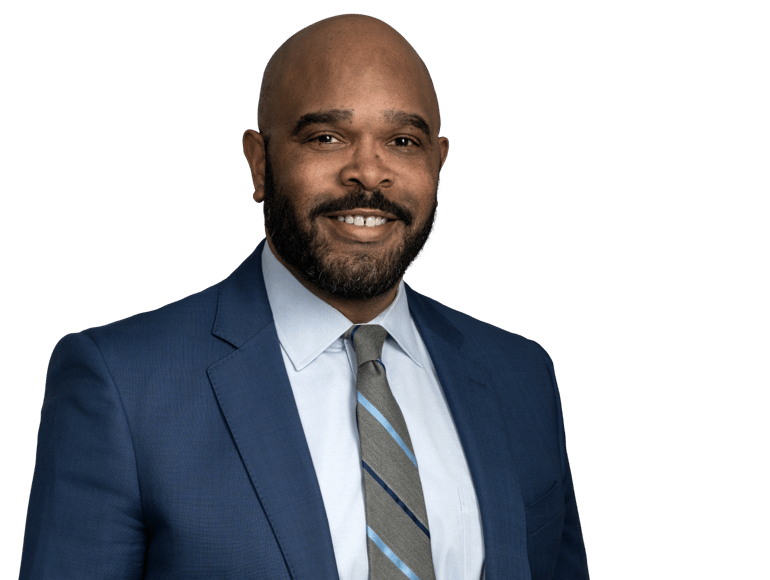
Portrait of Kevin E. Hexstall

Marshall Dennehey Names Carolyn Schweizer New Philadelphia Office Managing Attorney

July 8, 2026

Portrait of Carolyn Schweizer, with text below: Philadelphia Office Managing Attorney

-- Leadership transition follows the retirement of Butler Buchanan, III and includes new firmwide roles supporting attorney recruitment and diversity

Marshall Dennehey announced today that Carolyn Schweizer, longtime shareholder and a Casualty Litigation Supervisor in the firm’s Philadelphia office, has been named Managing Attorney of the firm’s Philadelphia headquarters office, effective July 1, 2026. Schweizer succeeds Butler “Buck” Buchanan, III who is transitioning to retirement after a distinguished tenure marked by significant leadership contributions across the firm. He will remain with the firm as Of Counsel and assist in the firm’s attorney hiring and recruitment initiatives.

Schweizer has been an integral member of the Philadelphia office and is widely recognized for her leadership, client service, and commitment to mentorship. In her new role, she will oversee the office’s 125+ attorneys and its operations, functions and initiatives, alongside Matthew Noble who will continue to serve as the office’s Assistant Managing Attorney.

“With 20 years of experience at Marshall Dennehey, Carolyn possesses all of the attributes necessary to be successful in this high-profile role,” said Marshall Dennehey President & CEO, G. Mark Thompson. “In addition to being a highly-accomplished attorney, she is a confidant to many at the firm, as well as a friend, mentor and trusted adviser. She’s approachable, enjoys the respect of her peers and exhibits the temperament, maturity and personality necessary for the position. I’ve no doubt she’ll foster a positive work environment and continue to advance the office’s success.”

“I am deeply honored to take on this role and grateful for the opportunity to lead such a talented and dedicated team,” said Schweizer. “I know I have big shoes to fill and I look forward to continuing to serve our clients while supporting the ongoing growth and success of the Philadelphia office.”

Buchanan retires after serving not only as Philadelphia Office Managing Attorney but also as the firm’s Attorney Hiring Chair and leader of the Diversity, Equity & Inclusion (DE&I) Committee. Throughout his 27-year tenure, he played a pivotal role in shaping the firm’s talent strategy and strengthening its commitment to fostering an inclusive workplace.

“We are deeply grateful to Buck for his innumerable contributions to the firm,” Thompson said. “Through the years, he has shown a commitment to fostering relationships with our employees at all levels. He is not only a friend and mentor but the personification of our culture and one of the best ambassadors the firm has ever had to the bench, bar and industry in which we practice.”

As part of the leadership transition, Melanie J. Foreman has been appointed the firm’s new Attorney Hiring Chair. A shareholder in the firm’s Casualty Department with a long track record of service to the bar and community, Foreman has been serving as the Assistant Hiring Chair for three years and brings extensive experience in recruiting, mentorship, and talent development.

“Melanie has demonstrated a strong passion for this role, along with the love and enthusiasm for our firm that is essential to success in the position,” said Thompson.

Additionally, Kevin E. Hexstall, shareholder and trial attorney in the firm’s Casualty Department, will assume the role of Chair of the firm’s DE&I Committee, continuing the firm’s focus on advancing diversity, equity, and inclusion across its 19 offices in seven states. In this role, Hexstall will guide firmwide initiatives aimed at strengthening an inclusive culture and broadening opportunities for its attorneys and staff.

“All of these leadership appointments reflect our continued commitment to thoughtful succession planning, strong leadership development, and investment in our people and communities,” said Thompson. “As we look ahead, we do so with appreciation for what’s been built and confidence in the people carrying it forward.”


Firm Highlights

Thought Leadership

Ohio Supreme Court Holds That a Binding Appraisal Award May Not Be Set Aside Absent Specific Evidence of Manifest Mistake or Fraud

On July 23, 2026, the Ohio Supreme Court issued a rare opinion on the binding effect of an appraisal award in a property insurance policy.  The Court in One Church held: A binding appraisal award will not be set aside unless an error is so palpably wrong that it undermines the intent of the agreement, such as corruption or gross mistake, not a mere error of judgment—To plead a claim of mistake with particularity as required by Civ.R. 9(B), facts alleged in a complaint must constitute the elements of mistake—Allegation that additional, hidden damage was discovered after appraisal award failed to state a claim of mistake that could justify setting aside binding appraisal.  The case arose out of a claim brought by One Church against its insurer, Brotherhood Mutual Insurance Company for roof damage from a storm. Pursuant to the terms of the insurance policy, the parties agreed to submit the matter to appraisal. The two appraisers inspected the building, and both appraisers agreed that the damages were $313,271.98. The insurer paid the agreed appraised amount.  Thereafter, the insured submitted a claim for an additional $206,663.09 in damages. The insured argued that these additional damages were not discovered until after the repairs began, and that they should be permitted to submit an additional claim, even though there had already been a binding appraisal of damages. The insurer refused to pay the additional damages, and the insured sued for breach of contract and bad faith.  In the trial court, the insurer moved to dismiss for failure to state a claim, arguing that the binding appraisal award barred any further claims. The insured took the position that additional hidden damages could not be discovered until after the repairs began, and therefore there was a mutual mistake. The trial court dismissed the case on the insurer’s motion, because there was no “evidence of fraud, misfeasance, or mistake”. The Court of Appeals agreed that appraisal awards are generally binding, but noted that an appraisal award can be set aside for fraud or manifest mistake. The Court of Appeals reversed and remanded the case to the trial court, finding that the insured had pled mistake with sufficient particularity. The insurer appealed to the Ohio Supreme Court. On appeal, the Ohio Supreme Court reversed the Court of Appeals, and reinstated the trial court decision dismissing the case for failure to state a claim upon which relief can be granted. The Supreme Court found that since the insured had already demanded appraisal, and the appraisal award was binding, “something more than error of judgement, such as corruption in the arbitrator, or gross mistake” must be pled with particularity, and proven for the insured to override the appraisal award. Since the complaint did not allege fraud or manifest mistake with sufficient particularity, something more than a mere error of judgment, the complaint was insufficient to state a claim.  The complaint in this case did not challenge the appraisal award. It pled that additional damages were discovered that were not apparent when the appraisal was done. It did not specify “who discovered the damages, how they were discovered, where they were found, why they were previously hidden, or why they rise to the level of a manifest mistake that the “appraiser would have corrected...had it been called to his attention”. Id at ¶22 citing Lakewood Mfg. Co. v. Home Ins. Co. of New York, 422 F.2d 796, 798 (6th Cir. 1970). Cases deciding the effect of appraisal awards are unusual. The Ohio Supreme Court’s decision in One Church relies primarily on 19th century case law for its conclusion. This emphasizes the fact that there is minimal case law deciding the effect of binding appraisal clauses in property insurance policies, and makes this case all the more significant. A lengthy dissent was written by Justice Fisher, who would have affirmed the Court of Appeals decision reversing and remanding the case for a decision on the merits. Of course, the decision works both ways, and an insurer dissatisfied with a binding appraisal award will likewise be without further recourse absent evidence of corruption, fraud, misfeasance, or manifest mistake, which must be pled with particularity. To constitute manifest mistake, “the mistake must be of such character that the arbitrator or appraiser would have corrected it had it been called to his attention.”  Lakewood Mfg. Co. v. Home Ins. Co. of New York, 422 F.2d 796, 798 (6th Cir. 1970).  The majority opinion does not specifically identify what would have been sufficient to plead mistake with particularity, or if the insured could have amended the complaint to overcome the deficiencies. The dissent argues that this was not really a case alleging mistake, but rather a question of contract interpretation. The insured did not challenge the appraisal, but argued that the hidden damage was not part of the appraisal, and the appraisal only covered the known damages.  However, this argument did not carry the day with the majority. 

Thought Leadership

New Jersey Appellate Division Affirms Exclusion of Legal Malpractice Expert as Impermissible Net Opinion

Jack Slimm and Jeremy Zacharias obtained a favorable decision on behalf of their client in a case centering on the admissibility of expert testimony in legal malpractice actions. In Martin v. Loury, the New Jersey Appellate Division affirmed the exclusion of a plaintiff's legal malpractice expert, holding that the expert's opinions on causation and damages were too speculative to support the malpractice claim. The legal malpractice action arose from an underlying employment dispute involving claims for damages stemming from the breach of an employment agreement. The plaintiff alleged that defense counsel committed malpractice during a second trial by failing to recall the plaintiff as a rebuttal witness after the employer's CEO testified. According to the plaintiff's expert, additional rebuttal testimony would have bolstered the plaintiff's damages claims and led to a more favorable result. Both the trial court and the Appellate Division rejected that theory. The courts found that the expert could not explain how the proposed rebuttal testimony would have altered the outcome of the underlying case or resulted in any additional recoverable damages. Notably, the trial judge in the underlying employment matter had already rejected the CEO's testimony as not credible and had accepted the damages analysis advanced by the plaintiff. The court had also determined that the amount of damages was not genuinely disputed. As a result, the expert's opinion that additional rebuttal testimony would have produced a better outcome was unsupported by the record and based on speculation rather than evidence. The Appellate Division agreed that neither the plaintiff nor the expert could identify any actual damages attributable to the alleged malpractice or demonstrate the required element of proximate causation. The court further upheld the trial court's application of New Jersey's net opinion doctrine, finding that the expert failed to provide the necessary "why and wherefore" supporting his conclusion that the attorney's conduct caused a compensable loss. Because the opinions rested on unquantified possibilities rather than demonstrable facts, they were inadmissible. Key Takeaway for Legal Malpractice Defendants For attorneys and firms defending legal malpractice claims, Martin v. Loury underscores the importance of closely scrutinizing an opponent's expert report on the critical elements of proximate causation and damages. The decision demonstrates that a malpractice claim cannot survive where an expert merely speculates that different litigation tactics might have produced a better result. Instead, the plaintiff must present admissible expert testimony grounded in the record that explains how the alleged attorney error probably changed the outcome of the underlying matter and resulted in measurable damages.

Result

No-Cause Jury Verdict Secured in Wrongful Death Trial

We successfully obtained a no-cause jury verdict in a 13-day wrongful death trial. The decedent, a 59-year-old man, was admitted to the emergency room on February 15, 2019, with complaints of abdominal pain, decreased appetite, and constipation, despite the use of laxatives. The patient did not complain of any nausea, vomiting, or diarrhea. He had a significant medical history including diabetes, hypertension, prior coronary artery stenting, morbid obesity (with past gastric bypass surgery), longstanding ventral hernia, and back pain. A CT scan revealed multiple hernias and a potential closed-loop bowel obstruction, leading to a surgery consultation. Our client, an emergency general surgeon, interpreted that the patient did not have a closed loop or any significant obstruction and recommended non-surgical management. The patient was approved to have clear liquids, and had a vomiting incident shortly after, but our client was not notified. The patient was returned to NPO status, and after improving overnight, he was returned to “clears” and additional medical and renal consults were ordered. Our client did not receive any communications from the residents/nurses of any changes in the patient’s condition. On February 18, 2019, two rapid responses were called due to increased heart rate and vomiting. It is believed that the vomiting resulted in aspiration, causing sepsis, ultimately leading to the patient’s death. During the trial, the plaintiff’s sole medical expert highlighted imaging on the wrong hernia, which called into question all of his opinions in the case. We made key objections related to the expert testimony, limiting what the allegations were, and preventing new allegations from being made. After approximately two and a half hours of deliberating, the jury returned a no-cause verdict.
