.

Kacey C. Wiedt

Assistant Director, Workers' Compensation Department

Shareholder

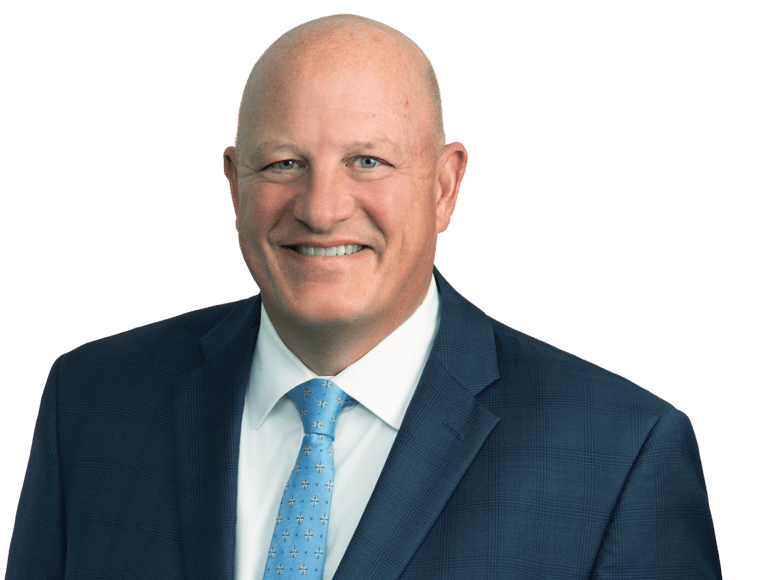
Portrait of Kacey C. Wiedt

Kacey is the Assistant Director of the Workers' Compensation Department, where he assists in the oversight of 35 attorneys in nine offices. He also serves as the managing attorney of the Workers' Compensation Department in the Harrisburg office.

In addition to his various management responsibilities, Kacey focuses his practice on high-exposure and complex workers' compensation litigation, representing clients in the construction, oil and gas, grocery, hospitality, landscaping, transportation and poultry industries. Kacey also consults with workers' compensation carriers to provide advice and guidance on pre-litigated workers' compensation cases. He is also a frequent presenter on topics relating to workers' compensation for carriers and employers.

A graduate of Washington & Jefferson College, Kacey received a B.A. in Political Science and Business Administration. He subsequently received his juris doctor from Widener University School of Law.

    • Widener University Delaware Law School (J.D., 1996)
    • Washington & Jefferson College (B.A., 1992)
    • Pennsylvania, 1996
    • AV® Preeminent™ by Martindale-Hubbell®
    • The Best Lawyers in America©, Workers’ Compensation Law – Employers (2024-2025)
    • Central Penn Business Journal's Power List For Law (2024)
    • Dauphin County Bar Association
    • Harrisburg Claims Association
    • Pennsylvania Bar Association
    • Where are We Now: How the Lorino and Neves Decisions Have Impacted the Defense of Workers’ Compensation Cases, County Commissioners Association of Pennsylvania (CCAP) Seminar, October 5, 2023
    • The Impact of COVID-19 on Workers' Compensation in Pennsylvania, Controlling Workers' Compensation Costs webinar, March 18, 2021
    • Understanding the Debate with the ADA, FMLA and Workers’ Compensation, Marshall Dennehey webinar, October 27, 2020
    • Tackling the Opioid Crisis: How Much Is Too Much?, Marshall Dennehey Workers' Compensation Seminar, October 24, 2019
    • Uninsured Employers Guaranty Fund, Pennsylvania Bar Institute's Tough Problems in Workers' Compensation Seminar, April 18, 2019 
    • Coverage Issues, Marshall Dennehey Workers' Compensation Seminar, October 18, 2018
    • In a Pickle: The Implications of Protz, Marshall Dennehey Workers' Compensation Seminar, October 19, 2017
    • How Employers, Insurers and Self-Insurers Can Save Money, SEAK National Workers’ Compensation and Occupational Medicine Conference, July 20, 2017
    • Best Practices to Avoid Common Workers' Compensation Mistakes, Lorman Education Services webinar, June 29, 2017
    • Overview of Pennsylvania Workers' Compensation, client seminar, June 16, 2017
    • Return to Work Strategies, client seminar, May 4, 2017
    • Workers' Compensation Jurisdictional Issues with Pennsylvania and New Jersey, client seminar, November 14, 2016
    • Understanding Medical Records, Marshall Dennehey Workers' Compensation Seminar, October 19, 2016
    • Back on the Job! Returning Injured Workers To Gainful Employment, Human Resource Professionals of Central Pennsylvania Fall Conference, October 27, 2015
    • An Overview of Pennsylvania Workers' Compensation, Nationwide Insurance Company, July 2015
    • Top Mistakes in Workers' Compensation, Susquehanna Human Resource Management Association, January 20, 2015
    • From Kachinski to Phoenixville Hospital: Proving Earning Capacity in the Modern Era, Marshall Dennehey Workers' Compensation Seminar, November 6, 2014
    • IMEs: How They Really Work, Roadmap to Success - Understanding Workers' Compensation, Marshall Dennehey seminar, October 24, 2013
    • "Did the Commonwealth Court Decide the Retroactive Effect of 'Protz'? Pennsylvania Law Weekly, October 12, 2017

Results

Successfully Denied Claim and Penalty Petitions Related to the Timing of the Alleged Injury

We successfully had the claimant’s claim and penalty petitions denied by proving the alleged injury occurred much later than claimed. The claimant, a technical operator responsible for shaping and packing cheese, alleged that he suffered a left shoulder tear with internal derangement, requiring surgery, as a result of using a long stick-like tool to dislodge cheese that had gotten stuck in a machine during the production process. The claimant asserted that he provided timely notice of his work-related injury to his supervisor; within a few days after the injury occurred. Through cross examination, the claimant admitted that he provided notice of his injury four or five months after the alleged injury occurred. Through employer witness testimony, we were also able to show that, while the claimant did leave early on the day of the alleged injury, the reason was because he was sick, and there was no written documentation to support notice being provided in a timely manner. Through medical expert testimony, we were also able to establish that the claimant’s injury likely occurred on a later date than the one alleged, based upon the medical evidence showing that the bicep did not show any signs of retraction 10 months after the alleged injury date. The workers’ compensation judge found the defendant’s expert testimony more credible than the claimant’s medical expert. The claimant’s claim petition seeking temporary total disability benefits and his penalty petition were denied, resulting in a successful outcome for the defendant.

Secured a Decision Denying a Claimant Wage Loss Benefits for an Accepted Work Injury

We secured a decision denying a claimant wage loss benefits for an accepted work injury. The claimant sustained a left wrist contusion and extensor carpi ulnaris (ECU) peri-tendonitis injury when a 50-pound lid crushed his left arm in the course and scope of his employment. The claimant alleged that as a result of the injury, he was unable to perform light-duty work as a system operator. Through medical evidence, we were able to establish that the claimant had medical issues unrelated to the accepted work injury that were the cause of his inability to work. The workers’ compensation judge found our expert testimony more credible than that of the claimant’s medical expert. Wage loss benefits were denied, resulting in a successful outcome for the defendant/employer.

Events

Firm Highlights

Thought Leadership

Appellate Division Affirms Dismissal of Legal Malpractice Counterclaim Against Martin Law Firm

In Martin v. Loury, 2026 N.J. Super. Unpub. LEXIS 1617 (App. Div. July 15, 2026), Martin Law Firm represented Kirk Loury in an employment matter Mr. Loury filed against his former employer, Concord Equity Group Advisors LLC (“Concord”). The allegations included, among other things, that Loury was not fairly compensated for his employment with Concord. After a bench trial finding in Loury’s favor, the Appellate Division remanded this matter in February 2016 for a second trial. During the second trial, Concord CEO, Lee Argush, testified to lower compensation estimate than first trial. On remand, the second trial judge awarded Mr. Loury the same damages as the first judge, finding Mr. Argush not credible. After the findings during the second trial, Martin Law Firm filed an action against Mr. Loury to recover legal fees and costs of representing Mr. Loury in a second bench trial and Mr. Loury filed a counterclaim against Martin Law Firm for legal malpractice, alleging he should have received an even higher award in the second bench trial. In this allegation, Mr. Loury, through his expert, claimed that Martin Law Firm should have recalled Mr. Loury to the stand to rebut Mr. Argush’s testimony to allege an alternative theory of damages. Mr. Loury’s expert admitted that the second judge already rejected Mr. Argush's theory and accepted Loury's damages theory. The trial court barred Mr. Loury’s expert and dismissed Loury's counterclaim with prejudice before convening the collection trial, and the jury ruled in Martin Law Firm’s favor. Mr. Loury appealed the trial court's pretrial rulings barring his liability expert from testifying in support of his legal malpractice counterclaim, denying his motion for summary judgment on that counterclaim, and denying his motion to amend his counterclaim by adding attorney Joseph A. Martin as a codefendant. In affirming the trial court’s decision, the Appellate Division held that the trial court properly excluded Loury’s expert testimony in the counterclaim against Martin Law Firm because the expert could not explain how calling Loury as a rebuttal witness would have increased damages when the second judge already rejected Mr. Argush's testimony and accepted Loury's damages theory, making the expert’s causation opinion speculative. The Appellate Division also held that the trial court properly denied Mr. Loury's summary judgment motion on his malpractice counterclaim because reasonable minds could differ on whether Mr. Martin's alleged failures would have changed the second judge's damages award, given the judge already found Mr. Argush not credible, creating genuine factual disputes precluding summary judgment. Also, the Appellate Division held that the trial court properly denied Loury's May 2023 motion to add Joseph Martin individually because the statute of limitations expired in February 2022, six years after the 2016 appellate remand when Mr. Loury incurred new legal costs, and relation back did not apply because Mr. Loury knew Mr. Martin's identity throughout and strategically chose to sue only Martin Law Firm in his 2019 counterclaim.

