Orlando
Marshall Dennehey's Orlando office is situated in the heart of downtown, overlooking Lake Eola. The Orlando office is mere blocks from state and federal courthouses and ideally positioned to service clients throughout central and northeast Florida. Its reach includes Jacksonville, Ocala, Gainesville, Daytona, the Space Coast, I-4 corridor and all points between. The Orlando office provides experienced legal representation in venues including the United States District Court for the Middle District of Florida and the state Circuit Courts of Orange, Seminole, Osceola, Brevard, Volusia, Flagler, St. Johns, Duval, Nassau, Clay, Putnam, Marion, Alachua, Lake, Polk, Indian River, St. Lucie, Martin, Palm Beach and Okeechobee Counties.
The Orlando office practices aggressive, well-prepared defense litigation by lawyers who are accessible and who practice and pride themselves on client relations. Its breadth of experience includes the successful defense of wrongful death, catastrophic injury, product liability, motor vehicle liability, alcohol liability, defamation and a wide range of premises liability cases. These include slip and fall, malicious prosecution, false arrest, negligent security, construction defect and elevator/escalator incidents. In addition, the office has distinguished itself in the defense of theme parks and issues relating to wild animals, amusement rides and crowd control.
Thought Leadership
Case Law Alerts
Florida Appellate Court Affirms Dismissal with Prejudice of a Claim Against Lyft Based on Statutory Immunity
July 20, 2026
Plaintiff, Louise Haddad, sued Lyft for damages after allegedly being assaulted by her Lyft driver. The plaintiff asserted claims for negligent and fraudulent misrepresentation against Lyft based on statements from its website which led her to believe the ride would be safe. Florida’s Fourth District Court of Appeal affirmed dismissal of her claims with prejudice, finding that they were barred by the broad immunity conferred to Transportation Network Companies (TNCs) under § 631.918, Florida Statutes. To plead an exception to TNC immunity, the plaintiff would have to allege sufficient facts, such as a violation of antitrust laws, bad faith, malicious purpose, or wanton and willful disregard of human rights, safety, or property. Since the plaintiff failed to adequately plead an exception, the court found her claims were barred by Florida’s TNC immunity statute. This case highlights the importance of legislative immunity in defending rideshare cases even at the pleadings stage.
Case Law Alerts
Florida Appellate Court Reverses Summary Judgment, Holding Commercial Landlord Had a Duty to Investigate Roof Leak
July 20, 2026
The District Court of Appeal reversed the trial court's entry of summary judgment, holding that the commercial landlord owed a duty of reasonable care to investigate a roof leak. Plaintiff, Scott Hale, managed a Domino's Pizza operating on premises leased from Sleiman Enterprises, Inc., slipped and fell on water that had leaked from the roof into the kitchen. Because the lease permitted only Sleiman to access the roof, Domino's could not investigate the source and instead reported the leak to Sleiman. The trial court granted summary judgment for Sleiman, reasoning that the lease required Domino's to maintain the allegedly defective hood vent and that Sleiman therefore owed no duty. The appellate court reversed, holding that Sleiman owed a duty of reasonable care because its exclusive control over roof access foreseeably created a zone of risk and prevented Domino's from discovering or repairing the source of the leak. The court held that the lease provision assigning hood vent maintenance to Domino's did not relieve Sleiman of that duty, and it rejected the argument that the danger was open and obvious, noting that an obvious danger discharges only the duty to warn, not the duty to maintain the premises in a reasonably safe condition. The ruling reinforces that a landlord's retained exclusive control over an area can support a duty notwithstanding a tenant's contractual maintenance obligations.
Results


News
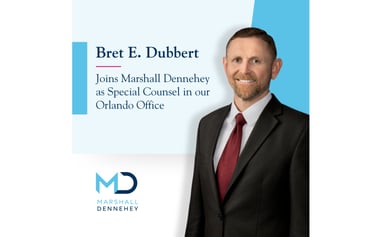
Bret E. Dubbert Joins Marshall Dennehey’s Orlando Office as Special Counsel in the Casualty Department
October 14, 2026
106 Marshall Dennehey Attorneys Recognized in the 2027 Editions of The Best Lawyers in America® and the Best Lawyers: Ones to Watch® in America
August 20, 2026
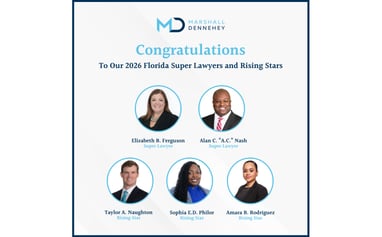
Marshall Dennehey Announces 2026 Florida Super Lawyers & Florida Rising Stars
June 26, 2026