.

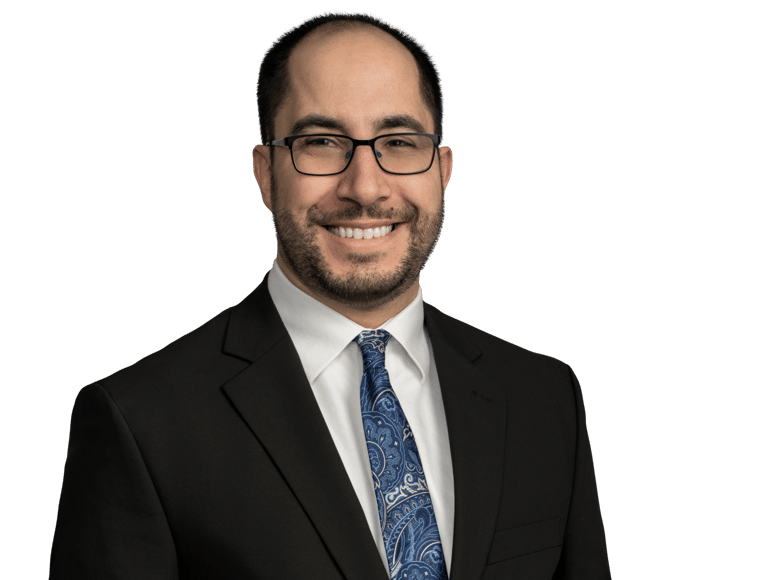
Michael A. Salvati

Portrait of Michael A. Salvati

A litigator and legal scholar, Michael provides streamlined solutions to his casualty clients’ most complex litigation challenges. With a focus on product liability, premises liability, automobile and other personal injury claims, he provides counsel to manufacturers of consumer goods, regional and national retail chains, manufacturing facilities, restaurants/bars, commercial landowners, pharmacies and more. Michael has experience in all aspects of defense litigation, from initial claim investigation through discovery and trial.  Michael has also assisted in the defense of class actions involving various subject matters, ranging from alleged product failures to data breach claims.

Michael prioritizes efficiency, achieving favorable outcomes, and ensuring the best possible results for his clients. By dissecting the key issues in litigation, he aims to avoid unnecessary complexities and legal disputes. He approaches every client matter strategically, by first assessing the case; identifying critical legal arguments; and creating a well-informed legal strategy.  

An avid reader and life-long student, he keeps abreast of legal topics pertinent to his clients, so he can better understand the current legal landscape and how it may impact their cases. A prolific writer, he has published substantive articles in The Pennsylvania Lawyer, The Legal Intelligencer and Law360. 

Michael’s scholarship and devotion to the law has not gone unnoticed. In 2023, he was selected to serve a five-year term on the Supreme Court of Pennsylvania’s Civil Jury Instruction Subcommittee, which drafts jury instructions used by trial judges throughout the Commonwealth of Pennsylvania.

Admitted to practice in both Pennsylvania and New Jersey, Michael is a member of the Pennsylvania, Philadelphia and New Jersey State Bar Associations. He is additionally a member of the Defense Research Institute where he has served as an editor for its Product Liability Defenses, a State-by-State Compendium. 

Prior to joining the firm, Michael served as a judicial law clerk to the Honorable Timothy G. Farrell of the Superior Court of New Jersey. In that capacity, Michael managed the judge's dockets, drafted opinions and orders, and served as a mediator in Small Claims and Special Civil Part cases.

Michael earned his juris doctor at Villanova Law School, where he graduated in the top 10% of his class, was a member of the Order of the Coif, and served as an Associate Editor of the Villanova Law Review.  He earned his bachelor's degree in history from Villanova University, where he graduated first in his class with a 4.0 GPA.

Michael resides in South Jersey with his wife and twin boys.

    • Villanova University Charles Widger School of Law (J.D., magna cum laude, 2011)
    • Villanova University (B.A., summa cum laude, 2008)
    • New Jersey, 2011
    • Pennsylvania, 2011
    • U.S. District Court District of New Jersey, 2012
    • U.S. District Court Eastern District of Pennsylvania, 2013
    • U.S. District Court Middle District of Pennsylvania, 2021
    • Pennsylvania Super Lawyers Rising Star (2024-2025)
    • New Jersey Bar Association
    • Pennsylvania Bar Association
    • Pennsylvania Supreme Court Subcommittee for Civil Jury Instructions
    • Philadelphia Bar Association
    • The Misuse Defense: Strategic Approaches to Defending Product Liability Claims for Insurers, A.M. Best Podcast, April 1, 2026
    • Strategies to Mitigate Risk and Avoid Litigation, Marshall Dennehey Client Presentation, May 14, 2025
    • Panel Member, Nuts and Bolts of Litigation Practice Under the Fair Share Act, Pennsylvania Bar Institute, April 2016.
    • Litigation Pointers for Defending the Supermarket Slip and Fall Case, Liberty Mutual Insurance, February 2015
    • "Pa. Supreme Court Must Defend Established Venue Standard," Law360, February 17, 2023
    • "A Two-Pronged Test Becomes One - Why the Superior Court's Venue Decision in Hangey Departs From Decades of Prior Precedent," The Pennsylvania Lawyer, January/February 2023
    • "After 'Tincher,' Evidence of Industry Standards Should be Admissible in PI Litigation,"The Legal Intelligencer, Personal Injury Supplement, November 5, 2021
    • “There’s No Turning Back Now: Product Liability Jury Instructions in the Wake of Tincher v. Omega Flex,” Defense Digest, Vol. 24, No. 2, June 2018
    • "There’s No Place Like “Home”: Challenging General Jurisdiction When an LLC Is a Citizen of the Forum State,Defense Digest, Vol. 23, No. 2, June 2017
    • “Pennsylvania’s Fair Share Act: Practical Pointers for Litigators,” Defense Digest, Vol. 20, No. 2, June 2014, co-author
    • Successfully obtained dismissal of a wrongful death action against a product manufacturer and distributor for lack of personal jurisdiction. The case involved allegations of a defective windshield installed in Pennsylvania, but the defense team demonstrated that the clients—located in Ohio and South Carolina—lacked sufficient contacts with the forum state, overcoming the plaintiff’s stream-of-commerce jurisdiction theory.
    • Prevailed on a Motion to Dismiss in a data breach class action in the Eastern District of Pennsylvania. Sixteen named plaintiffs brought claims alleging that a hacker had accessed the personal information of over 1,000,000 individuals nationwide. We defended the debt collection company whose computer servers were compromised. Plaintiffs asserted broad and novel legal theories, including negligent failure to protect data, breach of implied contract, invasion of privacy, negligence per se, and violations of various state consumer protection laws. We successfully contested these claims, resulting in the dismissal of eight plaintiffs for lack of standing and 15 of the 17 asserted causes of action being dismissed.
    • Obtained a defense verdict as second chair in a federal jury trial involving an allegedly defective motorcycle that caught fire when left running contrary to instructions in the owner's manual, causing significant fire and smoke damage to the plaintiffs' residence.
    • Obtained a summary judgment on behalf of a janitorial franchising company, successfully arguing that it was not responsible for the rogue acts of its franchisee who allegedly stole jewelry and engaged in sexual acts while cleaning the plaintiff's office.
    • Obtained summary judgment on behalf of two homeowners, successfully arguing that they had no duty to prevent their general contractor from injuring his subcontractor, the plaintiff, who had fallen from a ladder on the job.
    • Successfully defended a retail pharmacy and its delivery driver at arbitration on an auto accident claim for which liability was uncontested.  Michael obtained a limited tort finding and limited plaintiff to recovery of her unpaid medical expenses, which were minimal.  The suit had initially been filed as a major jury case before being remanded to arbitration, and the award was less than 1% of plaintiff's original demand.
    • Obtained a dismissal on jurisdictional grounds of product liability and wrongful death claims brought against a truck dealership that was located in Ohio and that did not conduct regular business in Pennsylvania.
    • Obtained a summary judgment for the manufacturer of a smoker in a failure to warn claim involving an allegedly defective barbecue smoker by successfully challenging the opinions of the plaintiff's expert as speculative.

Results

Thought Leadership

Case Law Alerts

Superior Court Clarifies Crashworthiness Doctrine and Provides Key Jury‑Instruction Guidance

April 1, 2026

In the much-publicized Amagasu case, a jury returned a verdict of nearly a billion dollars to a plaintiff who was paralyzed in a rollover car accident.  On appeal, the Superior Court vacated the award and remanded for a new trial stating that the trial court did not properly charge the jury on crashworthiness principles. Crashworthiness is a subset of products liability cases in which it is alleged that a vehicle possessed a defect that did not cause an accident, but did not offer sufficient protection to the vehicle’s occupant during the accident. Pennsylvania law recognizes that collisions and other accidents are part of the intended use of a motor vehicle, so manufacturers must design and manufacture a product that is “reasonably crashworthy.” For example, if a plaintiff is involved in a head-on collision and the air bags do not deploy, the lack of air bag deployment did not cause the collision, but possibly increased the severity of the plaintiff’s injuries –  that failure to perform may give rise to a product defect claim. In Amagasu, the Superior Court re-affirmed the elements of a crashworthiness claim, which was first recognized in Pennsylvania in 1994, but has not frequently been analyzed since the landmark Tincher case re-defined the product liability cause of action. Amagasu explained that crashworthiness cases involved a “more rigorous” and a “heightened burden of proof” compared to ordinary products liability cases as a trade off for expanding the scope of liability to an alleged defect that did not cause the underlying accident. Specifically, in addition to proving a product defect, the plaintiff must prove that, at the time the vehicle was designed, a safer and more practical design existed. A plaintiff’s burden to prove causation is also heavier in a crashworthiness case, as he or she must distinguish between the “enhanced injury” caused by the defect, and the “non-compensable injuries” he or she would have sustained in the accident anyway. The Superior Court emphasized that these crashworthiness elements “impose a burden of proof far and above that of a typical” products liability case. Amagasu may have a greater impact than simply crashworthiness cases as the billion-dollar verdict was vacated because the trial court did not give proper jury instructions. The trial court had avoided giving instructions that were not included in the Pennsylvania Suggested Standard Civil Jury Instructions, which did not provide a specific instruction on crashworthiness. The Suggested Standard Jury Instructions are an excellent resource and guide, but they are not an exhaustive statement of every area of the law. If a legal issue is raised by the evidence, the jury must be given an appropriate instruction, even if one is not included in the SSJI.

Case Law Alerts

Third Circuit Court of Appeals Holds a Product Liability Plaintiff Does Not Need an Expert to Survive Summary Judgment in Certain Cases

October 1, 2025

Product liability suits often involve complex machinery or detailed questions of product design and engineering. Thus, when defendants seek to preclude a plaintiff’s experts from testifying, they often try to kill two birds with one stone. Without experts to explain nuanced questions of defect and causation, the defense will argue that the plaintiff’s claims must fail as a matter of law. In a recent decision, the Third Circuit reversed a trial court that had reached such a conclusion.  In Slatowski, the plaintiff shot himself in the leg and blamed his firearm for being too easy to fire. Although the plaintiff had two experts to explain the firearm’s internal workings and the specifics of several recommended alternative designs, the trial court excluded those experts’ causation opinions as speculative. Just because the plaintiff’s pistol could have been accidentally fired, there was no reliable evidence that it did so on this particular occasion. Without an expert to discuss the issue of causation, the District Court granted summary judgment for the defendant. The Third Circuit reversed, explaining that expert testimony is only needed when, considering all the admissible evidence, the jury cannot reach a decision without speculating.  As examples, the court noted that where a theory of harm is technical or abstract, expert opinion might be required—as when a mold infestation may be caused by a leaky toilet or by a fungus. Alternatively, in a product liability case, if something has gone very wrong with a product but the plaintiff is not sure what—as when a van suddenly catches fire—an expert may be needed to explain why. But even when the subject matter of a case is complex, the Third Circuit concluded that an expert is not needed when “lay testimony can tell the story of causation.”  The fact that the plaintiff had expert testimony on the issue of defect—how the pistol functioned internally and how alternative designs would have changed things—made the question of causation relatively simple. Given the anticipated testimony regarding how the pistol’s trigger worked, did the jury believe the plaintiff’s testimony that some debris could have gotten in his holster and activated the trigger? That, the Third Circuit held, was a simple enough question for a jury to decide without expert assistance. Defense practitioners who challenge a plaintiff’s experts should be aware of this decision and bolster the summary judgment portion of their motions accordingly.   Case Law Alerts, 4th Quarter, October 2025 is prepared by Marshall Dennehey to provide information on recent developments of interest to our readers. This publication is not intended to provide legal advice for a specific situation or to create an attorney-client relationship. Copyright © 2025 Marshall Dennehey, all rights reserved. This article may not be reprinted without the express written permission of our firm.

Firm Highlights

Thought Leadership

What’s Hot in Workers’ Comp - News and Results*

RESULTS* Ben Durstein (Wilmington) obtained a favorable decision involving a claimant who fractured his patella in a work accident requiring two surgeries. The IAB rejected the claimant’s medical expert’s opinion that he sustained a 25% permanent impairment to the right lower extremity. Instead, the board accepted the opinion of the employer’s medical expert that the appropriate permanency was 13% utilizing the 6th Edition of the AMA Guides to the Evaluation of Permanent Impairment. Tony Natale III (King of Prussia) successfully had a claim petition alleging new injuries and periods of disability dismissed based on full recovery. The claimant was injured when his skid loader was struck by another loader in the process of baling hay. Original injuries were accepted and the claimant returned to work. Thereafter, the claimant abandoned work and filed a claim petition to assert new injuries and extended disability. Cross examination of the claimant’s medical expert stunningly revealed his failure to review claimant testimony, his lack of awareness of a social security disability decision detailing the existence of claimant’s alleged work-related conditions prior to the date of work injury, and his failure to understand that the claimant admitted to full recovery of injuries for which he was continuing to treat. Tony Natale III (King of Prussia) successfully obtained a defense verdict in a Medicare conditional payment lien third level appeal. The United States government alleged a Medicare conditional lien payment was due and owing in the upper six-figure range based on an auto accident and PIP policy for which the government conditionally became the primary carrier. The government argued that our client, the PIP carrier, was the primary payer and, under federal law, must reimburse the government for its conditional lien payment. At the third-level appeal hearing, the government’s position was refuted by the revelation that the date of injury tied to the medical bills associated with the lien was glaringly and chronologically prior to the insurer’s PIP policy date. The court held that based on this evidence and argument, the government could not meet its requirements to assert a lien against our client. A. Judd Woytek (King of Prussia) and John Abda (Scranton) successfully had a workers’ compensation claim petition granted for medical benefits only for a closed period with no wage loss awarded. The claimant alleged multiple injuries as the result of a very minor motor vehicle incident where a co-worker’s delivery van rolled down an incline of approximately six feet, and bumped into the rear of the claimant’s delivery van. He claimed he was thrown forward and suffered head and neck injuries, along with aggravating a pre-existing ankle injury. The claimant was also terminated following the accident for having a large hunting knife in his van, which was against the employer’s workplace violence policy. The judge granted the claim for a mild concussion and an ankle contusion, but terminated medical benefits as of the date of our IME’s. The judge found that no wage loss benefits were payable as the claimant was terminated for cause and work remained available to him. The judge found our medical experts to be more credible than the claimant’s, along with finding our four employer witnesses to all be credible. The trial team was assisted by paralegal Bonnie Zemek (King of Prussia). Eric Scott Thompson (Wilmington) was successful in a workers’ compensation matter in Delaware. On October 15, 2024, the claimant was injured while performing fire training in a multistory building when he tripped over a fire line, injuring his right knee. The claimant received regular and consistent treatment for the right knee through August 29, 2025, when he presented with left knee complaints for the first time. His treating orthopedist diagnosed a hamstring strain. The claimant was next seen October 15, 2025, with continued left knee complaints, and was referred to a total knee doctor within the practice. He was then diagnosed with a posterior root tear of the medial meniscus. Our expert testified that it was not plausible for a lateral hamstring strain to progress to a meniscal tear in two months. The claimant required a total knee replacement that was ultimately performed in February 2026. In the six months between the time of initial presentation with left knee complaints and the total knee replacement, conservative care consisted of a single injection. Our expert testified that posterior root media meniscal tears can respond to conservative care, and it was not known if it would with the claimant because it was not adequately explored. The Industrial Accident Board agreed with our expert and determined that the claimant failed to meet the burden of establishing more likely than not that the left knee complaints were caused by overloading/overuse as a result of the compensable injury to the right knee. They also agreed that the claimant was able to return to work in a sedentary capacity as opined by his physicians and our expert prior to the left total knee replacement and that there were employment opportunities available within his restrictions and capabilities as presented by the vocational expert. As a result, the claimant was no longer entitled to total disability benefits and will receive partial disability benefits for which he is limited to 300 weeks. Michele Punturi (Philadelphia) and Alana Staniszewski (Pittsburgh) had a termination petition granted in a Pennsylvania workers’ compensation case. The petition involved an echocardiography technologist with long-term employment at a local hospital who sustained a right shoulder injury resulting in surgery in January 2024. Following surgery, the claimant was diagnosed with a frozen shoulder and underwent additional surgery in June 2024, with a recommendation for a third surgery. The opinions of the defense medical expert, a Board-certified orthopedic surgeon, were found credible, persuasive, and competent based upon the extensive history he obtained from the claimant, analysis of the mechanism of injury, and review of records, along with comparison of MRIs from October 2023, February 11, 2024, and January 6, 2025, which failed to reveal any causal relationship other than a strain/sprain of the right shoulder. This evidence supported that the claimant had fully recovered, and was not in need of any ongoing medical treatment and/or restrictions. In particular, despite allegations of injuries beyond a sprain/strain, the defense medical expert identified that those allegations were not consistent with what was found at the time of surgery, and elements of the surgery were to treat a chronic and degenerative condition. Additionally there were no ongoing issues or problems with the subscapularis, which was intact, consistent with the follow-up MRI of February 11, 2024, and the claimant did not have evidence of a frozen shoulder. In fact, the MRIs and mechanism of injury, he opined, did not support any injury causing tendonitis or inflammatory conditions within the bicep tendon. Furthermore, multiple days of surveillance footage demonstrated the claimant’s normal use, with the ability to sweep and shovel snow, operate her vehicle, raise her arms above shoulder level, and use a broom – all without any observable difficulty, which challenged the claimant’s credibility of a disability and further established a lack of causation. As a result of this favorable decision, supersedeas fund reimbursement will be obtained for both wage loss and medical benefits through the supersedeas fund recovery process. *Prior Results Do Not Guarantee a Similar Outcome NEWS Heather Carbone (Jacksonville) was a panelist for a webinar hosted by The Workers’ Compensation Claims Professionals (WCCP) Association. As part of the “Meet the Experts” Series, the speakers addressed “Afterthoughts that Undermine a Successful Mediation,” highlighting the pitfalls and challenges of underprepared or unprepared mediation participants. The discussion included appropriate pre-mediation communications, setting of expectations, management of expectations, and working through the unexpected or unprepared. Attendees gained ideas about how and when to prepare, best practices, and the potential for non-parties (spouse, significant other, risk owners-insurers) to have differing perspectives or concerns than the actual employee and employer. On May 21-22, 2026, A. Judd Woytek, (King of Prussia) joined a panel at the CLM Alliance (Claims and Litigation Management Alliance) Work Comp Conference in Nashville to present "We See You: How Employee Engagement Enhances Work Comp Outcomes." Judd and his fellow panelists discussed the positive impact of employee engagement on claim outcomes, return-to-work timelines, and overall claim costs.

Thought Leadership

NJ Workers' Compensation Legislation Update

A couple more bills were introduced for the 2026-27 session. Any updates since February have been highlighted in bold. A1023 | S3984 Medical use of cannabis under certain circumstances This requires workers’ compensation, PIP, and health insurance coverage for the medical use of cannabis under certain circumstances. It was introduced on January 13, 2026 and referred to the Assembly Financial Institutions and Insurance Committee. It was also introduced on March 19, 2026 and referred to the Senate Commerce Committee. A1045 Certain injuries to volunteer and professional public safety and law enforcement personnel This revises workers’ compensation coverage for certain injuries to volunteer and professional public safety and law enforcement personnel. It was introduced on January 13, 2026 and referred to the Assembly Labor Committee. A3724 Personal liability to employer officers for failure to pay for coverage This provides personal liability for owner, executive officer, or executive director of employer for failure to pay for workers' compensation coverage. It was introduced on January 13, 2026 and referred to the Assembly Labor Committee. On May 7, 2026, it was reported and referred to Assembly Judiciary Committee. A4617 Certain workers' compensation supplemental benefits and funding method This concerns certain workers' compensation supplemental benefits and funding method. For a permanently and totally disabled worker or surviving dependents after December 31, 1979, with some exceptions, this bill provides for an annual cost of living adjustment in the weekly workers’ compensation benefit rate. It was introduced on March 10, 2026, and referred to the Assembly Labor Committee. S241 Inclusion in database of appointed officials This requires that workers’ compensation judges and administrative law judges be included in database of appointed officials. It was introduced on January 13, 2026 to the Senate, Referred to Senate State Government, Wagering, Tourism & Historic Preservation Committee. A1870 | S1379 Workers' compensation benefits for certain workers due to September 11, 2001, terrorist attacks This provides workers’ compensation benefits for certain public safety workers who developed illness or injury as result of responding to September 11, 2001 terrorist attacks. It was introduced on January 13, 2026 and referred to the Assembly Labor Committee. It was also introduced on the same day and referred to the Senate Labor Committee. On February 5, 2026, it was reported from the Senate Committee, 2nd Reading, and referred to the Senate Budget and Appropriations Committee. A2779 | S1521 Excludes Certain Illegal Aliens This excludes certain illegal aliens from workers’ compensation and temporary disability benefits. It was introduced on January 13, 2026 and referred to the Senate Labor Committee. It was also introduced on the same day and referred to the Assembly Labor Committee. A2792 | S1555 Prevent Intoxicated Employees from Workers’ Compensation This prevents intoxicated employees from receiving workers’ compensation. It was introduced on January 13, 2026 and referred to the Senate Labor Committee. It was also introduced on the same day and referred to the Assembly Labor Committee. S2290 Increase Mandatory Retirement Age This increases statutory mandatory retirement age for Supreme Court Justices, Superior Court Judges, Tax Court Judges, Administrative Law Judges, and Workers’ Compensation Judges from 70 to 72. It was introduced on January 13, 2026, and referred to the Senate Judiciary Committee. A3167 | S2372 Workers’ compensation insurance requirements for certain corporations and partnerships. This concerns workers’ compensation insurance requirements for certain corporations and partnerships. It was introduced on January 13, 2026 and referred to the Senate Labor Committee. It was also introduced on the same day and referred to the Assembly Labor Committee. A1384 | S2757 Reduce Statute of Limitations in Medical Fee Disputes This reduces statute of limitations from six years to two years in medical fee disputes in workers’ compensation matters. It was introduced on January 13, 2026 and referred to the Senate Labor Committee. It was also introduced on the same day and referred to the Assembly Labor Committee. S3144 Testimony in Workers’ Compensation This concerns submission of testimony in workers’ compensation claims. It was introduced on January 13, 2026, and referred to the Senate Labor Committee. S3342 Increase Mandatory Retirement Age This increases statutory mandatory retirement age for Supreme Court Justices, Superior Court Judges, Tax Court Judges, Administrative Law Judges, and Workers’ Compensation Judges from 70 to 75. It was introduced on February 5, 2026, and referred to the Senate Judiciary Committee. A3548 | S3571 Maximum benefits for certain volunteers This provides certain volunteer and other workers with maximum compensation benefit for workers' compensation claim regardless of outside employment.. It was introduced on January 13, 2026 and referred to the Senate Labor Committee. On March 2, 2026, it was reported from the Senate Committee, 2nd Reading, and referred to the Senate Budget and Appropriations Committee. It was also introduced on the same day and referred to the Assembly Labor Committee. On May 7, 2026, it was reported and referred to Assembly State and Local Government Committee.

Result

No-Cause Jury Verdict Secured in Wrongful Death Trial

We successfully obtained a no-cause jury verdict in a 13-day wrongful death trial. The decedent, a 59-year-old man, was admitted to the emergency room on February 15, 2019, with complaints of abdominal pain, decreased appetite, and constipation, despite the use of laxatives. The patient did not complain of any nausea, vomiting, or diarrhea. He had a significant medical history including diabetes, hypertension, prior coronary artery stenting, morbid obesity (with past gastric bypass surgery), longstanding ventral hernia, and back pain. A CT scan revealed multiple hernias and a potential closed-loop bowel obstruction, leading to a surgery consultation. Our client, an emergency general surgeon, interpreted that the patient did not have a closed loop or any significant obstruction and recommended non-surgical management. The patient was approved to have clear liquids, and had a vomiting incident shortly after, but our client was not notified. The patient was returned to NPO status, and after improving overnight, he was returned to “clears” and additional medical and renal consults were ordered. Our client did not receive any communications from the residents/nurses of any changes in the patient’s condition. On February 18, 2019, two rapid responses were called due to increased heart rate and vomiting. It is believed that the vomiting resulted in aspiration, causing sepsis, ultimately leading to the patient’s death. During the trial, the plaintiff’s sole medical expert highlighted imaging on the wrong hernia, which called into question all of his opinions in the case. We made key objections related to the expert testimony, limiting what the allegations were, and preventing new allegations from being made. After approximately two and a half hours of deliberating, the jury returned a no-cause verdict.