.

James P. Hanratty

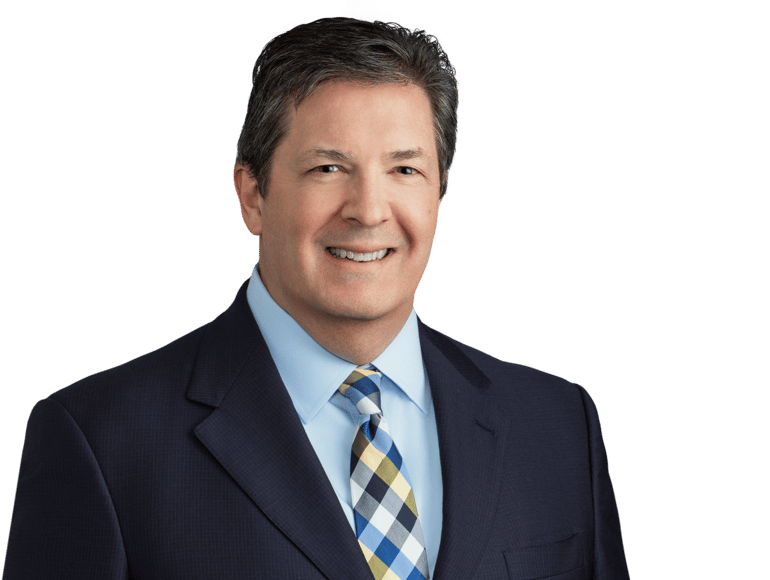
Portrait of James P. Hanratty

Jim is the managing attorney and Casualty Supervisor for the Jacksonville office.  In this capacity, Jim oversees a team of experienced attorneys handling corporate, commercial and civil litigation matters including workers’ compensation across Northern Florida.

Jim transferred to the Jacksonville office in 2012 after a 23-year career defending manufacturers, hospitals, trucking and transportation carriers, retail establishments and construction professionals throughout Ohio, Western Pennsylvania and West Virginia. Jim is an experienced first-chair trial lawyer and has taken over 150 civil jury trials to verdict since 1989.

In Florida, Jim has put his broad based experience to work by assuming the statewide supervision of matters for key clients in a wide range of cases including products liability, trucking and transportation, commercial premises liability and construction related injuries. Jim continues to handle significant and catastrophic injury cases involving automobile and general liability claims with an emphasis on the defense of brain injury claims. He is also experienced in representing health care professionals in medical malpractice claims. Jim has also expanded his practice to include representing condominium and homeowners associations as well as representing employers in matters involving ADA, FLSA/Wage & Hour, and Title VII before the EEOC and the Florida Commission on Human Relations.

Jim maintains a Martindale-Hubbell rating of AV® Preeminent™, the highest rating for professional competence and was recognized in 2010 as a Super Lawyer. He is board certified in Civil Trial Law by The Florida Bar. Jim is licensed to practice in all state and federal District Courts of Florida.

    • University of Akron School of Law (J.D., 1989)
    • Walsh University (B.A., 1986)
    • Florida, 2012
    • U.S. District Court Middle District of Florida
    • U.S. District Court Northern District of Florida
    • U.S. District Court Southern District of Florida
    • AV® Preeminent™ by Martindale-Hubbell®
    • The Best Lawyers in America®, Personal Injury Litigation - Defendants (2021-2026)
    • Florida Trend's Legal Elite - Civil Trial (2022)
    • Ohio Super Lawyer (2010)
    • International Association of Defense Counsel
    • American Board of Trial Advocates (ABOTA)
    • American Bar Association
    • Florida Bar Association
    • Jacksonville Bar Association
    • Ohio Academy of Trial Lawyers, 1989-1993
    • Ohio Association of Civil Trial Attorneys (Chair, Insurance Relations Committee, 2002-2007; Chair, Trial Tactics Committee, 2009-2012)
    • Ohio State Bar Association
    • Stark County Ohio Bar Association
    • West Virginia Bar Association
    • Top 5 Challenges Relative to Workers' Compensation Claims, Property and Casualty Claims and For Mediators, FCCI Educational Conference, October 2018
    • Defending Catastrophic Injury Claims - How to Stack the Deck in Your Favor, Marshall Dennehey Florida Claims Symposium – Casino Royale, Tampa, FL, September 20, 2018
    • "Courtroom Warriors" Present: Trying Your Case To A Defense Verdict; "Opening Statements; Making A Good First Impression," Cleveland Association of Civil Trial Attorneys, August 2008
    • Use, Selection of Expert Witnesses, Ohio Association of Civil Trial Attorneys, 2003
    • Insurance Relations Round Table, Ohio Association of Civil Trial Attorneys, 2003
    • Defense of Wrongful Death Case, Ohio Association of Civil Trial Attorneys, 2002
    • Law Office Management, University of Akron, 1992, 1995
    • Insurance Seminar, Ohio Academy of Trial Lawyers, 1992
    • "Reducing Workplace Accident Liability," Wholesale & Distribution International, Winter 2014
    • "Benefits of Involving Counsel When an Accident Occurs," Defense Digest, Vol. 19, No. 2, June 2013
    • "A Defendant's Guide To Approaching Head Injury Cases," Law360.com, February 8, 2013
    • "Benefits of Involving Counsel When an Accident Occurs," Construction Executive, December 2012
    • "Avoiding Headaches in Traumatic Brain Injury Cases," Defense Digest, Vol. 18, No. 4, December 2012
    • "Opening Statements: You Never Have a Second Chance to Make a First Impression," OACTA Quarterly Review, Vol. 2, Issue 4, Winter, 2009-2010
    • "A Momentary Lapse Of Reason In Ohio," Defense Digest, Vol. 14, No. 3, September 2008
    • "Selection, Use, Care and Feeding of Expert Witnesses," OACTA Review, Winter 2002
    • "Discovery In a Slip/Trip and Fall Case," OACTA Quarterly Review, Vol. 33, No. 2, Spring, 1998
    • United States Army Reserve, 1981-1990
    • Obtained summary judgment in a wrongful death and negligent security action involving the off premises murder of an employee. The plaintiff’s decedent was abducted, stabbed, and strangled during her lunch break after leaving the workplace parking lot with a man who had been looking for one of her co workers. We demonstrated that the crime was not foreseeable and that the client owed no duty. The First District Court of Appeal affirmed the order granting summary judgment.
    • A defense jury verdict in a tort/underinsured motorist suit directly against an insurance carrier where the plaintiff claimed brain injury and demanded $1.25 million.
    • Resolution of a wrongful death action against a manufacturer of a forklift by establishing that the incident was not caused by a defect in the product.
    • Resolution of a claim during trial of a dentist who, as a result of an auto accident, was left with neurological damage to her right arm. Economic experts claimed her professional loss due to the inability to practice dentistry was in excess of $3.4 million, but the case was settled during trial for approximately 24% of that number, due in large part to the cross examination of plaintiff's expert revealing several inconsistencies.
    • Supervised and coordinated several protective investigations for national construction firm requiring immediate response and scene inspection within hours of incidents to preserve the evidence and coordinate defenses often leading to the prevention of claims.
    • Successfully coordinated investigation and defense of Japanese manufacturer of industrial machinery in an amputation case leading to dismissal of client before trial.
    • Successfully defended National Restaurant Chain in multi-party litigation involving catastrophic injuries by using social media discovery to defeat emotional distress claims due to scarring.
    • Successfully defended a watercraft manufacturer at jury trial in a product liability action involving allegations of brain injury.
    • Obtained a defense jury verdict in a premises case on behalf of a national tax firm arising from a fall with serious injuries including a fractured femur with placement of intramedullary rod.
    • Obtained a defense jury verdict in a product defect/Magnuson-Moss action alleging personal injury due to inhalation of toxic mold and chemicals.
    • Successfully defended recreational vehicle retailer in multiple claims arising from allegations of product defect and "downstream distributor" claims including successful use of dispositive motions.
    • Successfully defended automobile accident case at jury trial involving catastrophic injuries and liability questions involving complex accident reconstruction issues and vehicle dynamics.
    • Successfully defended regional construction firm at jury trial in claim involving allegations of complex medical conditions arising from a low speed impact accident.
    • Board Certified Specialist, Civil Trial Law, The Florida Bar

Results

Summary Judgment Secured in a Contentious Coverage Matter

We were granted summary judgment in a coverage matter. The plaintiff was seeking UM benefits for a policy he had on a car he owned for an accident that occurred when he was operating a motorcycle he owned, but did not insure. The court confirmed that the policy excluded underinsured motorist coverage for the plaintiff’s motorcycle. The issue was that the definition of “motor vehicle” for the other owned motor vehicle exclusion was not specifically provided in the policy. In the PIP coverage, the policy contained an exclusion for motorcycles because the definition said motor vehicles must have four wheels. The plaintiff argued that the same policy said a motorcycle was not a motor vehicle for PIP coverage, but was a motor vehicle for the other owned vehicle exclusion. This was an ambiguity in the policy that should be interpreted against the carrier. The plaintiff had significant injuries that far exceeded the value of the policy. The court upheld both exclusions and followed our argument that the PIP and UM portions of the policy are separate and distinct and that any definition in the PIP coverage did not necessarily apply to the UM coverage. 

Directed Verdict Secured in a High-Exposure Defamation Lawsuit in Florida

We obtained a directed verdict in favor of our client in a high-risk defamation lawsuit. We were called to try the case on behalf of the CEO of a local chapter of a well-known national nonprofit after the plaintiff was permitted to amend the complaint to seek punitive damages from the CEO personally. The plaintiff was a volunteer at a camp. A decision was made to separate him from the camp and the organization. The plaintiff alleged that the CEO personally defamed him by alerting other volunteers and committees of the decision. He demanded an eight-figure sum prior to trial. After a six-day trial and several hours of argument at the close of the plaintiff’s case, the court granted our motion for directed verdict, ruling that the evidence presented confirmed that the communications by the CEO were covered by a qualified privilege and that, based on cross examination of the plaintiff and his witnesses, the defense established that there was no malicious conduct by the CEO. 

Thought Leadership

Defense Digest

On the Pulse…Jacksonville Office Expands and Leads Litigation Practice in Northern Florida

September 1, 2025

In 2024, the Jacksonville, Florida office celebrated our 20th year by moving to beautiful, new office space. We remain a presence in downtown Jacksonville and continue to cement our position as a premier litigation practice in Northern Florida. The Jacksonville office’s territory stretches from the Atlantic Coast to the Gulf Coast, across the northernmost counties of the state and across two time zones. Our lawyers have leveraged technology to allow us to service our clients’ needs in the most efficient way possible. When travel is necessary, we are perfectly situated to reach our expansive practice area quickly and effectively. The Jacksonville office is made up of talented lawyers working in the firm’s four practice departments: Casualty, Health Care, Workers’ Compensation, and Professional Liability. While only about 3% of all Florida lawyers have the distinction of being Board Certified as Specialists by the Florida Bar, almost 30% of our Jacksonville lawyers hold this honor. These highly-qualified lawyers include Elizabeth Ferguson, the leader of our Architectural, Engineering & Construction Defect Litigation Practice Group, Heather Carbone and Blake Hood, who are certified specialists in workers’ compensation practice, and myself, who works in the Casualty Department and has the honor of being certified as a specialist in civil trials. These distinctions and our commitment to our practices demonstrate the quality of counsel available to our clients as well as the excellent mentoring available to our newer lawyers.  Our newer attorneys are routinely named in the various professional journals lists of up-and-coming, talented attorneys. They are well situated to continue the growth of Marshall Dennehey’s presence in Northern Florida. As we continue to expand, we do so with an eye toward maintaining the Marshall Dennehey culture, which demands that we are not just great lawyers for our clients, but good people to each other, our families, and our opposition. Northern Florida continues to experience rapid and sustained growth, and the Jacksonville office is poised to continue to be a leader in the market as we move forward.  Jim is the managing attorney of our Jacksonville, FL office. He can be reached at (904) 358-4208 and JPHanratty@mdwcg.com.    Defense Digest, Vol. 31, No. 3, September 2025, is prepared by Marshall Dennehey to provide information on recent legal developments of interest to our readers. This publication is not intended to provide legal advice for a specific situation or to create an attorney-client relationship. ATTORNEY ADVERTISING pursuant to New York RPC 7.1. © 2025 Marshall Dennehey. All Rights Reserved. This article may not be reprinted without the express written permission of our firm. For reprints, contact tamontemuro@mdwcg.com.

Defense Digest

On the Pulse…Our Jacksonville Office

March 1, 2021

Marshall Dennehey has been an active part of the Jacksonville legal community since 2004. We opened with a few well-known and highly-respected members of the Duval County Bar and have since developed into a vibrant group of attorneys from many walks of life, handling diverse case loads in multiple practice groups. The Jacksonville office is within walking distance of the beautiful Duval County Courthouse, and we can often be found working there. However, we handle litigation far beyond the immediate area, covering an expansive territory across northern Florida, from the Atlantic Coast to the Gulf Coast. One of the founding members of the Jacksonville office is Michael DeCandio. Michael is well known as one of the leading construction defect defense attorneys in the state, regularly representing engineers and architects as well as the trades. Joining Michael in this practice group is Elizabeth Ferguson, a Board Certified Construction Defect attorney who is also recognized as a go-to construction defect lawyer. Elizabeth has a long history of leadership with the bar, and she is a former president of the Jacksonville Bar Association. They are supported by associate Avery Sander, who is active in the Jacksonville Women Lawyers Association, the Florida Association of Women Lawyers and the Chester Bedell Inn of Court. Jacksonville’s newest practice is the Workers’ Compensation Practice Group led by Heather Carbone. Heather and Linda Farrell joined us three years ago as part of the firm’s strategic plan to expand the Workers’ Compensation Department into the state. Heather and Linda provide their clients with unparalleled service through their advocacy, incredible work ethics and professionalism. Kelly Scifres is an associate in the group who is rapidly developing her own client relationships and reputation in the close-knit workers’ compensation bar. Responding to the needs of our clients, in 2019, Corey Setterlund transferred to Jacksonville from our Fort Lauderdale office to provide much needed defense of first-party property cases. Corey is a passionate, dedicated and diligent lawyer for her clients. (Is it any wonder that in her spare time she runs ultra-marathons?) The newest member of the property team is Caitlin Polly, who came over from the dark side (a little defense bar humor) to provide her unique insight and energy to the team. I am fortunate to lead the Casualty Practice Group in Jacksonville. As an attorney with 30+ years of experience and more than 150 verdicts in four states, it is my privilege to watch the attorneys I work with develop and grow their talents to the benefit of our clients. Rob Williams is a Jacksonville native who previously served as in-house counsel for a major casualty insurer. Sean Reeves is a former Army helicopter pilot whose experiences in Iraq and Afghanistan surely contribute to his fearless, warrior spirit in attacking any challenge, no matter how complex. Kathleen Carlson is extremely knowledgeable in the auto defense arena and is relentless in her pursuit of excellent outcomes for her clients while assuring on-time and informative reporting to the carriers. In addition to these primary practice areas, the attorneys in our Jacksonville office also handle employment and health care matters. Whatever your civil litigation needs are, we have the diverse talent, experience, energy, and flexibility to efficiently and effectively handle your litigation throughout north Florida. Please contact me with any questions about your legal needs. We look forward to working with you! *Jim is the managing attorney of our Jacksonville, Florida office. He can be reached at 904.358.4208 or jphanratty@mdwcg.com.   Defense Digest, Vol. 27, No. 2, March 2021 is prepared by Marshall Dennehey Warner Coleman & Goggin to provide information on recent legal developments of interest to our readers. This publication is not intended to provide legal advice for a specific situation or to create an attorney-client relationship. ATTORNEY ADVERTISING pursuant to New York RPC 7.1. © 2021 Marshall Dennehey Warner Coleman & Goggin. All Rights Reserved. This article may not be reprinted without the express written permission of our firm. For reprints, contact tamontemuro@mdwcg.com.
Events

Firm Highlights

Thought Leadership

SIDEBAR: News and Happenings

We are pleased to share that attorneys from our health care team have been selected to the 2026  New Jersey and Pennsylvania Super Lawyers and Rising Stars lists. Their dedication to clients and commitment to high-quality work continues to strengthen our firm! Please join us in congratulating: NJ Super Lawyers: Robert T. Evers and Justin F. Johnson NJ Super Lawyer Rising Stars: Nataliana A. Guida  2026 Pennsylvania Super Lawyers: Alyson J. Kirleis and Gary M. Samms 2026 Pennsylvania Rising Stars: Holli K. Archer and Daniel Dolente Victoria Scanlon (Scranton) was a faculty presenter at the 2026 American Roentgen Ray Society (ARRS) Annual Meeting in Pittsburgh. She participated in the “Resident Symposium: Producing Quality Reports,” focusing her presentation on “How to Write a Great Report: Malpractice Lawyer’s Perspective.” Vicky, the only attorney presenter for this two-hour segment, was joined by several health care professionals including diagnostic radiologists, an interventional radiologist, an internal medicine physician, and a radiologist turned AI entrepreneur expert.  Matthew Keris (Scranton), President of the Pennsylvania Association for Health Care Risk Management (PAHCRM) and shareholder in our Scranton Health Care Department, presented an important and timely session titled “Keynote Address: A Conversation with RaDonda Vaught on Criminalizing Errors” at PAHCRM’s Annual Meeting in April. RaDonda is a former Tennessee nurse widely known for being criminally convicted in 2022 of negligent homicide and gross neglect after a 2017 fatal medication error at Vanderbilt University Medical Center. Her case gained national attention because she was criminally prosecuted rather than just facing licensing board action, sparking debate over blaming individual nurses for systemic healthcare failures. Matt and RaDonda’s conversation explored one of the most consequential issues in health care risk management today—how systems respond to human error, and what it means for patient safety, accountability, and the professionals who serve on the front lines. Gary Samms was a panelist for a podcast hosted by the Medical Liability Monitor, “From Outliers to Pattern: The Increasing Predictability of Megaverdicts in the Med-Mal Industry – and How to Reduce the Likelihood of Getting Hit with One.” Gary discussed the changing megaverdict landscape and why “outlier” verdicts are becoming structural, in addition to how plaintiffs turn weaknesses into megaverdicts (including building emotional narrative and jury psychology). Thank you to our clients who joined us for our Trends in Health Care & Health Law seminar on May 14. Led by our Health Care Department Director and Assistant Director, Robin Snyder and Donna Modestine, the session explored key issues that are currently shaping outcomes in health care litigation. We owe a debt of gratitude to our esteemed guest speaker, Mary Ellen Nepps, Esq., Senior Counsel, University of Pennsylvania, who presented “Medical Malpractice Litigation: Driving Another Health Care Crisis in Pennsylvania.” And special thanks to our attorneys who presented and shared their insights, including John J. Hare and Holli Archer who discussed “Highlights in PA Medical Malpractice Law;” David Drake for his presentation, “From Claims to Courtroom: Key Trends in NJ Medical Malpractice Litigation;” and Matthew Keris with an “Update on Health Care Tech Discovery.” Thank you to all of our clients for entrusting us with your health care litigation. We are proud to partner with you as we defend your interests and navigate legal landscapes together.

Result

No-Cause Jury Verdict Secured in Wrongful Death Trial

We successfully obtained a no-cause jury verdict in a 13-day wrongful death trial. The decedent, a 59-year-old man, was admitted to the emergency room on February 15, 2019, with complaints of abdominal pain, decreased appetite, and constipation, despite the use of laxatives. The patient did not complain of any nausea, vomiting, or diarrhea. He had a significant medical history including diabetes, hypertension, prior coronary artery stenting, morbid obesity (with past gastric bypass surgery), longstanding ventral hernia, and back pain. A CT scan revealed multiple hernias and a potential closed-loop bowel obstruction, leading to a surgery consultation. Our client, an emergency general surgeon, interpreted that the patient did not have a closed loop or any significant obstruction and recommended non-surgical management. The patient was approved to have clear liquids, and had a vomiting incident shortly after, but our client was not notified. The patient was returned to NPO status, and after improving overnight, he was returned to “clears” and additional medical and renal consults were ordered. Our client did not receive any communications from the residents/nurses of any changes in the patient’s condition. On February 18, 2019, two rapid responses were called due to increased heart rate and vomiting. It is believed that the vomiting resulted in aspiration, causing sepsis, ultimately leading to the patient’s death. During the trial, the plaintiff’s sole medical expert highlighted imaging on the wrong hernia, which called into question all of his opinions in the case. We made key objections related to the expert testimony, limiting what the allegations were, and preventing new allegations from being made. After approximately two and a half hours of deliberating, the jury returned a no-cause verdict. 

Thought Leadership

Casual Care, Serious Consequences: How Informal Prescribing Can Trigger Medical Board Scrutiny

The lesson for health care practitioners is that regular review of the regulatory requirements can ensure compliance and that casual prescribing may be in violation of state regulations if the necessary components are not met. Consider the following scenario: in December 2025, a medical provider renewed a prescription for a long-standing telemedicine patient receiving a Schedule II controlled dangerous substance. This was not a violation of the New Jersey Administrative Code. Another provider doing the same action for an equally situated patient in March 2026 would be in violation. The casual prescriber who is not aware of newer regulatory requirements may have a more difficult time responding to a medical board complaint. Medicine is a highly-regulated helping profession. Without addressing the merits of this regulatory burden, the practice of medicine continues to see drastic changes impacting the everyday life of patient and provider. Telemedicine, COVID-19, and other advances and roadblocks, present a challenge to those saving lives while attempting to comply with the rules of practice. Physicians often discover—through real cases and the lens of regulatory expectations—that even well-intentioned informal help can be reinterpreted as stepping outside mandated professional boundaries, and seemingly harmless actions can be construed as deviations from required practice standards specifically outlined in Title 13, Chapter 35, Subchapters 7.1A of the New Jersey Administrative Code. Title 45, "Professions and Occupations," of the New Jersey code governs the practice of medicine, nursing, optometry, pharmacy, and many other professional occupations. Section 9 specifically addresses the state board of medical examiners and allows for the creation of rules and regulations in Section 45:9-5.3. These regulations can be found in the New Jersey Administrative Code Title 13, Chapter 35. While broad in scope, Chapter 35 contains a subchapter dedicated to the administration and dispensing of prescription drugs. Such knowledge will arm physicians with the tools they need to prevent a negative outcome if a medical board complaint is filed. Likewise, attorneys must be familiar with these regulatory requirements when advising and defending providers. In New Jersey, N.J.A.C. Section 13:35-7.1A(a) requires that a practitioner conduct an examination and appropriately document the same within the medical record before dispensing drugs or issuing prescriptions. The examination must include an "appropriate history and physical examination," a diagnosis based upon the examination and any testing consistent with good medical care, the formulation of a therapeutic plan discussed with the patient, and the availability of appropriate follow-up care. There are only six exceptions to this requirement: In admission orders for a newly hospitalized patient For a patient of another physician for whom the practitioner is taking calls For continuation medications on a short-term basis for a new patient prior to the patient's first appointment For an established patient who, based on sound medical practice, the physician believes does not require a new examination before issuing a new prescription For a patient examined by a healthcare professional who is in collaborative practice with the practitioner When treatment is provided by a practitioner for an emergency medical condition Emergencies are also limited to situations where someone's health is in serious jeopardy, there is serious impairment to bodily functions, or serious dysfunction of any bodily organ or part. During the COVID-19 pandemic, then New Jersey Governor Phil Murphy issued an executive order declaring a public health emergency and a state of emergency that allowed authorized prescribers to prescribe Schedule II controlled dangerous substances via telemedicine. The order was terminated when he left office earlier this year and the state reverted to the requirement of an initial in-person examination and quarterly in-person visits. With this return to prior regulatory requirements, practitioners subject to the jurisdiction of the board of medical examiners may benefit from a refresher on the regulatory limitations on their practice now that the pandemic-era flexibilities have ended. This new requirement may create confusion for prescribers and lead to casual prescribing of medication in violation of the regulations, even in the setting of recurrent telemedicine appointments as noted in the example above. Casual prescribing can take many forms: filling a prescription request from a friend or family member without an examination or contemporary medical record; using telemedicine to expand your practice without proper in-person appointments or documentation in the medical record; failing to ensure appropriate follow-up care for a "one time" prescription; etc. Although not all board complaints end in a publicly available opinion, serious deviations from regulatory requirements can shine a light on practices that will require action by the board if a complaint is received. Consider the following cases: In October 2025, the board issued a final consent order in an administrative action where a doctor provided opioids without examination and his license was permanently revoked. In re Robert Dela Gente, D.O., N.J. State Bd. of Med. Exam'rs Oct. 21, 2025. Criminal charges were filed (though that is not always the case). In a September 2025 consent order, a physician was reprimanded for "prescribing opioids several months in advance without the proper patient follow-up..." and explained that they did so for "patients who can not pay for multiple visits to refill medications." In re A/an E. Schultz, M.D., N.J. State Bd. of Med. Exam'rs Sept. 25, 2025. Another physician was suspended and placed on probation in a consent order for prescribing three patients the weight-loss medication "Ozempic" via text messages through a website called "Push Health" and without any further communication with the patients or taking a medical history. In re Laura E. Purdy, M.D., N.J. State Bd. of Med. Exam'rs Aug. 29, 2025. A June 2025 interim consent order required a "full evaluation and assessment of [a physician's] general knowledge and skill, with specific emphasis on his knowledge of and ability to safely prescribe [controlled dangerous substances]" due to his failure to review a patient's prior medical history and medical record, assess and review the prescription monitoring program before prescribing CDS, and conduct random urine screens on a patient that tested positive for CDS upon admission to his practice because "he trusted the patient." In re Donald Oh, M.D., N.J. State Bd. of Med. Exam'rs June 2, 2025. Each of these examples demonstrate a failure to follow strict procedure regardless of the intention. Failing to follow procedure secondary to good intentions, such as considering a patient's financial constraints, trust in the patient, or utilizing a new telemedicine service platform, will not be a defense to a board complaint. Especially when practicing via telemedicine, practitioners must ensure they are adhering to the appropriate regulatory standard. A provider who calls in a prescription for a traveling friend or family member or agrees to prescribe medication for individuals using the newest phone app will have a hard time meeting the requirements of N.J.A.C. Section 13:35-7.1A. Even if a history was taken, a "therapeutic plan" was created, and "follow up care" was provided, the prescriber would still not be in compliance with the regulation without an in-person examination. In our opening hypothetical, the prescriber's behavior did not change between December and March; however, the legal shift in the regulatory landscape made once acceptable behavior a violation as a required examination did not occur. When complaints are made with regard to informal prescribing, the board has discretion to employ measures to encourage compliance in lieu of formal proceedings such as a private, written warning; suspending fines subject to continuing compliance; medical or professional treatment as may be necessary; medical or diagnostic testing and monitoring; skills assessment; corrective training; participation in outreach programming; or contribution to the consumer fraud protection fund. The lesson for health care practitioners is that regular review of the regulatory requirements can ensure compliance and that casual prescribing may be in violation of state regulations if the necessary components are not met. Even compliant providers who had not conducted an in-person examination for telemedicine patients during the COVID-19 emergency would be in violation of the regulations as of January 2026 for the same practice. Practitioners should be diligent in adhering to the prescribing rules to avoid sanctions related to casual care. Likewise, attorneys advising or defending practitioners before the board must be aware of the in-person examination requirements for prescribing in New Jersey whether the care in question took place in-person or in a telemedicine setting. Reprinted with permission from the April 22, 2026 issue of the New Jersey Law Journal. ©2026 ALM Media Properties, LLC. Further duplication without permission is prohibited. All rights reserved.